
When the Helmet Fell Before the Kalon Minaret
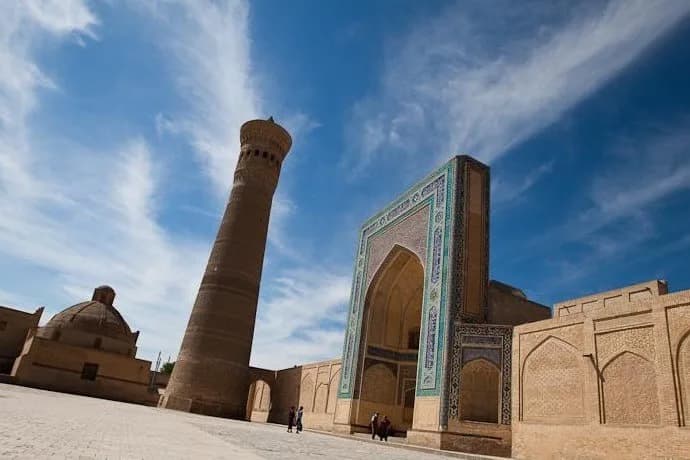
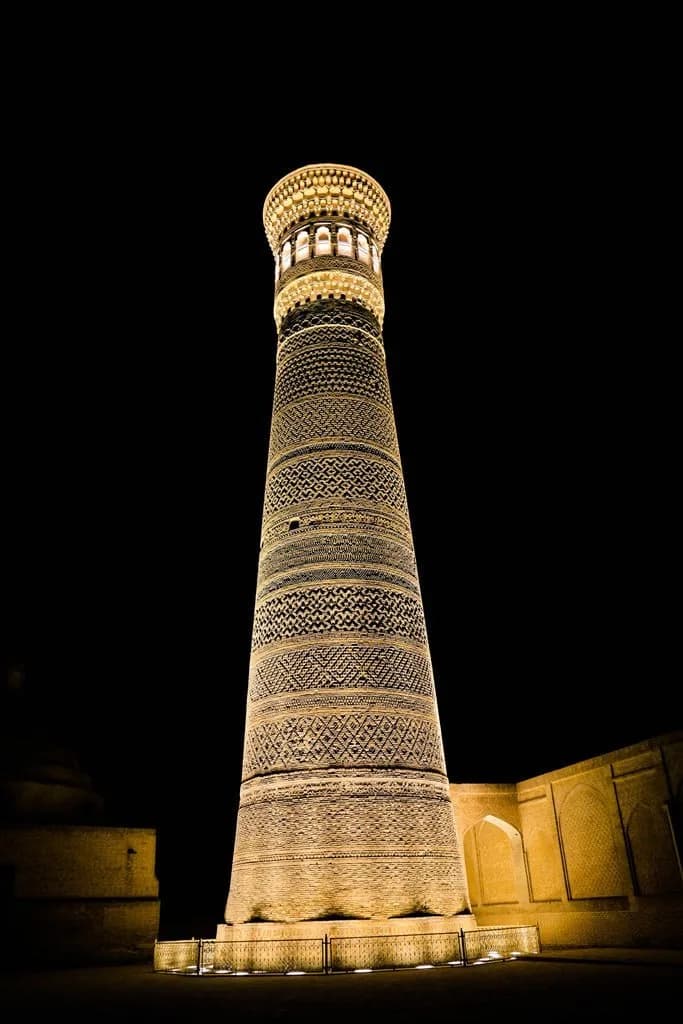
During a history club visit to Poi Kalyan, a student named Aziza heard a guide begin with a story many locals know by heart. When Chinggis Khan entered Bukhara after conquest, the guide said, he stepped into the main square and noticed a towering minaret. He looked up so sharply that his helmet fell to the ground.
‘I have never bowed to anyone,’ the legend continues, ‘but this building is so majestic that it deserves a bow.’ In the retelling, the moment is not about fear—it is about recognition. Some things are built with such skill and meaning that even the harshest era pauses in front of them.
Aziza then walked the courtyard with new attention. She learned that the Kalon Minaret stands in Bukhara’s historic center as part of the Poi Kalyan ensemble. It was built in 1127 under the Qarakhanid ruler Arslon Khan, and local tradition remembers the architect as a master named Baqo, whose name is said to be preserved near the top.
As the group left, Aziza wrote a simple line for her presentation: ‘Heritage survives when people choose to protect it—even when they have power to erase it.’
Legend retelling
‘I have never bowed to anyone. But this building is so majestic that it deserves a bow.’
Adapted English retelling of a popular local legend about Chinggis Khan and the Kalon Minaret.
Symbolism and meaning of the Kalon Minaret
The Kalon Minaret is not just an architectural landmark but a deeply symbolic monument that reflects the cultural, spiritual, and political life of medieval Bukhara. Built in the 12th century, its name “Kalon,” meaning “Great,” represents more than physical height; it signifies the power and influence of the city during the Silk Road era. For travelers approaching Bukhara, the minaret served as a visible statement of authority and prosperity.
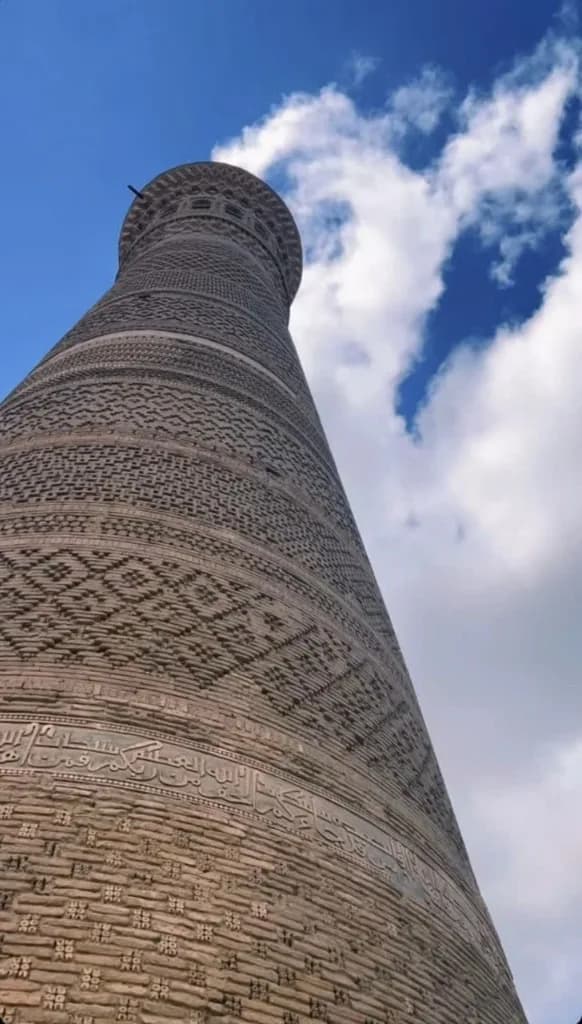
One of the most fascinating aspects of the Kalon Minaret is its intricate brickwork. The surface is decorated with bands of geometric patterns, many of which do not repeat. In Islamic art, such patterns symbolize infinity and the perfection of divine creation. The variation in designs suggests that while the universe follows order, it also contains endless uniqueness, reflecting the complexity of God’s creation.
The minaret’s cylindrical shape, narrowing toward the top, carries spiritual meaning as well. It represents a journey from the earthly world to the heavens, symbolizing the connection between humans and the divine. Functionally, the structure was used not only for the call to prayer but also as a watchtower, highlighting the integration of religion and governance.
Additionally, the minaret holds darker historical significance as a site of public executions, symbolizing justice and authority. Despite this, its survival for nearly 900 years demonstrates advanced engineering and resilience. Today, the Kalon Minaret stands as a powerful blend of beauty, meaning, and history, making it one of the most captivating monuments for tourists.
Specific parts of the Kalon Minaret
- Foundation base and load-bearing masonry core
- Tapering cylindrical shaft (main body)
- Decorative brick bands with non-repeating geometric patterns
- Calligraphic inscription belt in carved brick
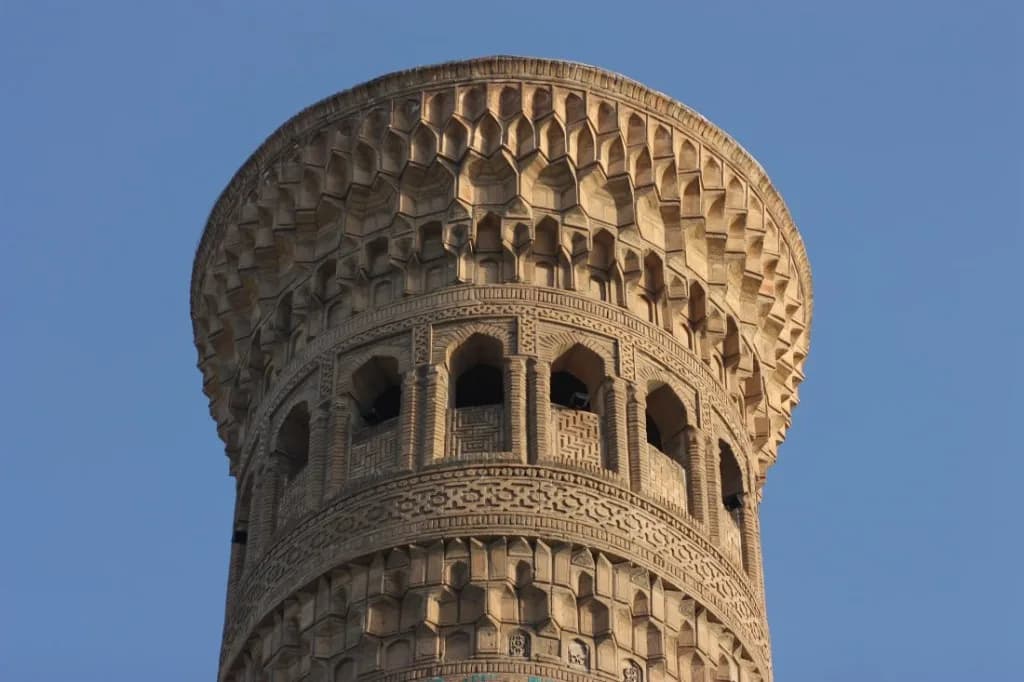
- Muqarnas-style cornice below the crown
- Lantern gallery and upper rotunda