Shah-i-Zinda Necropolis
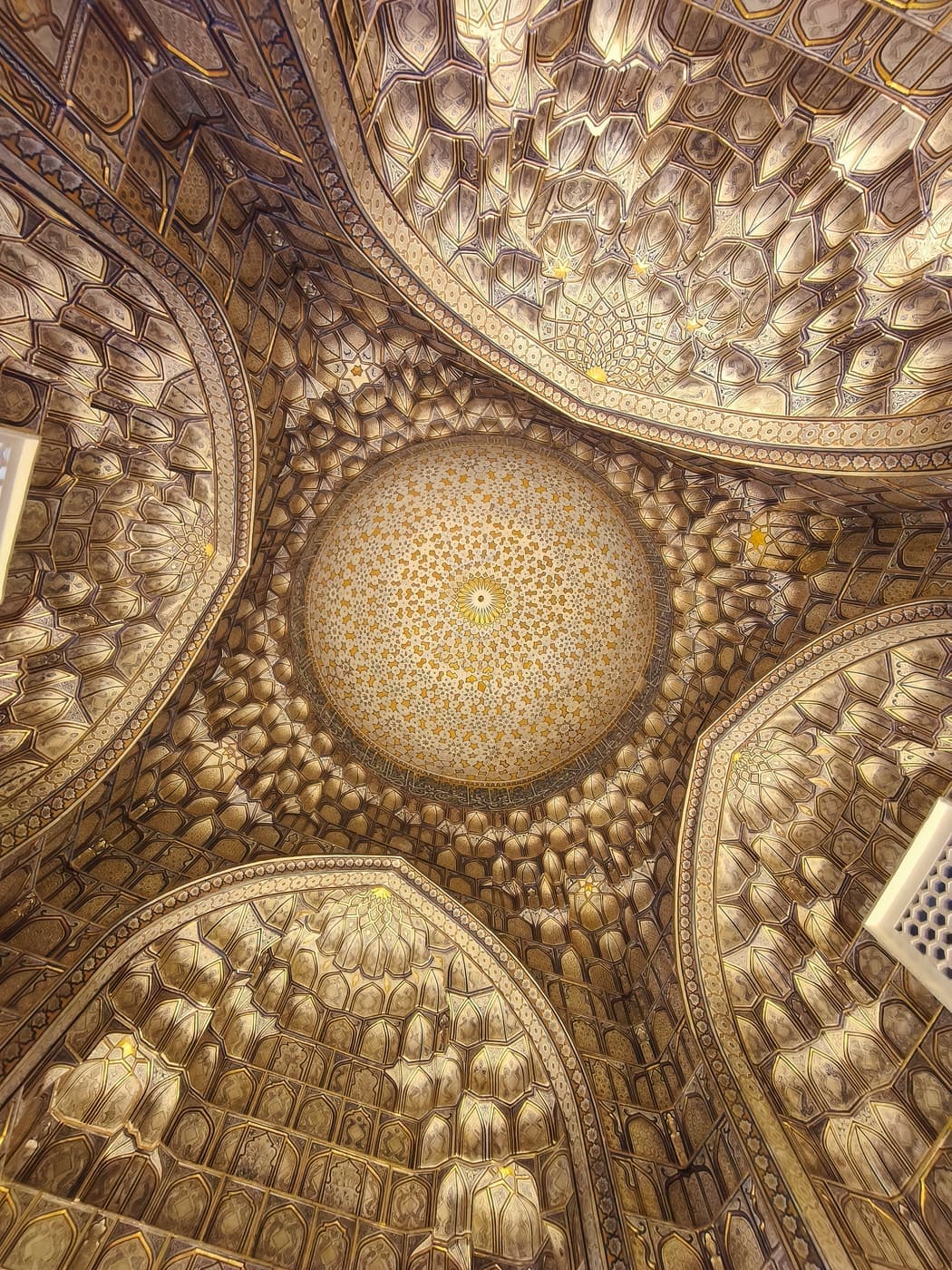
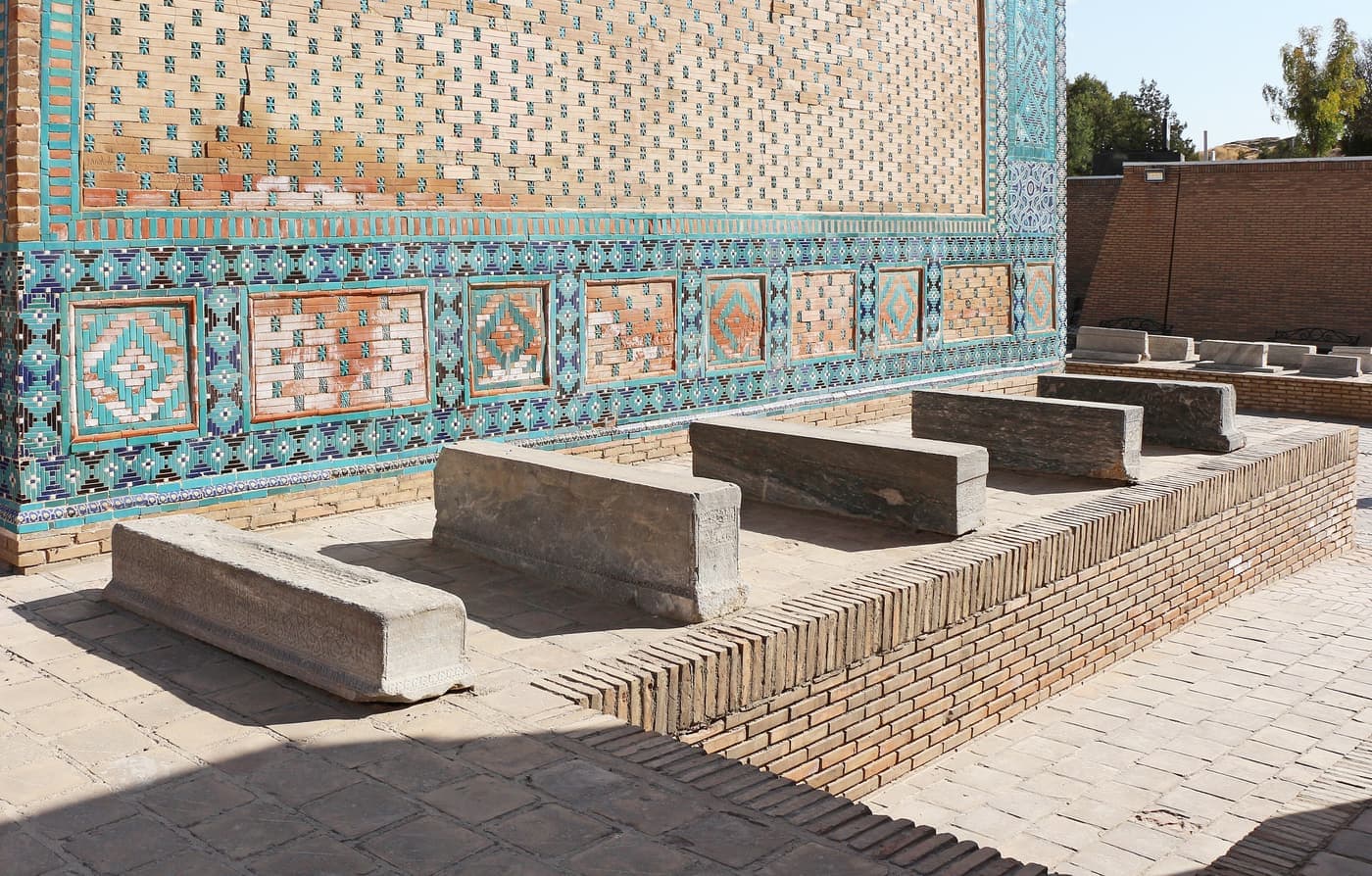
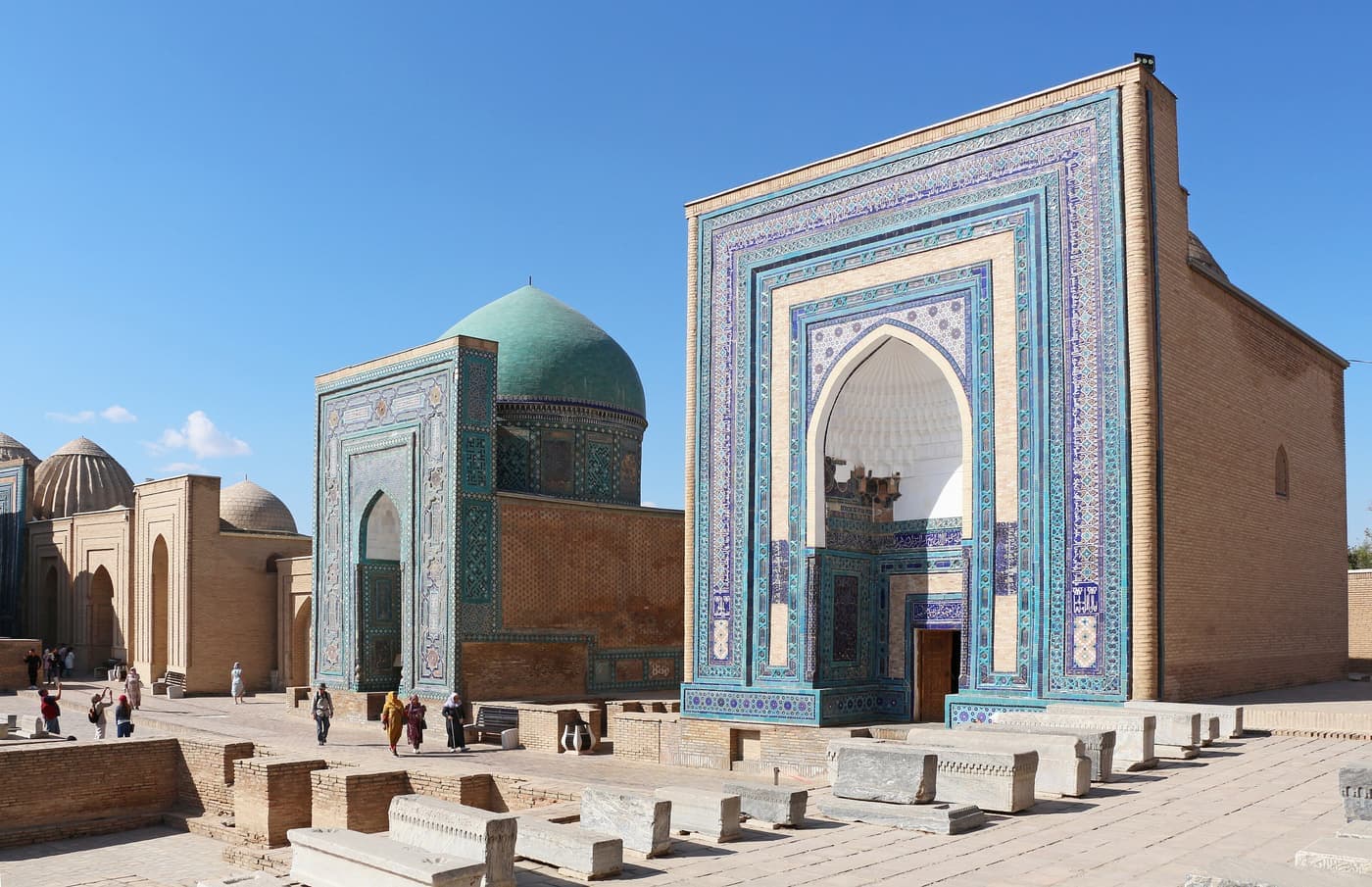
A lane of tiled mausoleums climbing a hillside, built between the 11th and 19th centuries around a revered tomb.
Listen while you walk
This guide plays in the language you selected.
Audio recording coming soon
The recording for this language has not been added yet. The full script is below — you can read it now and the audio will appear here as soon as it is uploaded.
Script
You are at the foot of Shah-i-Zinda, a burial street on the edge of old Samarkand. In front of you is an entrance portal; behind it a staircase climbs the hillside, and along the lane above stand the mausoleums, one after another. Go through the gate and take the stairs slowly.
The name is Persian and means "the living king". It comes from a legend. Qutham ibn Abbas, a cousin of the Prophet Muhammad, is said to have come to Samarkand in the seventh century to preach Islam. The legend says that he was beheaded while praying, picked up his own head and went down into a deep well, where he lives to this day. His shrine, at the far end of the lane, is the reason everything else is here.
People wished to be buried near that shrine, and so the street grew. Building went on from the 11th century to the 19th, but most of what you see dates from the 14th and 15th centuries, when Timur's family and commanders built their tombs here. Today there are more than twenty buildings, in a lower, a middle and an upper group, linked by domed gateways.
The entrance portal in front of you is the latest of the great works: it was built in 1434 to 1435 under Ulugh Beg, Timur's grandson.
Gallery