Morning at the Ark Gate
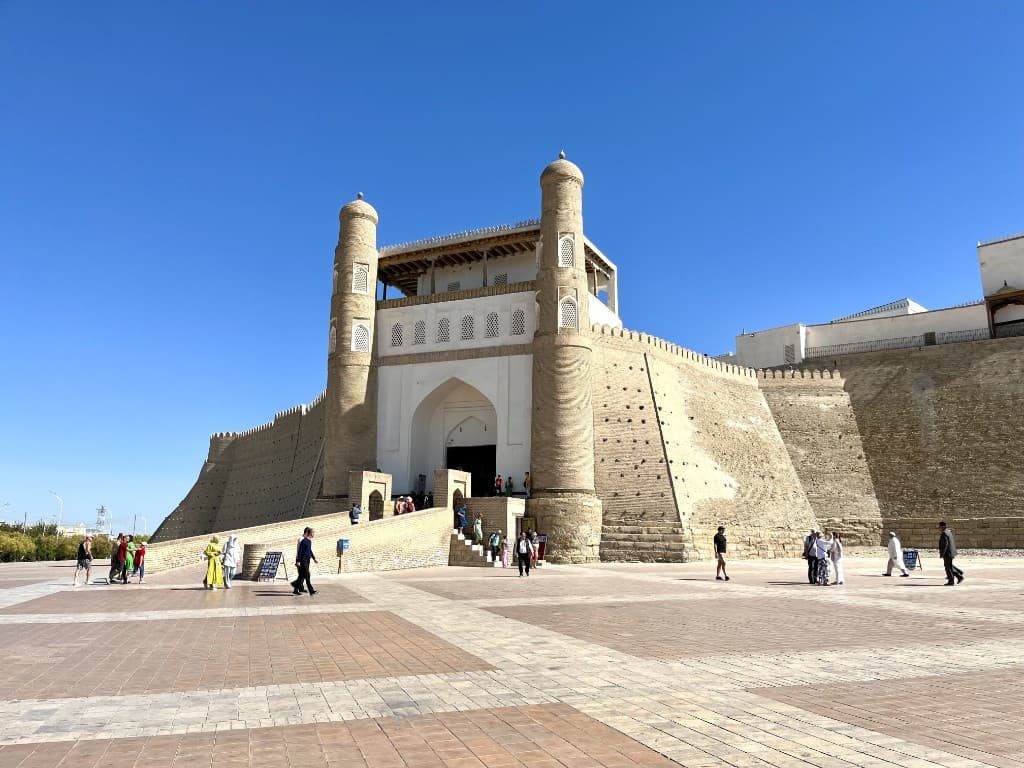
At sunrise, Malika joined her classmates near the Ark Fortress to prepare signs for visiting students. Standing below the massive walls, she imagined the rulers, guards, and scribes who once passed through the same gate to decide matters that affected the whole city.
Her teacher then read a translated excerpt from the medieval historian Narshakhi's Tarikh-i Bukhara: according to the chronicle tradition, Siyavush came to this region, built a great fortress in Bukhara as a lasting memorial, and after his death the people remembered him with annual mourning rites on Navruz. The class listened in silence, realizing that the Ark was not only a political center, but also a place shaped by memory and legend.
Her history mentor explained that every public space carries two stories: the story of power and the story of duty. A fortress can protect a city, but only fair choices protect trust. Malika listened quietly, then rewrote her poster headline from 'Old Building' to 'Lessons in Leadership.'
By noon, younger pupils asked thoughtful questions about justice, responsibility, and service. Malika realized that heritage sites do not only preserve history - they train future citizens.
Translated Chronicle Excerpt
In Tarikh-i Bukhara, Narshakhi's chronicle tradition describes how Siyavush came to Bukhara, built a fortress there as a lasting memorial, and was later mourned in rites remembered by local people. The account reflects how historical memory and legend became intertwined around the Ark.
Adapted English translation from a Uzbek-language passage citing Narshakhi's Tarikh-i Bukhara.