
Poi-Kalyan Ensemble
Bukhara's monumental heart: a twelfth-century minaret between a vast Friday mosque and a working madrasa.
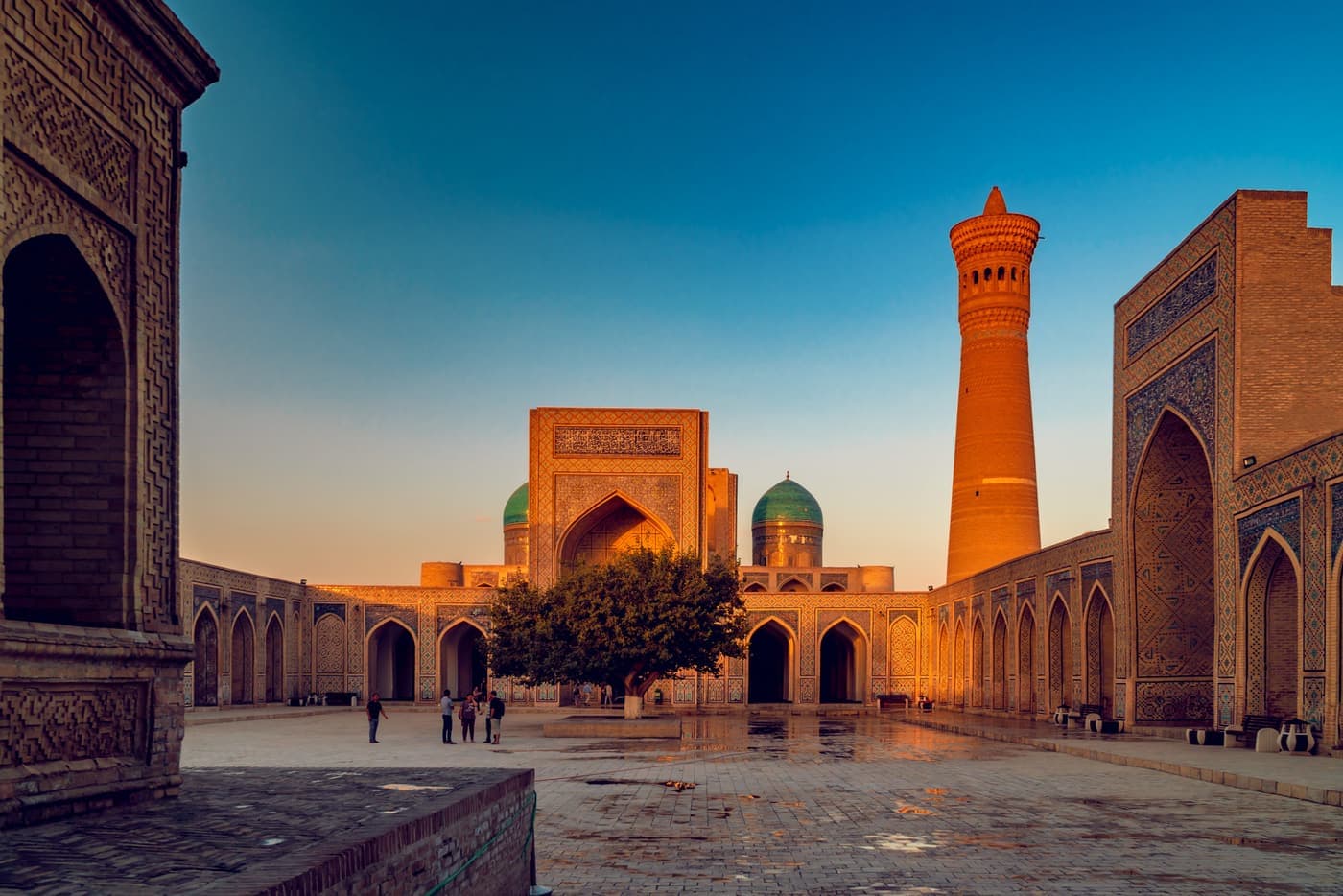
About this complex
Poi-Kalyan means "at the foot of the Great One" — the Great One being the minaret that has stood at the centre of Bukhara since 1127. Everything around it was built later, and everything around it was built in relation to it.
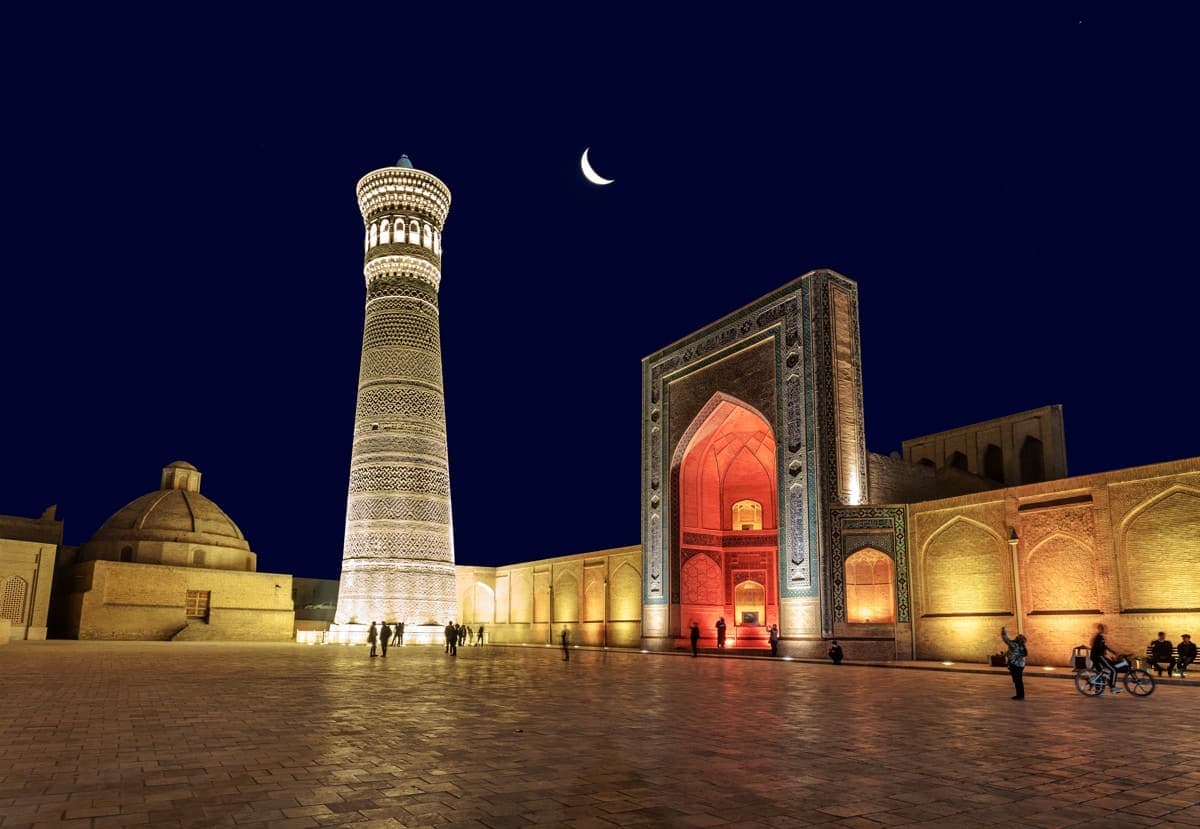
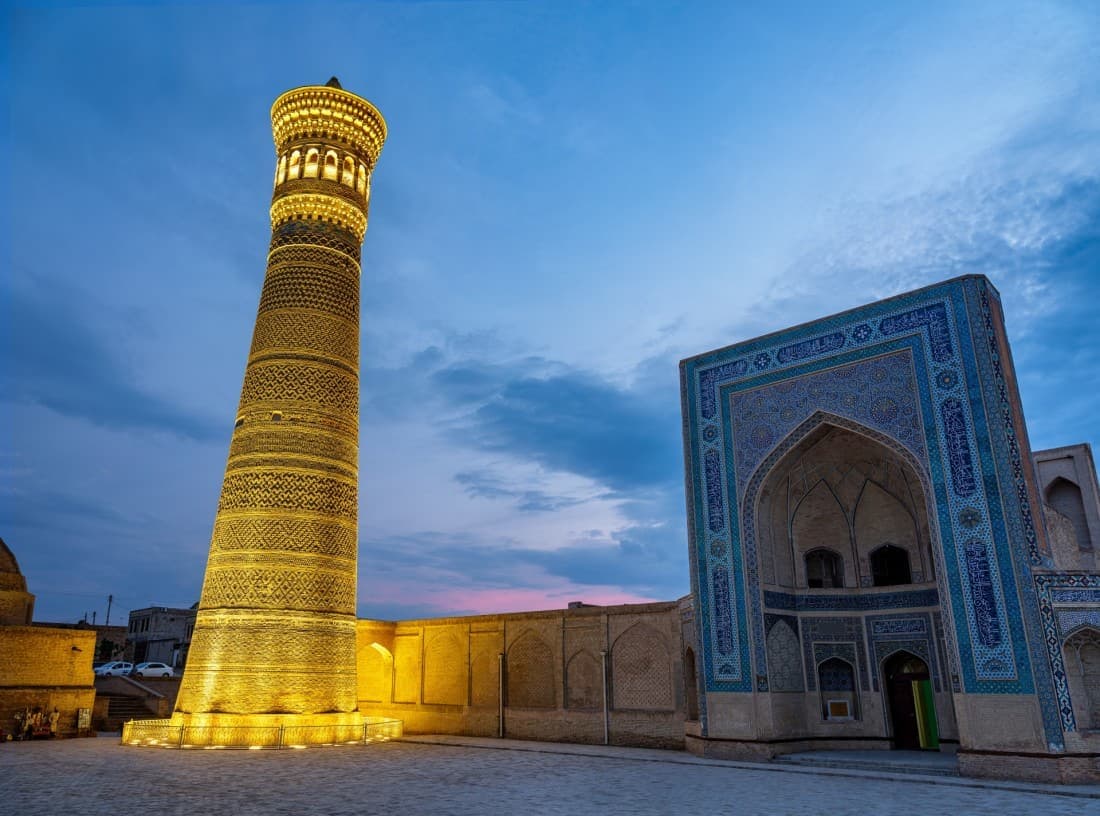
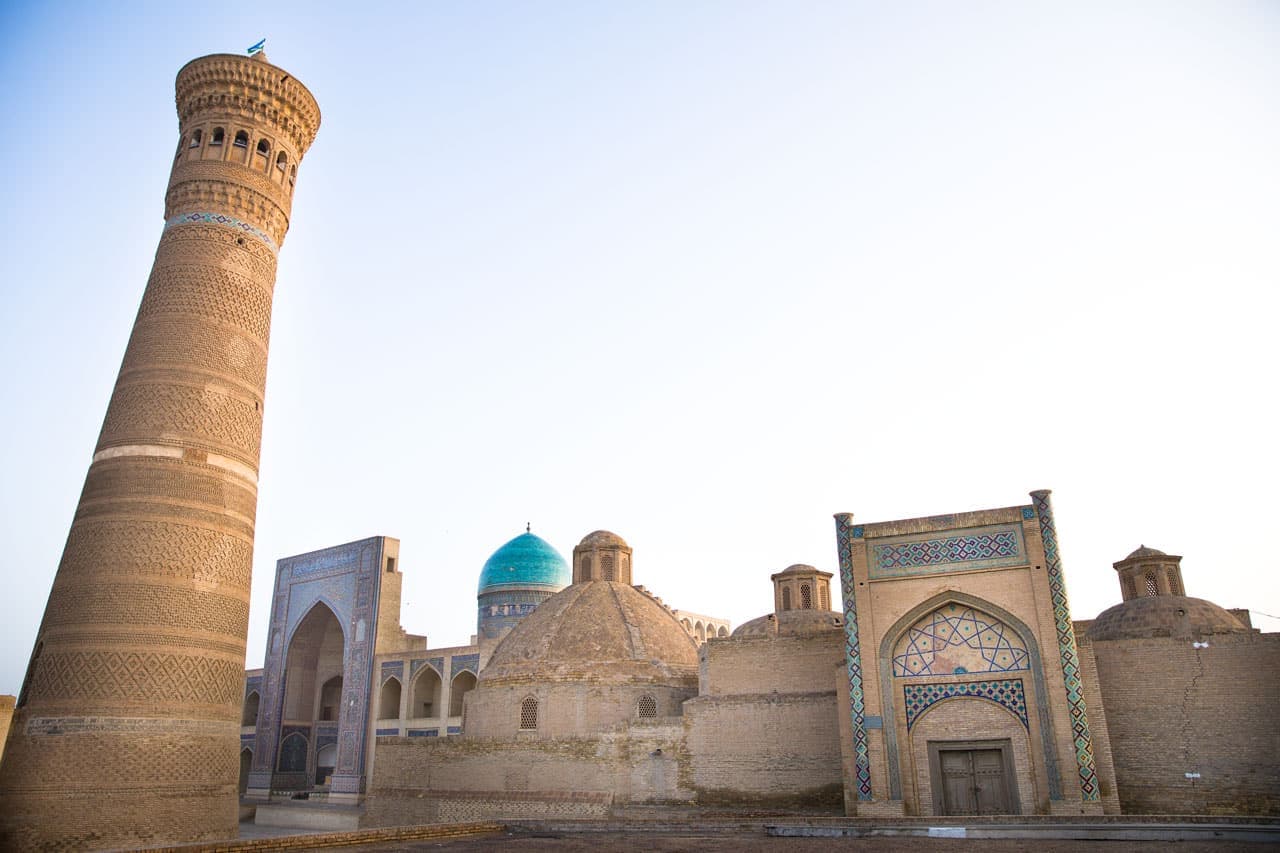
Three buildings face one another across the square: the Kalyan Minaret, the Kalyan Mosque that could hold much of the city at Friday prayer, and the Mir-i-Arab Madrasa, which has taught students almost continuously since the 1530s. Between them they cover four centuries of Bukharan architecture in a single view.
Gallery
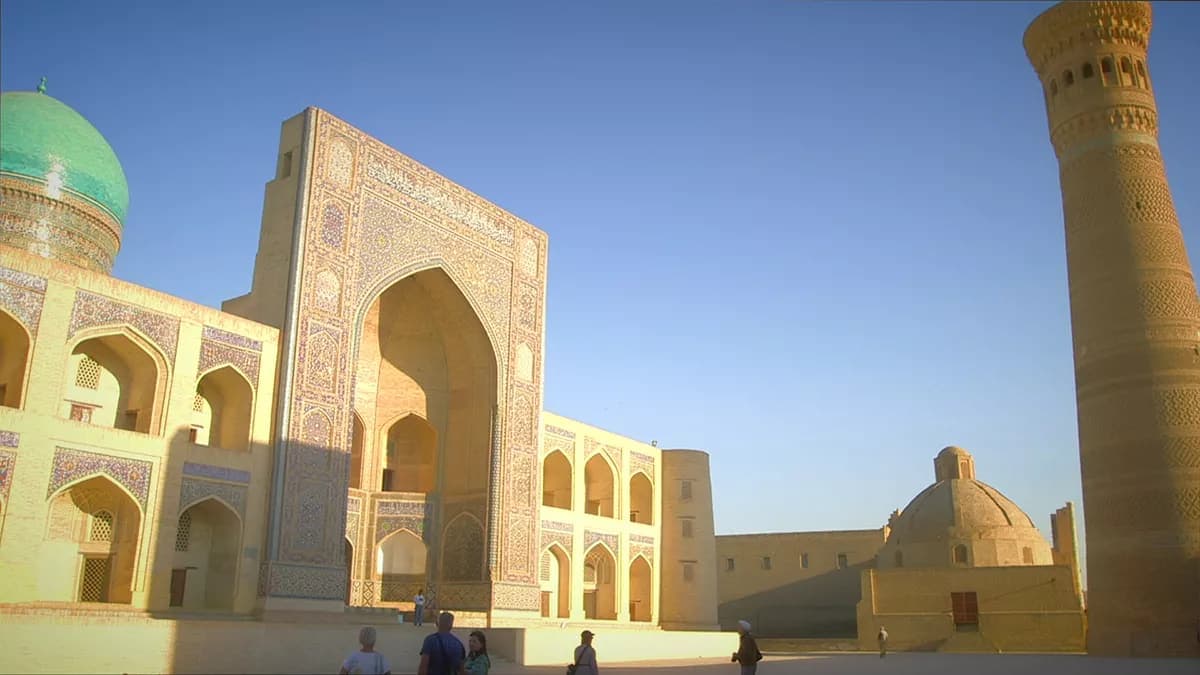
Monuments in this complex
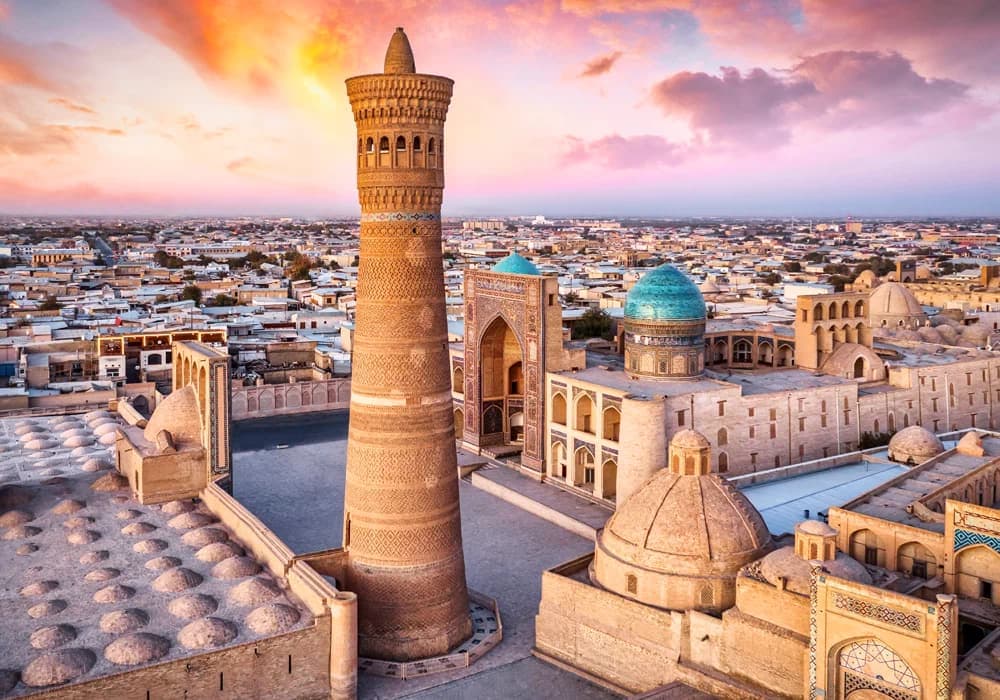
Kalyan Minaret
The brick tower, about 46 metres tall, that has watched over Bukhara since 1127 — spared, the story goes, even by Genghis Khan.
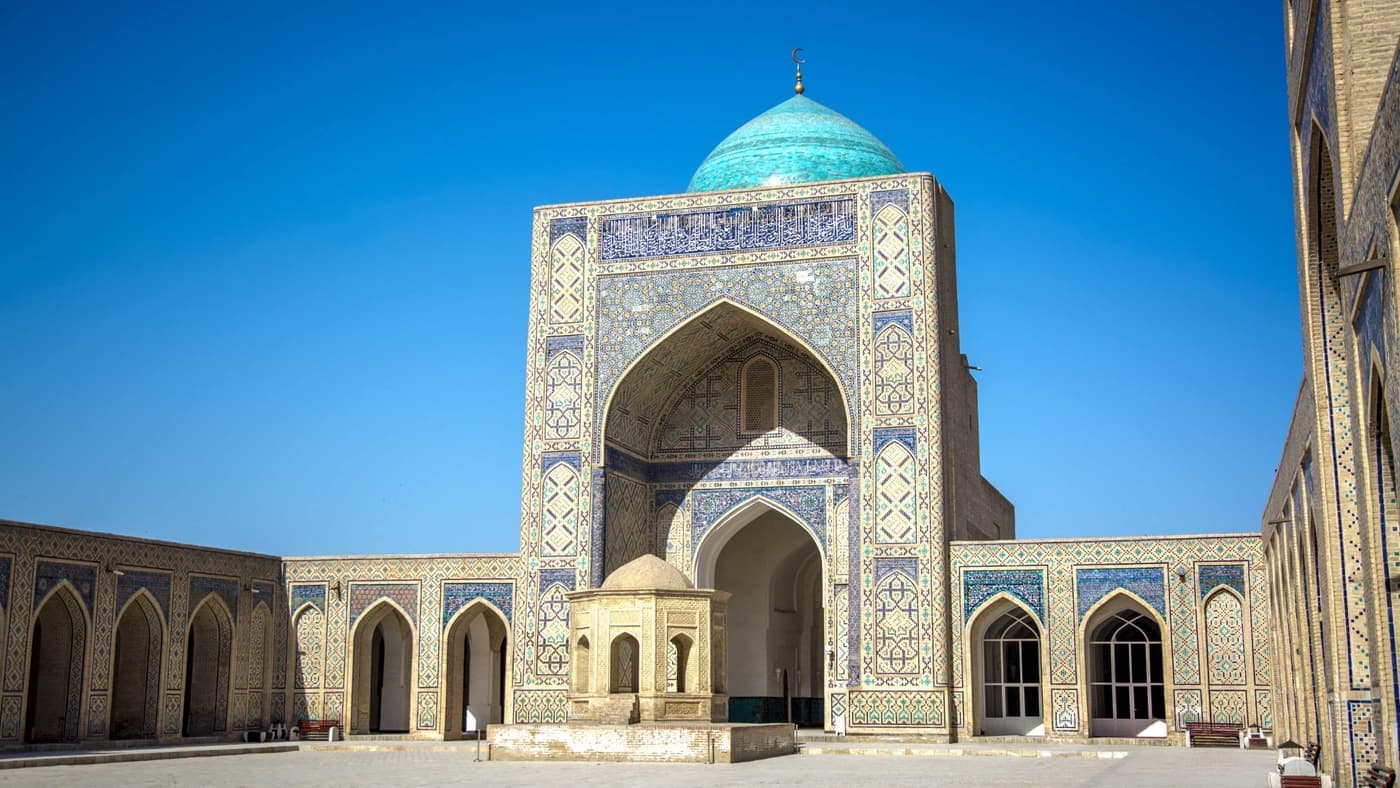
Kalyan Mosque
Bukhara's great Friday mosque, finished in 1514 around a courtyard wide enough for much of the city at prayer.
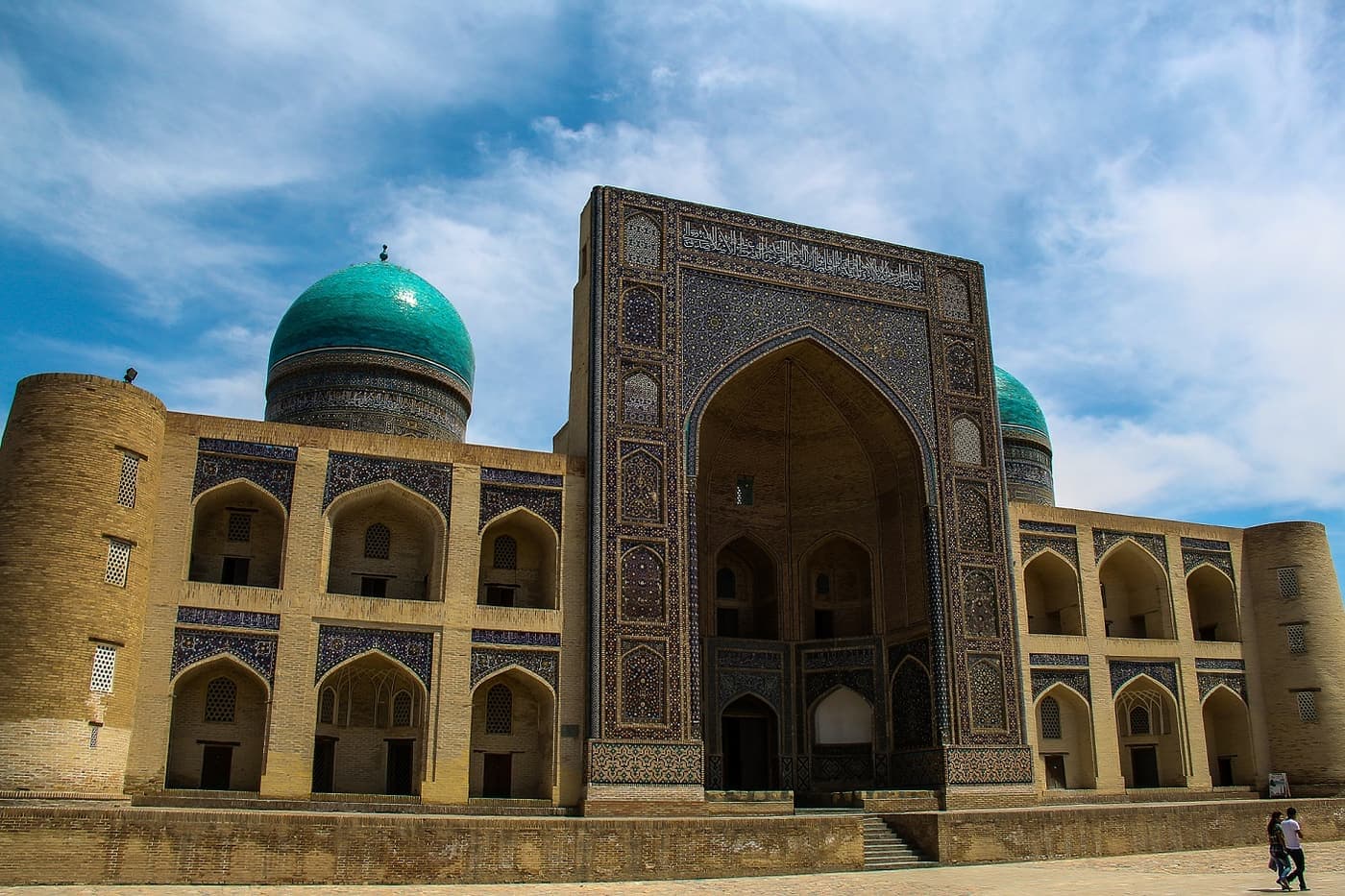
Mir-i-Arab Madrasa
Two blue domes facing the mosque across the square — and a madrasa that has taught students since the 1530s.