
Bolo-Hauz Complex
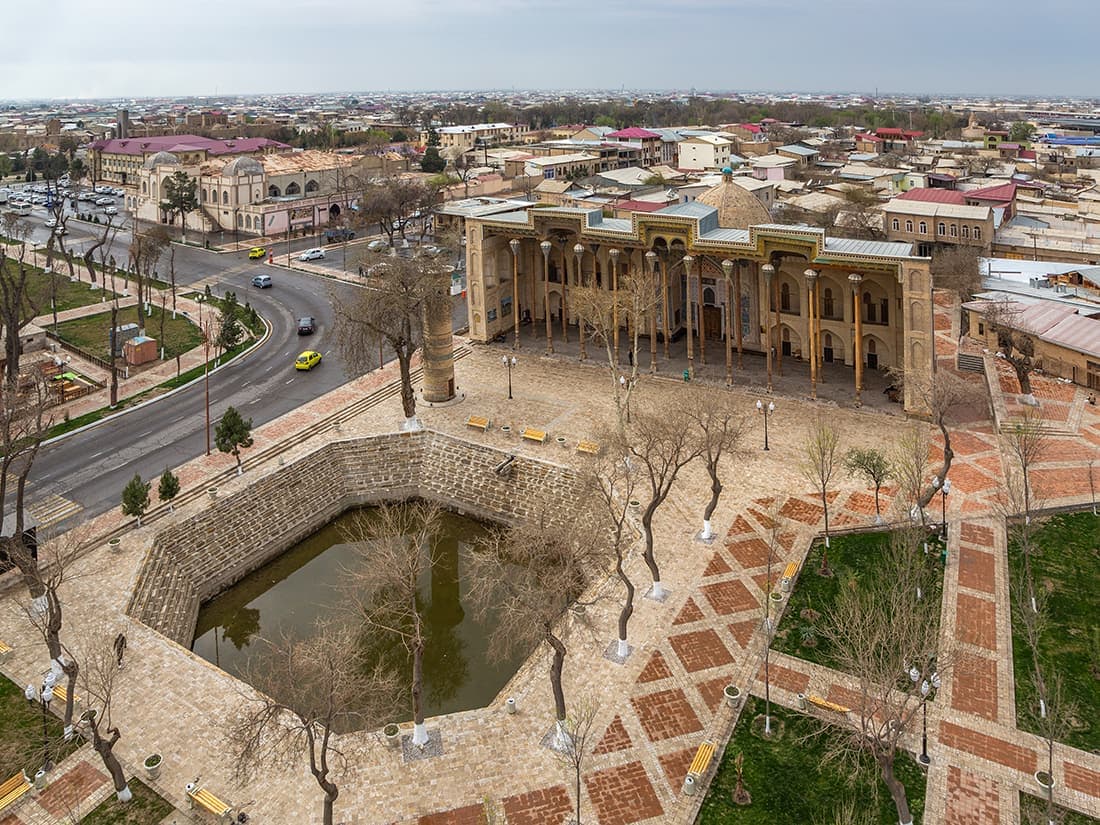
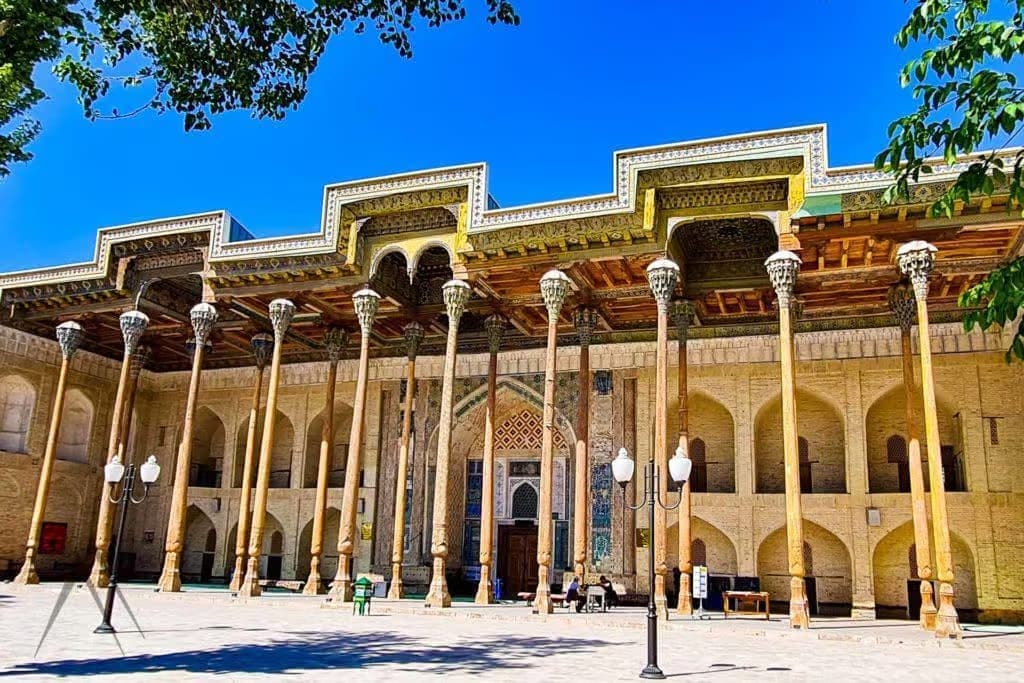
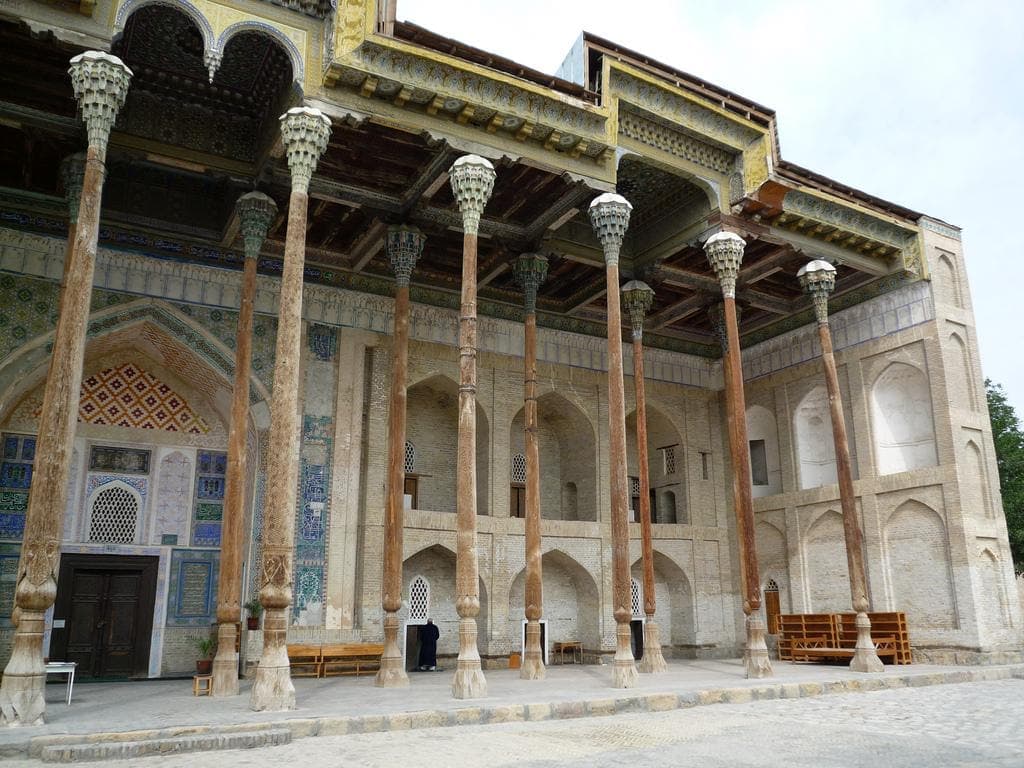
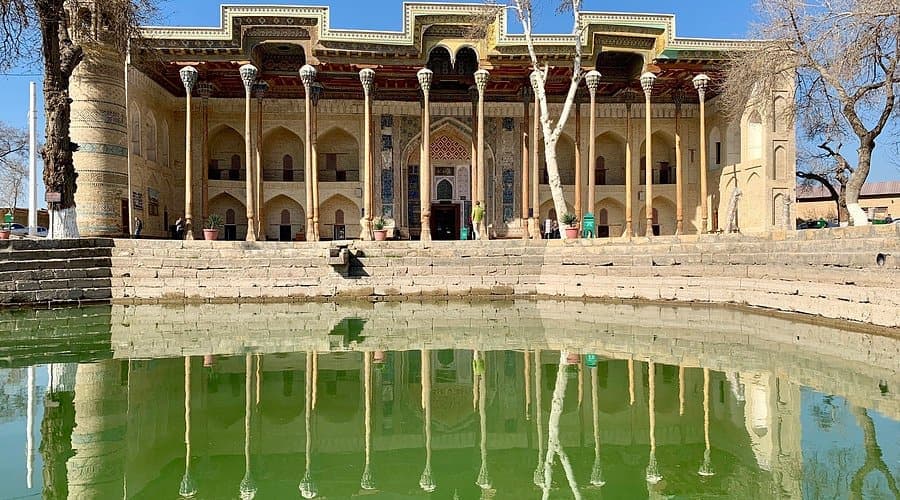
The emir's Friday mosque facing the Ark across a pond, the twenty carved columns of its ayvan doubled in the water.
About this complex
Bolo-Hauz means "above the pond" ("bolo" is "upper"), and the complex is best understood as three things that belong together: a mosque begun in 1712, the pond it was named after, and a slender minaret added in 1917 by the master builder Usto Shirin Muradov.
It stands directly opposite the Ark, across the open ground of the Registan. That position was deliberate. The fortress spoke for the ruler's power; Bolo-Hauz, where the emir came to Friday prayer, spoke for his piety — and its twenty tall wooden columns are as light and open as the Ark's walls are heavy.
Gallery
Monuments in this complex
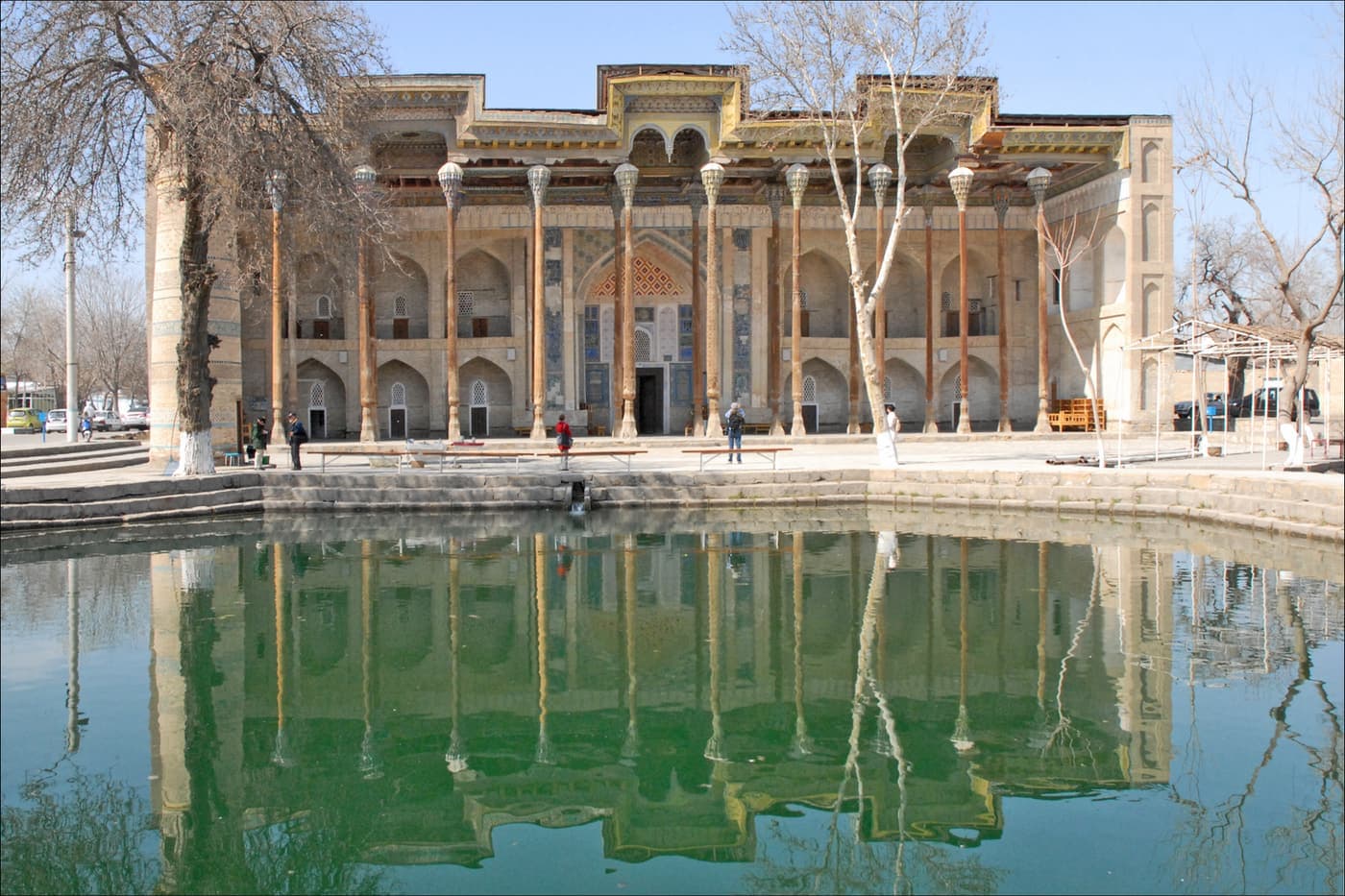
Bolo-Hauz Mosque
The emir's Friday mosque of 1712, fronted by a later ayvan whose twenty carved wooden columns are doubled in the pond.
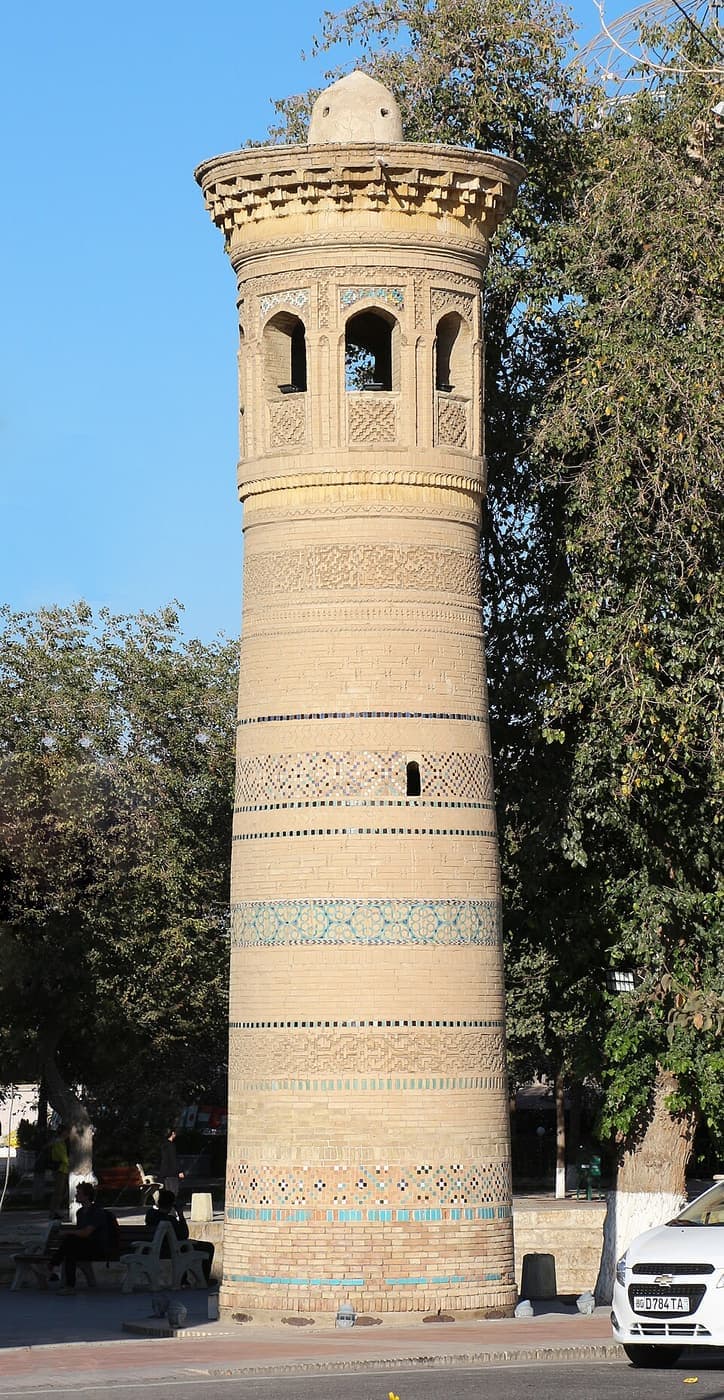
Bolo-Hauz Minaret
Built in 1917, two centuries after the mosque — a twentieth-century master answering the medieval Kalyan Minaret.
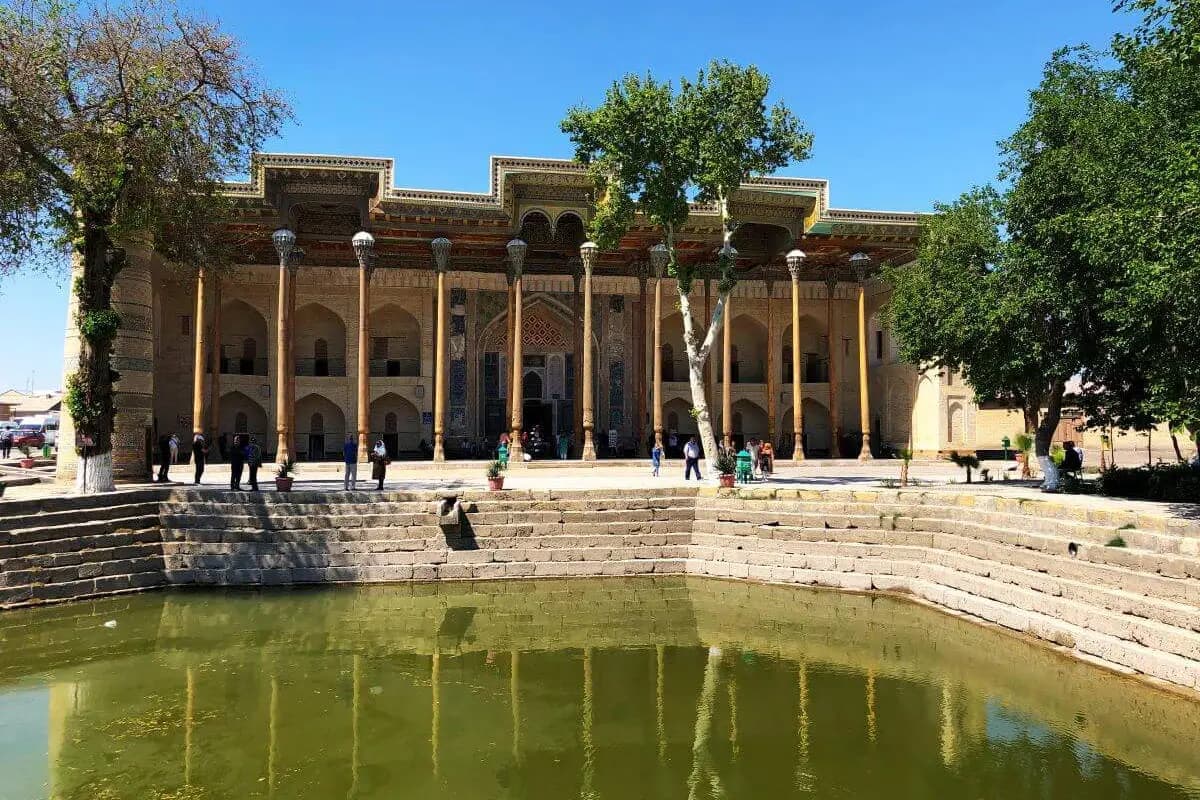
Bolo-Hauz Reservoir
The pond that gave the complex its name, and one of the last working pieces of Bukhara's old water network.