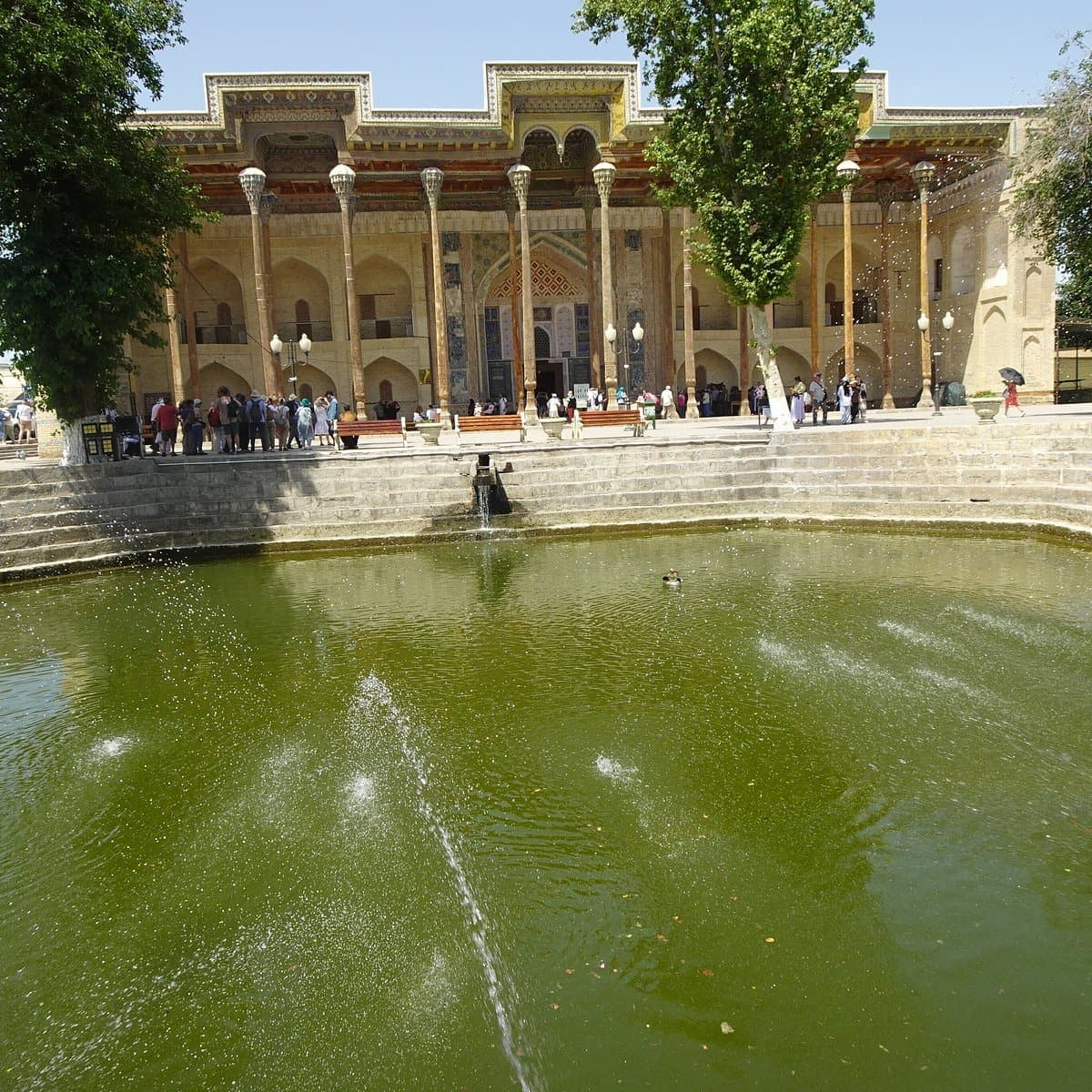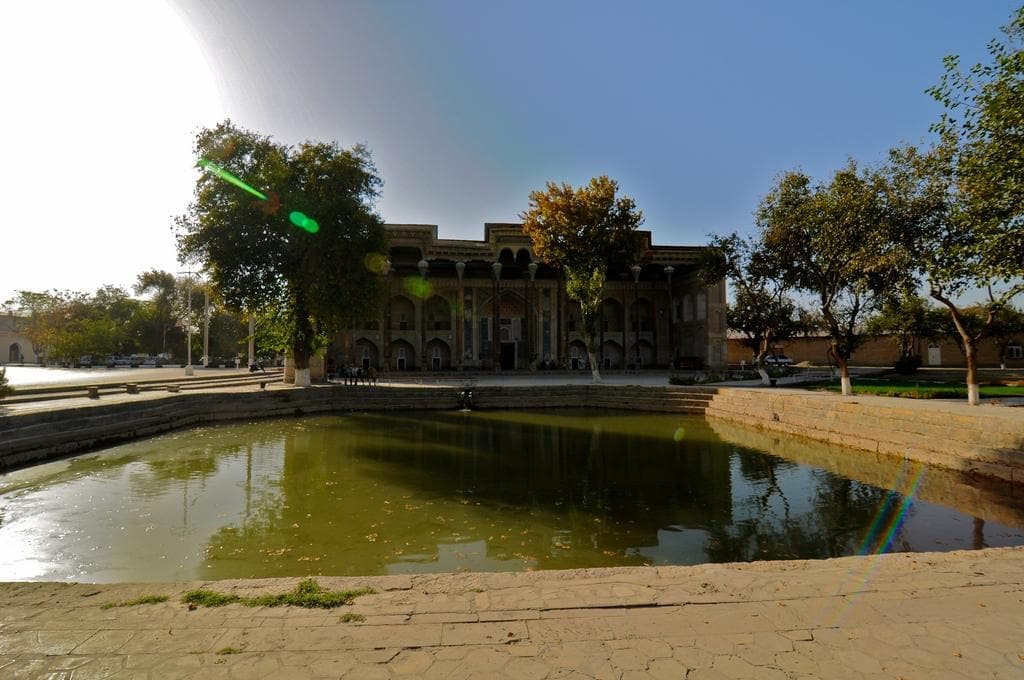
Bolo-Hauz Reservoir
The pond that gave the complex its name, and one of the last working pieces of Bukhara's old water network.
Listen while you walk
This guide plays in the language you selected.
Script
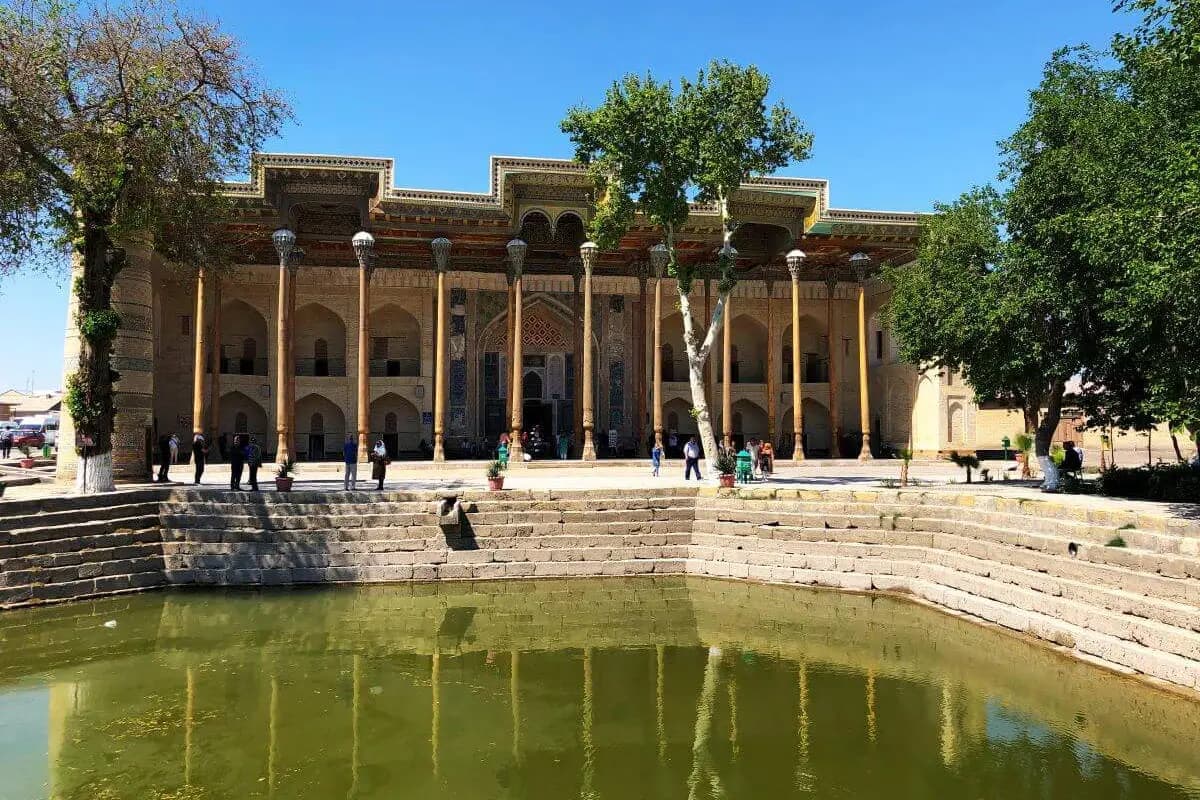
Take a look at the water in front of you. This is the Bolo-Hauz Reservoir, one of the most important surviving traditional water reservoirs in the historic city of Bukhara.
At first, it may seem like a simple pond. But this quiet body of water holds a story about something far more fundamental than architecture: how people lived, survived, and built a city in one of Central Asia's driest environments.
The reservoir stands in the Bolo-Hauz Complex, in the historic centre of Bukhara, directly opposite the ancient Ark Fortress. Its setting is important, but the reservoir itself deserves your attention. It is not simply an attractive feature of the landscape. It represents an essential part of the city's old water system.
For centuries, water was one of the most valuable resources in Bukhara.
Gallery