Bolo-Hauz Mosque
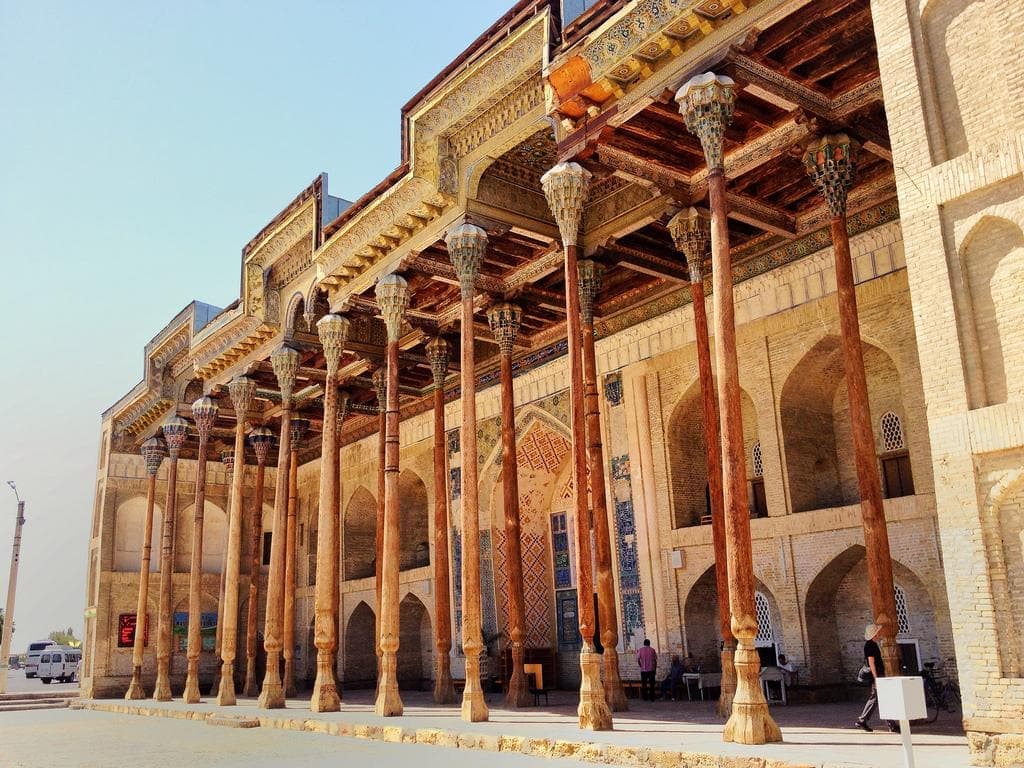
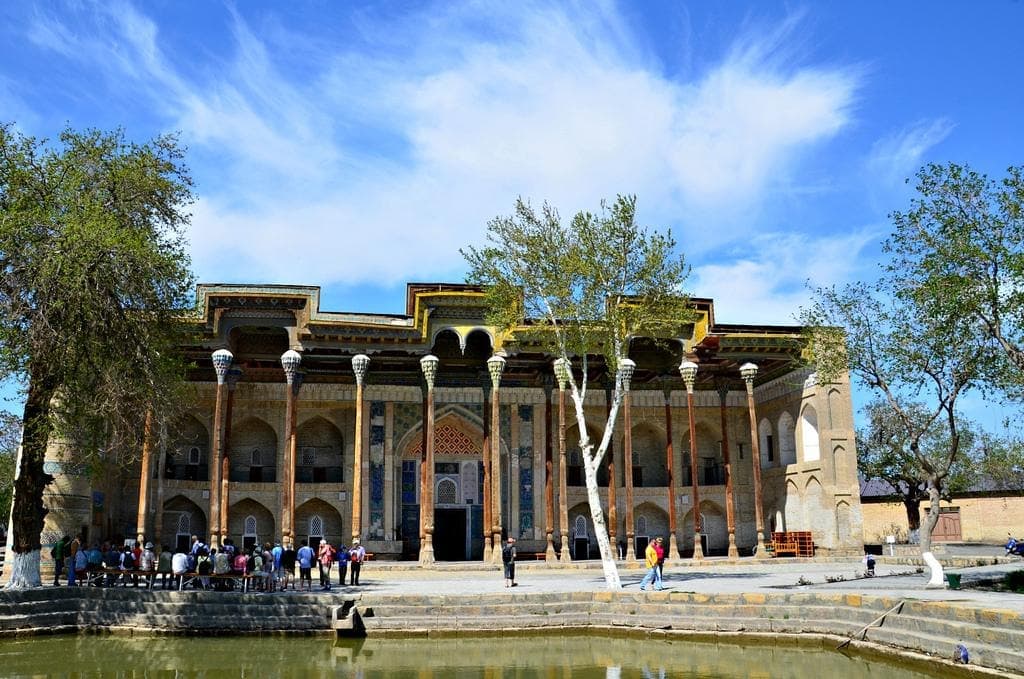
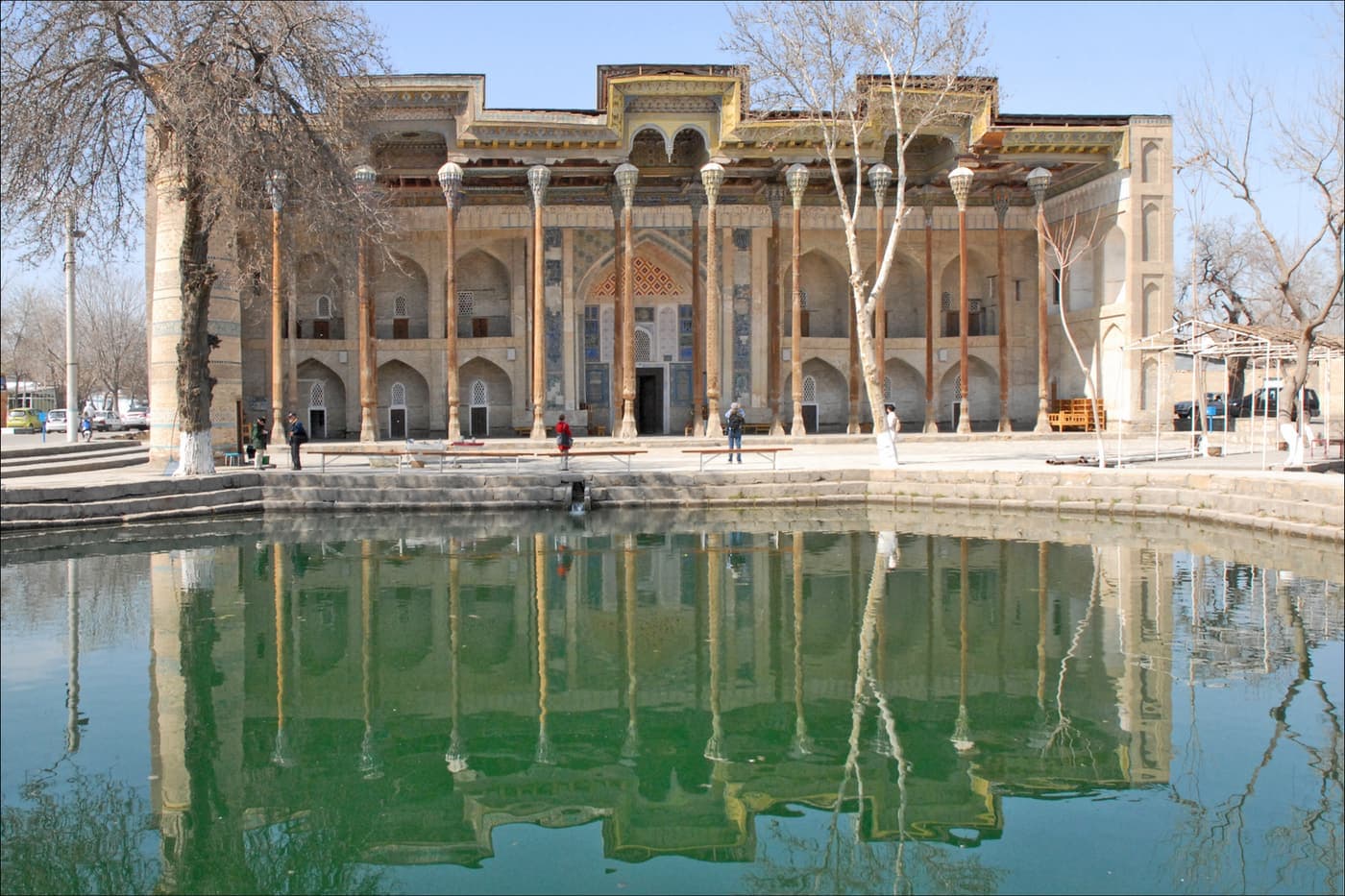
The emir's Friday mosque of 1712, fronted by a later ayvan whose twenty carved wooden columns are doubled in the pond.
Listen while you walk
This guide plays in the language you selected.
Script
Welcome to Bukhara, one of the oldest and best-preserved cities of Central Asia. And standing before you now, opposite the massive Ark Fortress, is one of the city's most elegant and recognisable monuments: the Bolo-Hauz Mosque.
At first glance, you may notice the extraordinary wooden columns stretching along the mosque's façade. But Bolo-Hauz is much more than a beautiful building. It is a place where several centuries of Bukhara's history come together — religion, architecture, water, craftsmanship, and the everyday life of the city.
The name "Bolo-Hauz" can be understood as "above the pond": "bolo" means "upper". The name refers to the hauz, the traditional water reservoir that stands in front of the mosque. For centuries, water was one of the most important elements of life in Bukhara. In a city surrounded by the dry landscapes of Central Asia, a pool was not simply decorative. It could provide water for the community and create a cooler, more pleasant environment around a mosque.
The mosque itself was built in 1712, during the period of the Ashtarkhanid dynasty. It was constructed in the Registan area, directly opposite the Ark — the great citadel that had been the political heart of Bukhara for centuries. This location was highly significant. The Ark represented the power of the ruler, while Bolo-Hauz became an important spiritual centre for the people of the city.
Gallery