Ayaz-Kala Fortress
Three mud-brick fortresses on and below a desert ridge; the oldest dates from about the 4th century BCE.
Listen while you walk
This guide plays in the language you selected.
Audio recording coming soon
The recording for this language has not been added yet. The full script is below — you can read it now and the audio will appear here as soon as it is uploaded.
Script
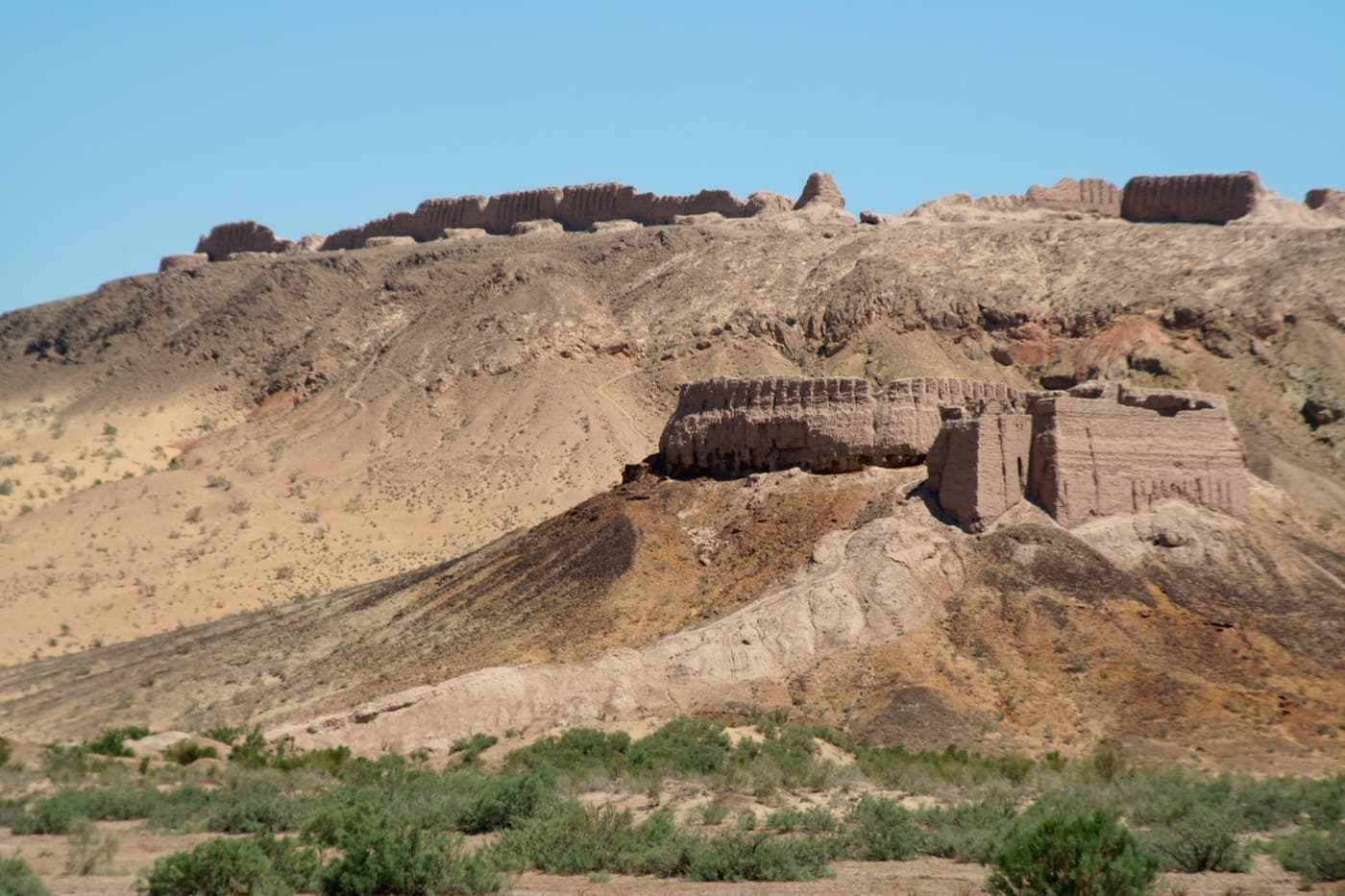
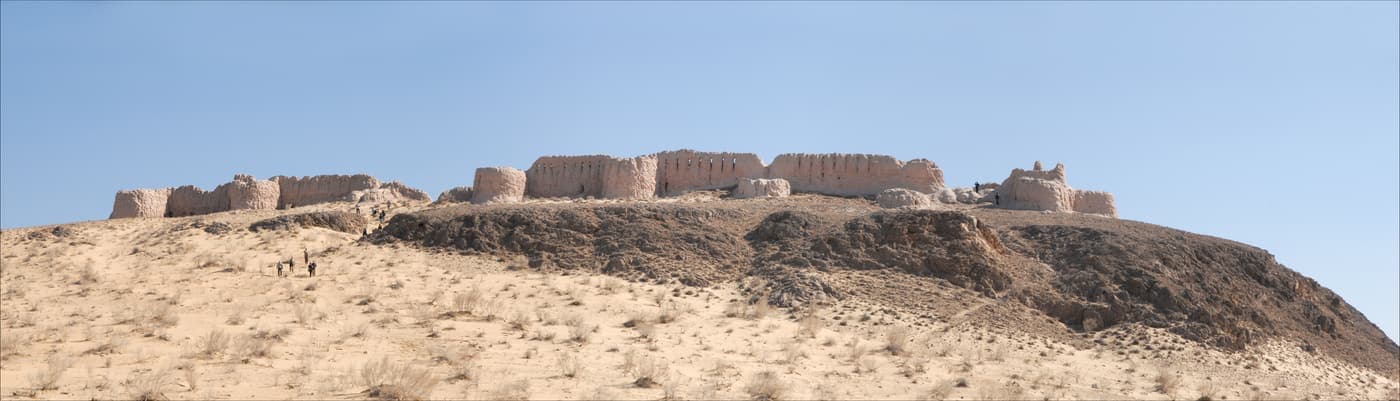
You have reached Ayaz-Kala, in the Ellikkala district of Karakalpakstan, on the edge of the Kyzylkum desert. There is not one fortress here but three, built in different ages on and around the same ridge. Start at the foot of the hill and look up: the long wall on the skyline is the oldest of them.
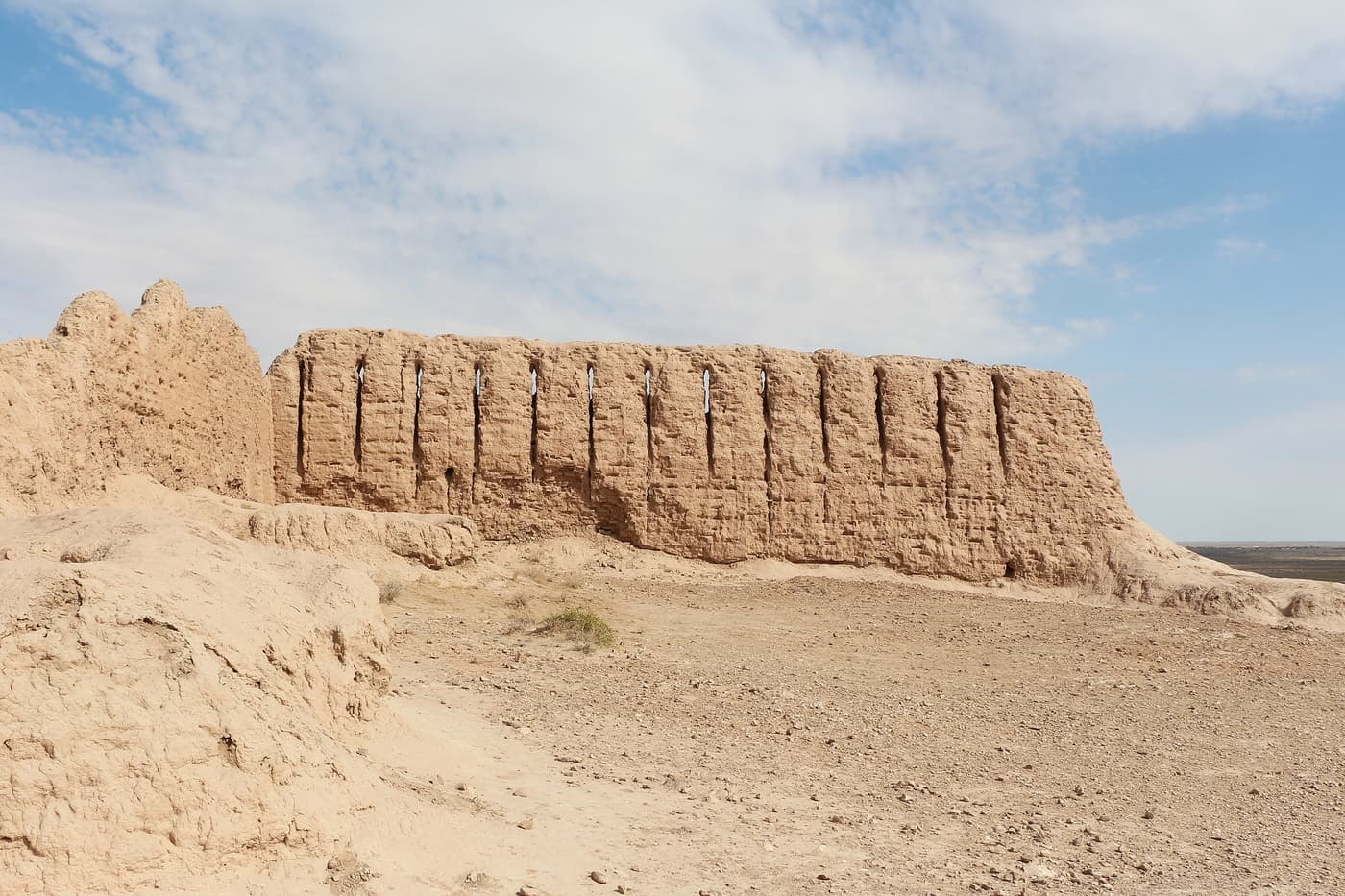
That upper fortress is known as Ayaz-Kala 1. It was built at the end of the 4th century BCE or the beginning of the 3rd, when this was the frontier of ancient Khorezm. It is a rectangle about 182 metres by 152 metres, set on a hill about 100 metres high, and its walls of mud brick still stand up to 10 metres tall. Its job was defence: from here a garrison could watch the desert for raids by nomads.
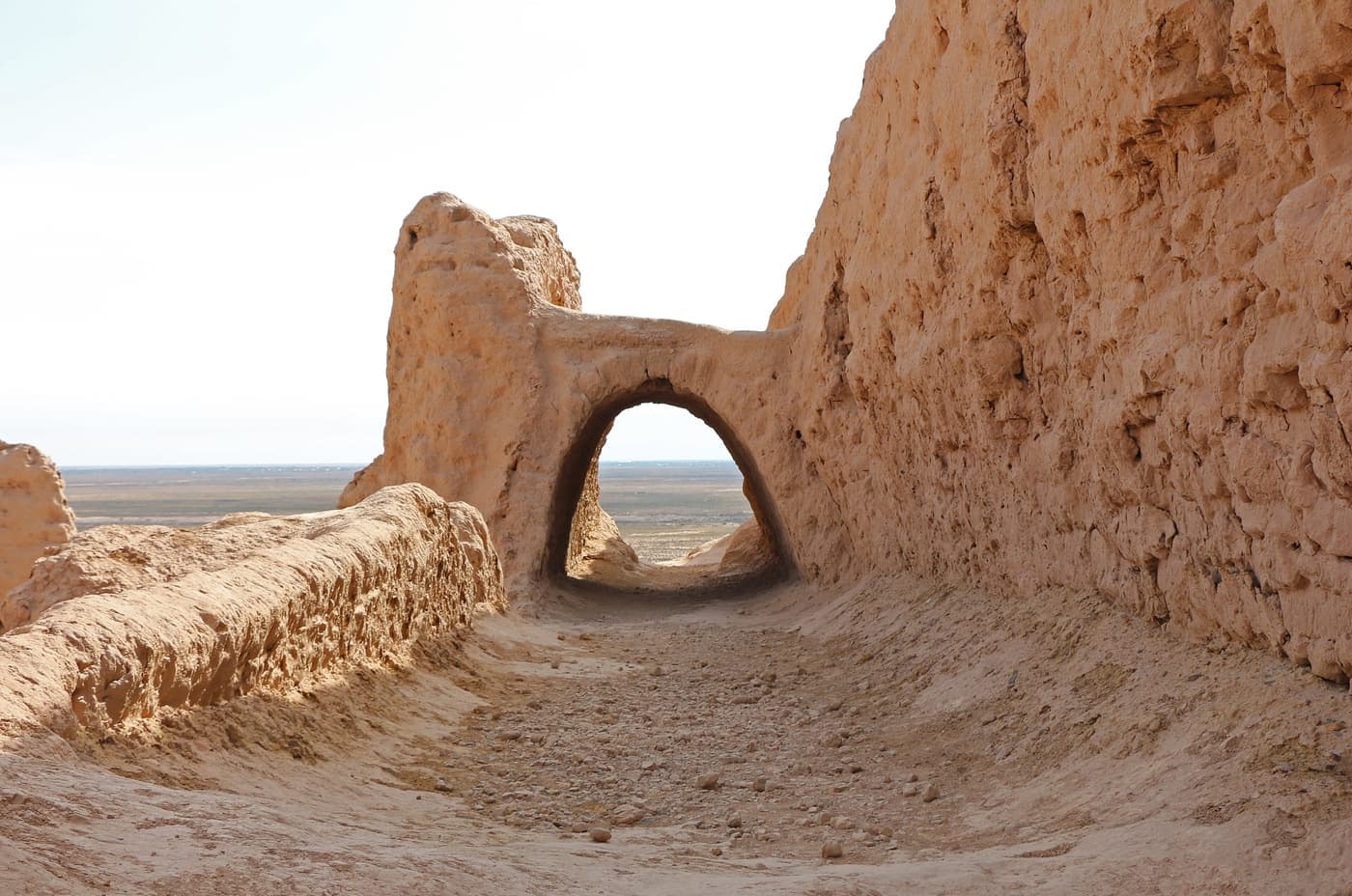
Climb the path to the top. As you walk along the wall, look for two things. The wall is double, with a corridor between the outer and the inner face where archers could move under cover. And it is pierced by rows of narrow arrow slits. Everything is made of earth, unbaked brick and rammed clay, which is why the dry climate has preserved it and why you should keep off the fragile edges.
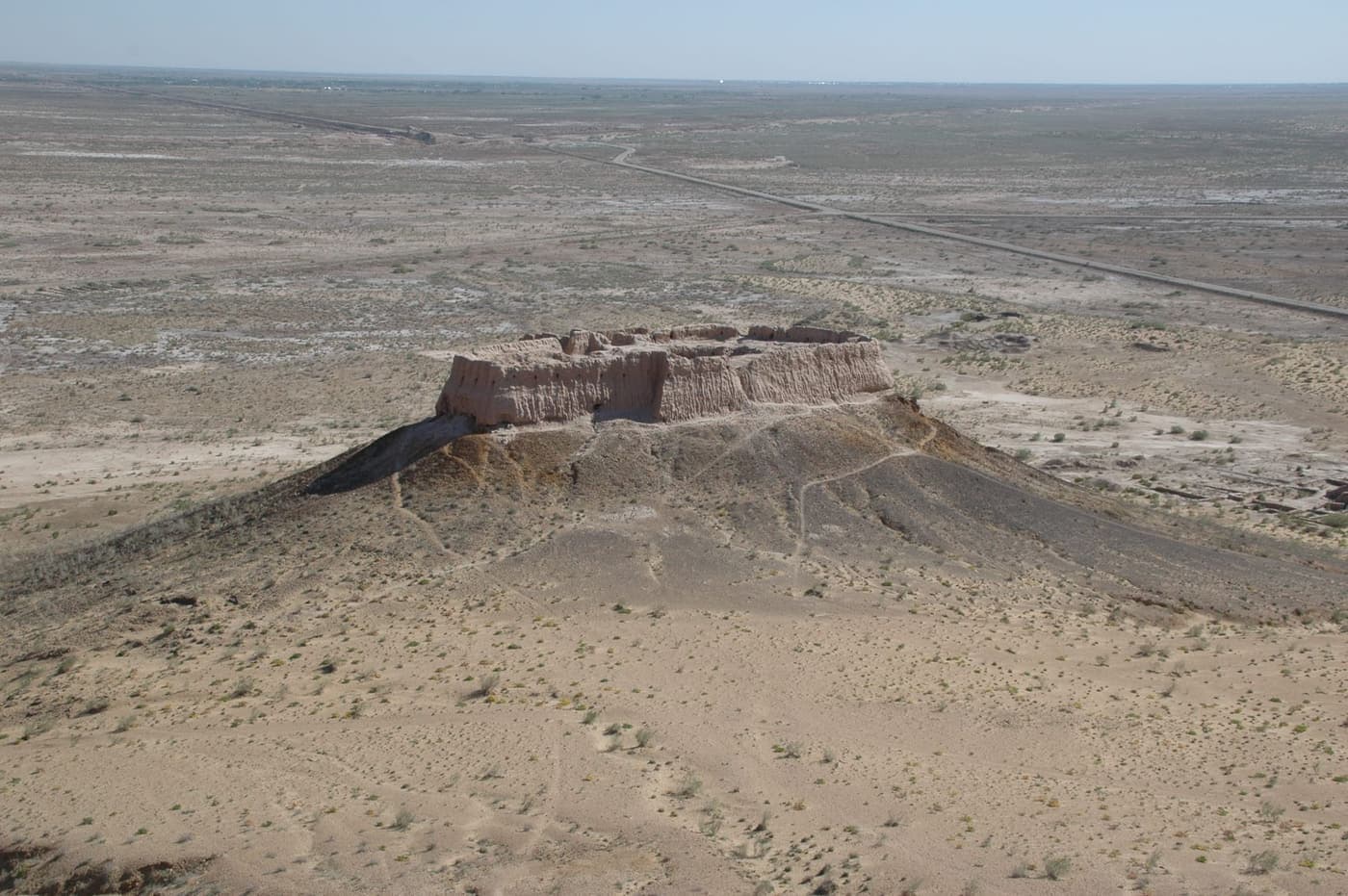
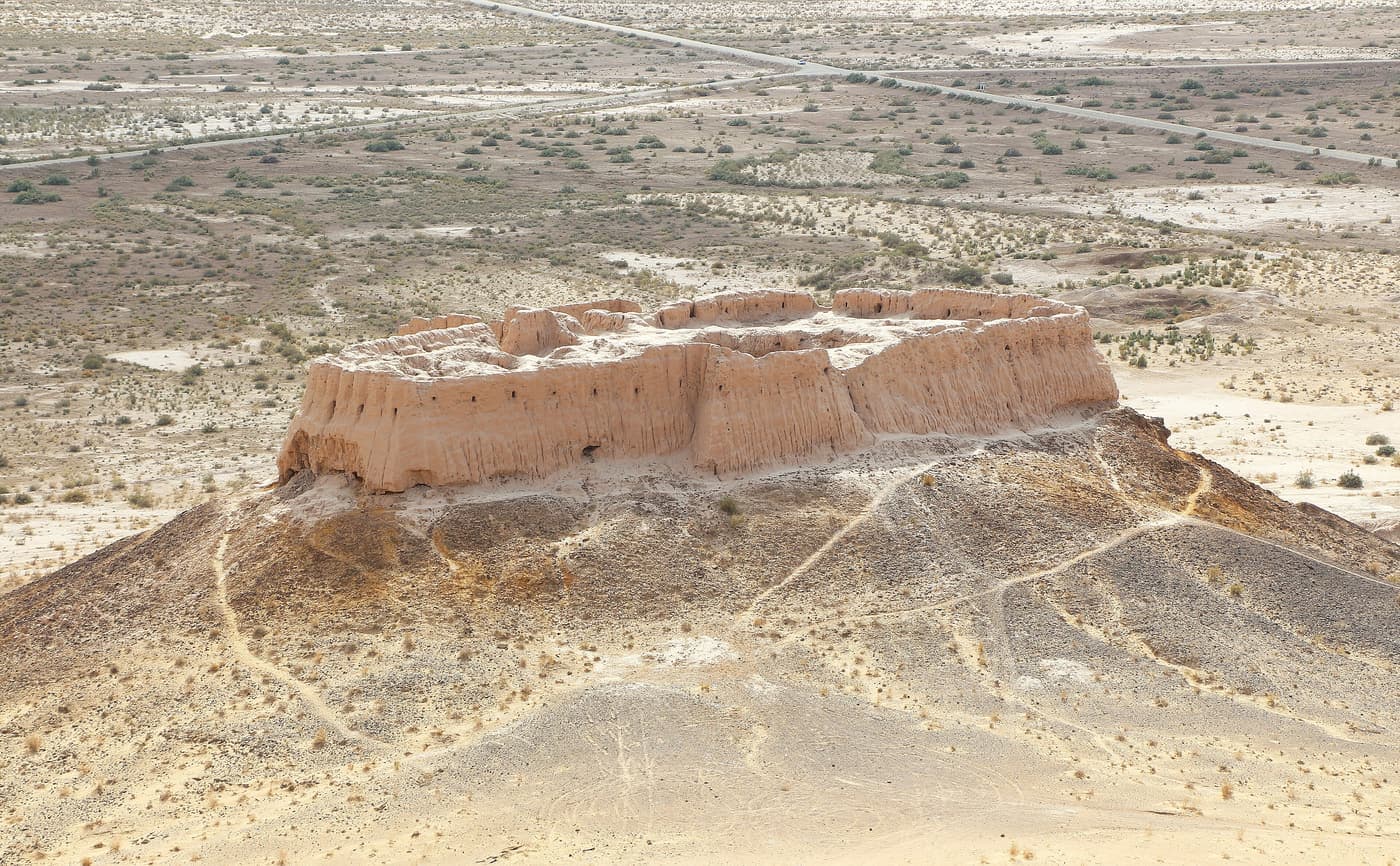
From the top, look down to the south-west. On a smaller, cone-shaped hill stands Ayaz-Kala 2, a compact fort of the 6th to 8th centuries CE, the last period before the Arab conquest. On the plain below is Ayaz-Kala 3, a large walled enclosure of the 1st to 2nd centuries CE, the Kushan period. In one view you have about a thousand years of fortification.
Gallery