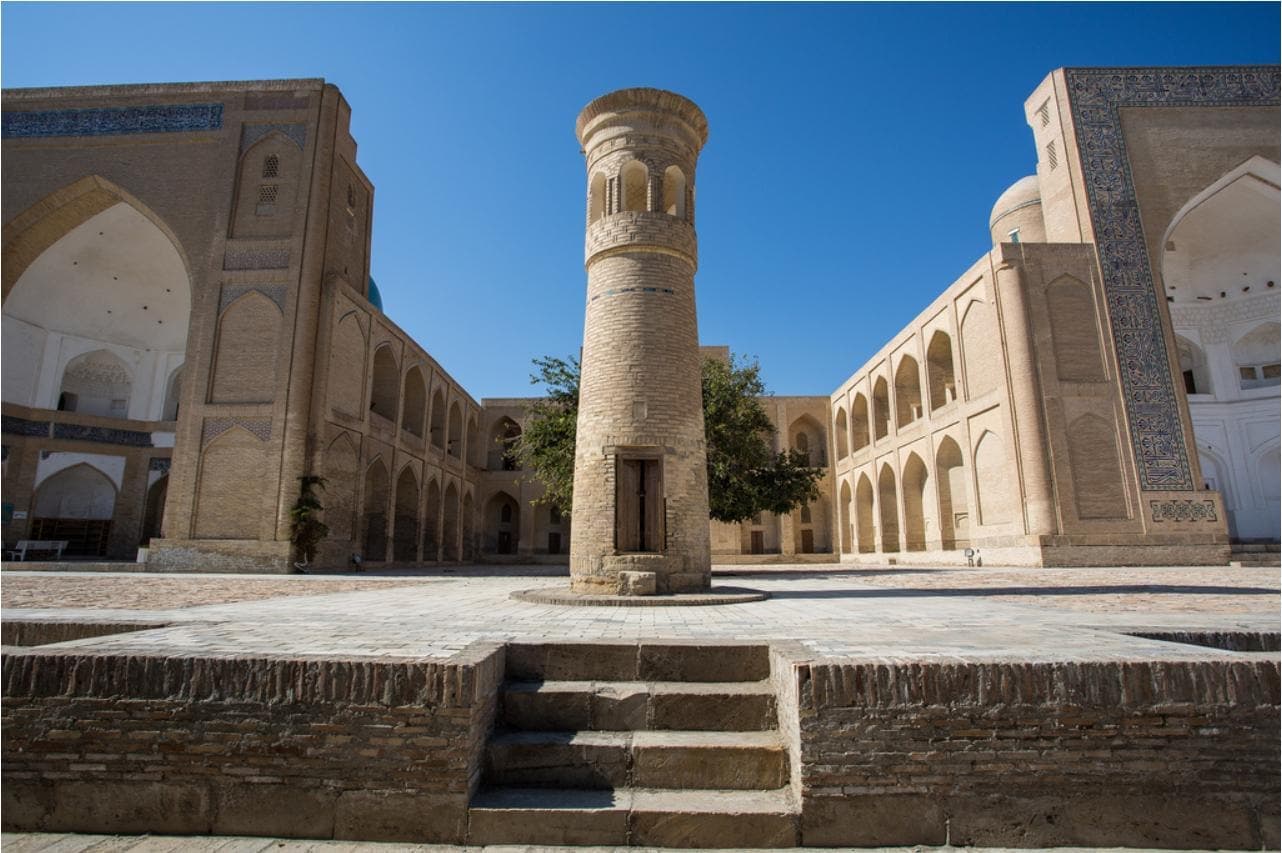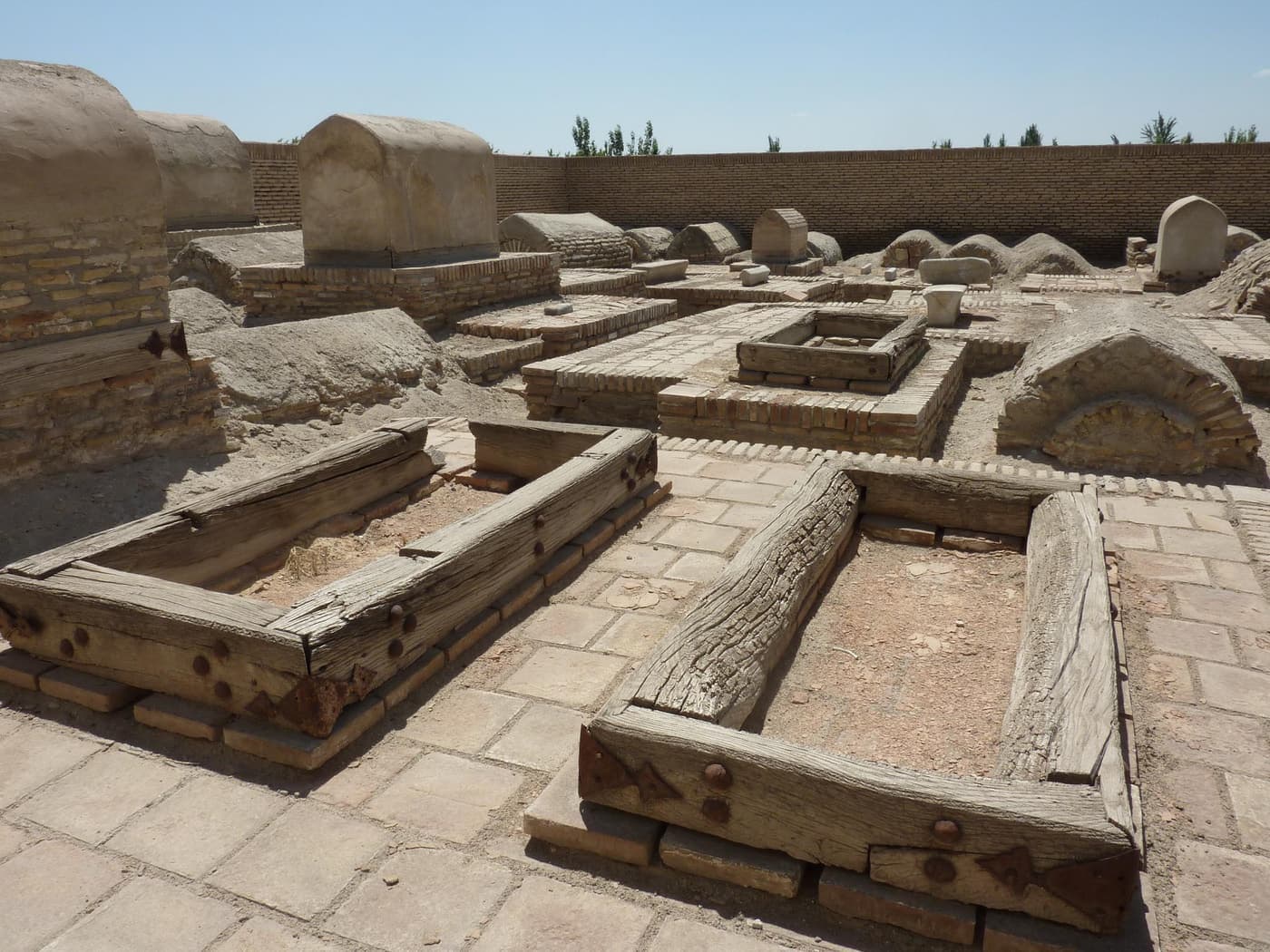
Abu-Bakr Fazl Mausoleum
A quiet courtyard for a tenth-century scholar whose greatest legacy was never a building at all.
Listen while you walk
This guide plays in the language you selected.
Script
You are now standing before the Mausoleum of Abu-Bakr Fazl within the Chor-Bakr Complex. Behind these quiet courtyards and ancient walls is the memory of one of the important scholars of Bukhara's intellectual history: Abu-Bakr Muhammad ibn Fazl ibn Ja'far al-Bukhari. To understand him, first remember what Chor-Bakr is. A few kilometres from Bukhara, in the historic area of Sumitan, this vast necropolis developed as a place of burial, pilgrimage and remembrance. The name “Chor-Bakr,” meaning “Four Bakrs,” is associated with four prominent figures: Abu-Bakr Sa'd, Abu-Bakr Fazl, Abu-Bakr Hamid and Abu-Bakr Tarkhan.
Abu-Bakr Fazl is remembered as a major jurist and hadith scholar of the Samanid period. According to the Imam al-Bukhari International Scientific Research Centre, Muhammad ibn Fazl, also known as Abu-Bakr Fazli Kamari, was born in 301 AH, around 912, in the village of Kamor near Bukhara. He studied Islamic law with leading scholars of his time and became an important representative of the Hanafi legal tradition in Bukhara.
One of the most fascinating things about his intellectual legacy is that some of it has survived only through references to works that are no longer available. Sources mention a book called “Al-Fawa'id fi al-Fiqh,” meaning roughly “Useful Benefits in Jurisprudence.” The work itself has not been reliably found today. This means that Abu-Bakr Fazl's reputation reaches us not simply through a surviving manuscript, but through the memory of later scholars and the transmission of legal learning.
Another work associated with him is the “Musnad of Fazl,” a collection connected with hadith scholarship. Later historical accounts say that this famous work was destroyed during the Mongol conquest of Bukhara under Genghis Khan. Whether we imagine the loss of a single manuscript or a larger collection, the story illustrates a painful reality of history: cities can lose libraries, but intellectual influence can survive even when the physical books disappear.
Gallery