Kalta Minor Minaret
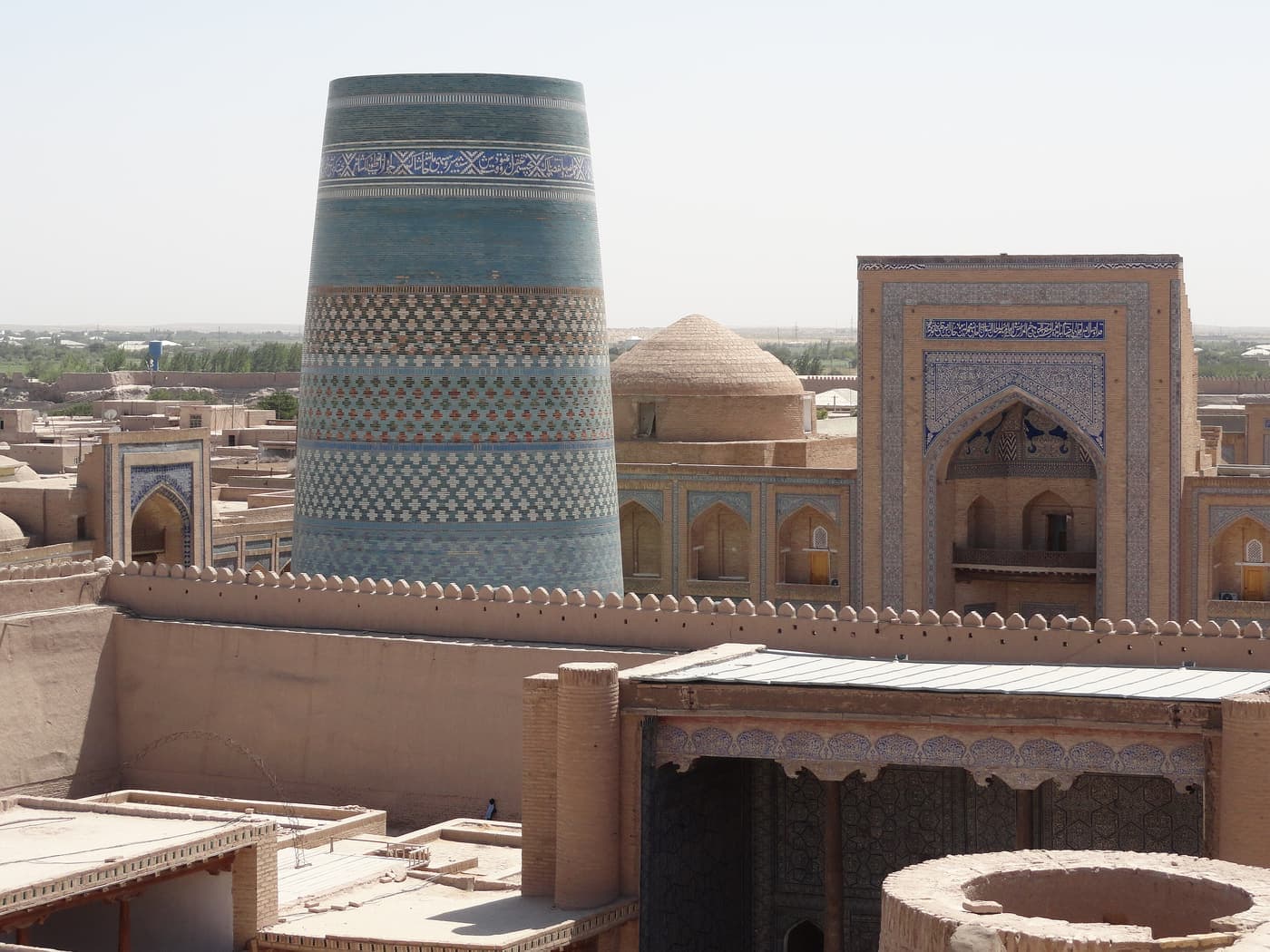
A 29-metre stump sheathed in turquoise tiles: the minaret a khan of Khiva began in 1852 and never finished.
Listen while you walk
This guide plays in the language you selected.
Audio recording coming soon
The recording for this language has not been added yet. The full script is below — you can read it now and the audio will appear here as soon as it is uploaded.
Script
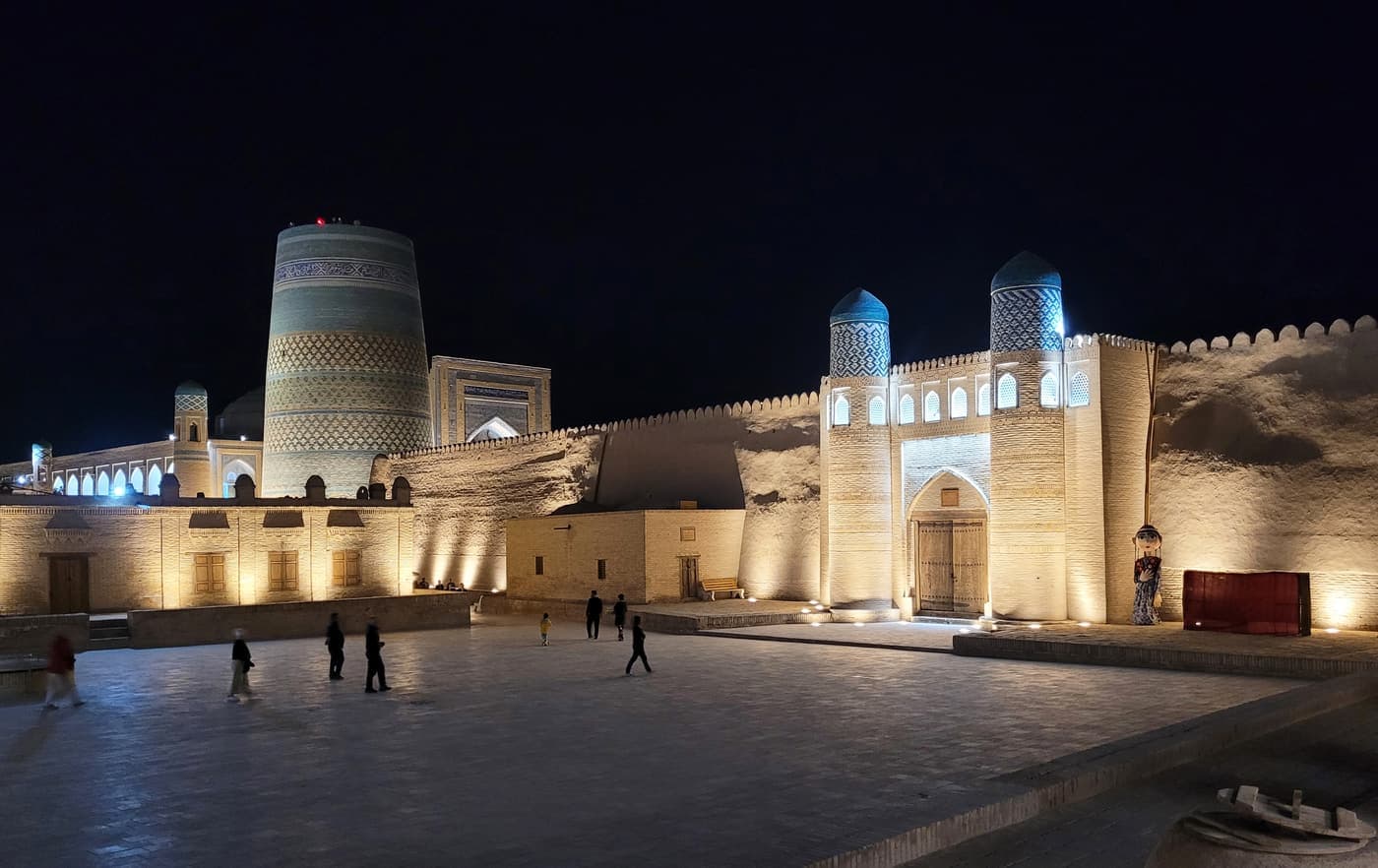
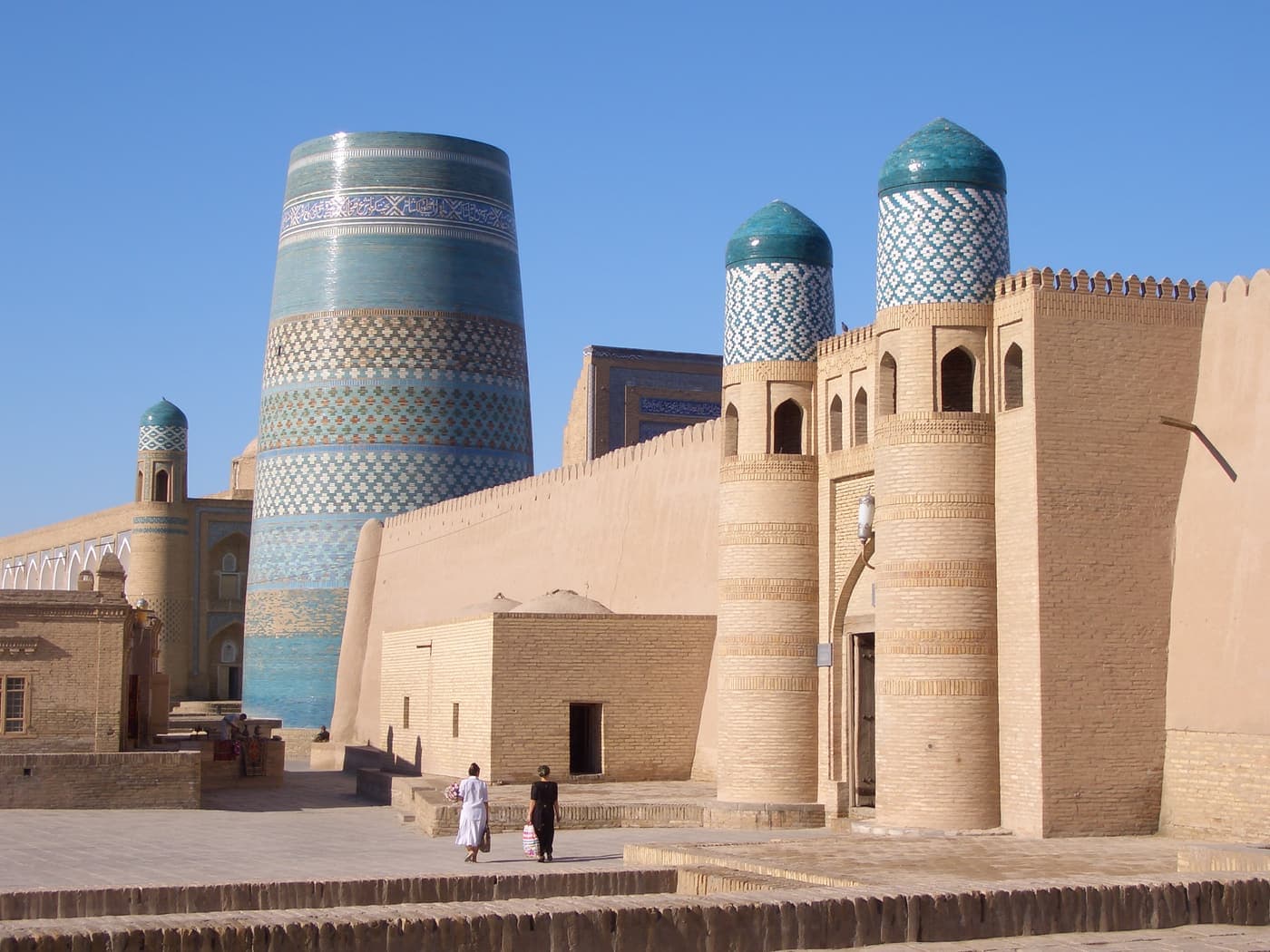
You are standing beside Kalta Minor, inside Itchan Kala, the walled inner town of Khiva. It is just inside the western gate, next to the Muhammad Amin Khan Madrasa. Walk a few steps away from it so that you can see it from base to rim.
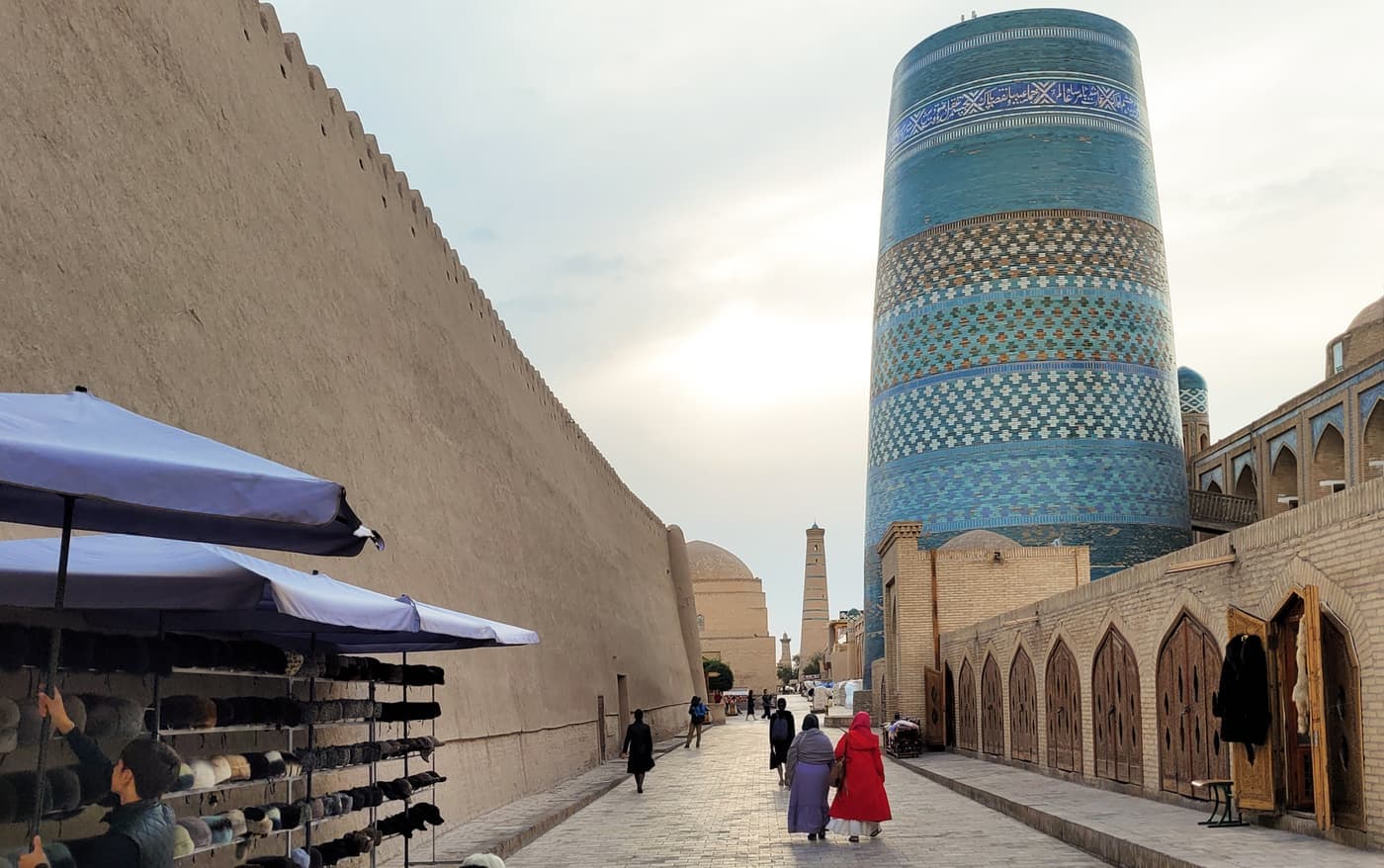
The name means "short minaret", and you can see why. It is a very wide tower that simply stops. The base is about 14.2 metres across, and the tower rises only 29 metres. It tapers so little because it was meant to carry on upwards for a long way.
It was begun in 1852 on the orders of Muhammad Amin Khan, the ruler of the Khanate of Khiva. The plan was for a minaret 70 to 80 metres high, taller than any other in the region. Work stopped in 1855. That year the khan was killed in battle, and the minaret was never taken up again.
Now look at the surface. Almost every other minaret in Central Asia shows bare brick with bands of ornament. This one is covered completely in glazed tile: wide bands of turquoise, green, white and dark blue, each with its own geometric pattern, and near the top a band of script. In sunlight it looks less like a building than like a piece of glazed pottery several storeys high.
Gallery