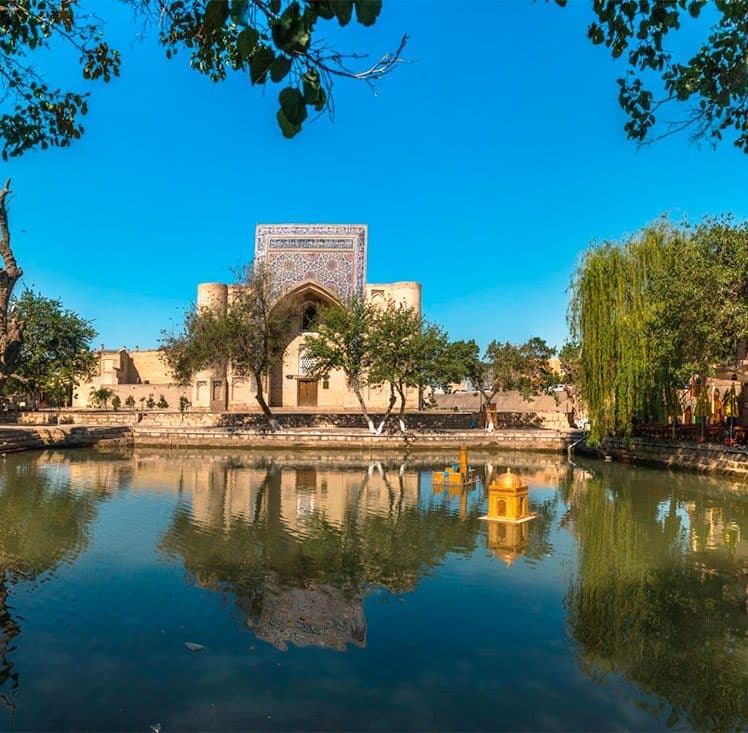
Lyabi-Hauz Reservoir
The pond the whole ensemble is named after — once part of Bukhara's water supply, now its living room.
Listen while you walk
This guide plays in the language you selected.
Audio recording coming soon
The recording for this language has not been added yet. The full script is below — you can read it now and the audio will appear here as soon as it is uploaded.
Script
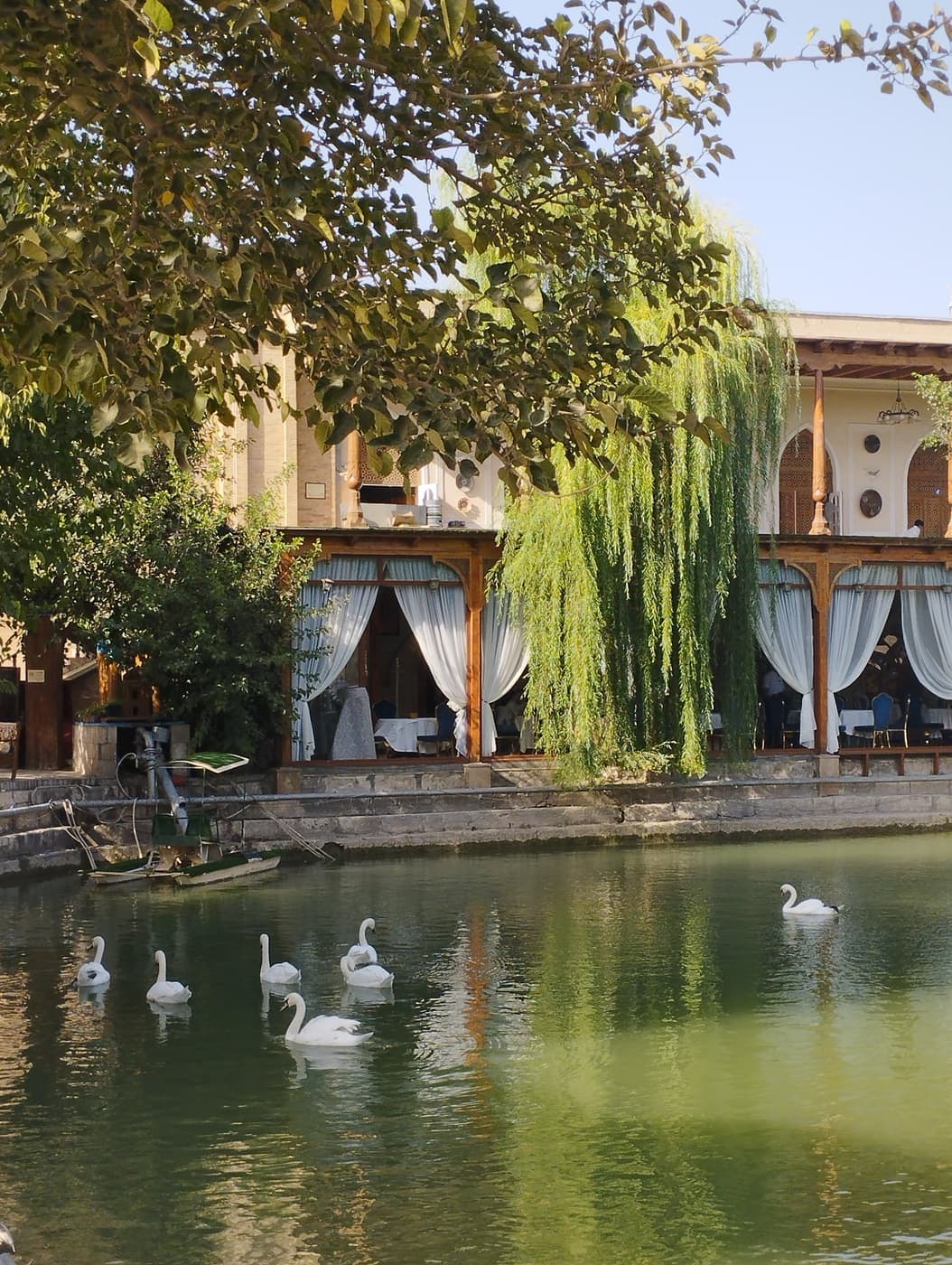
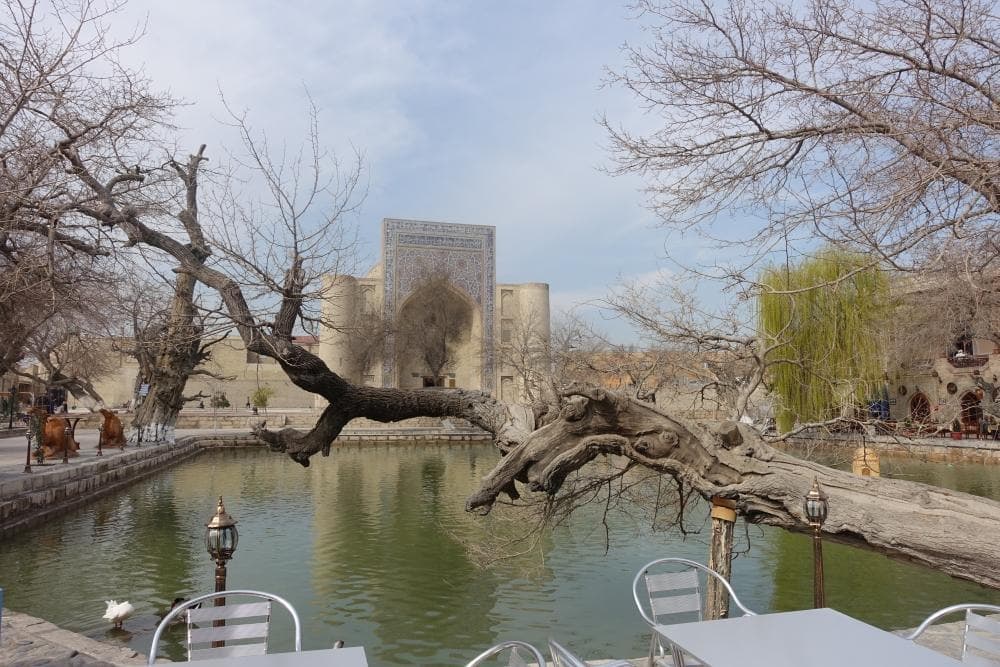
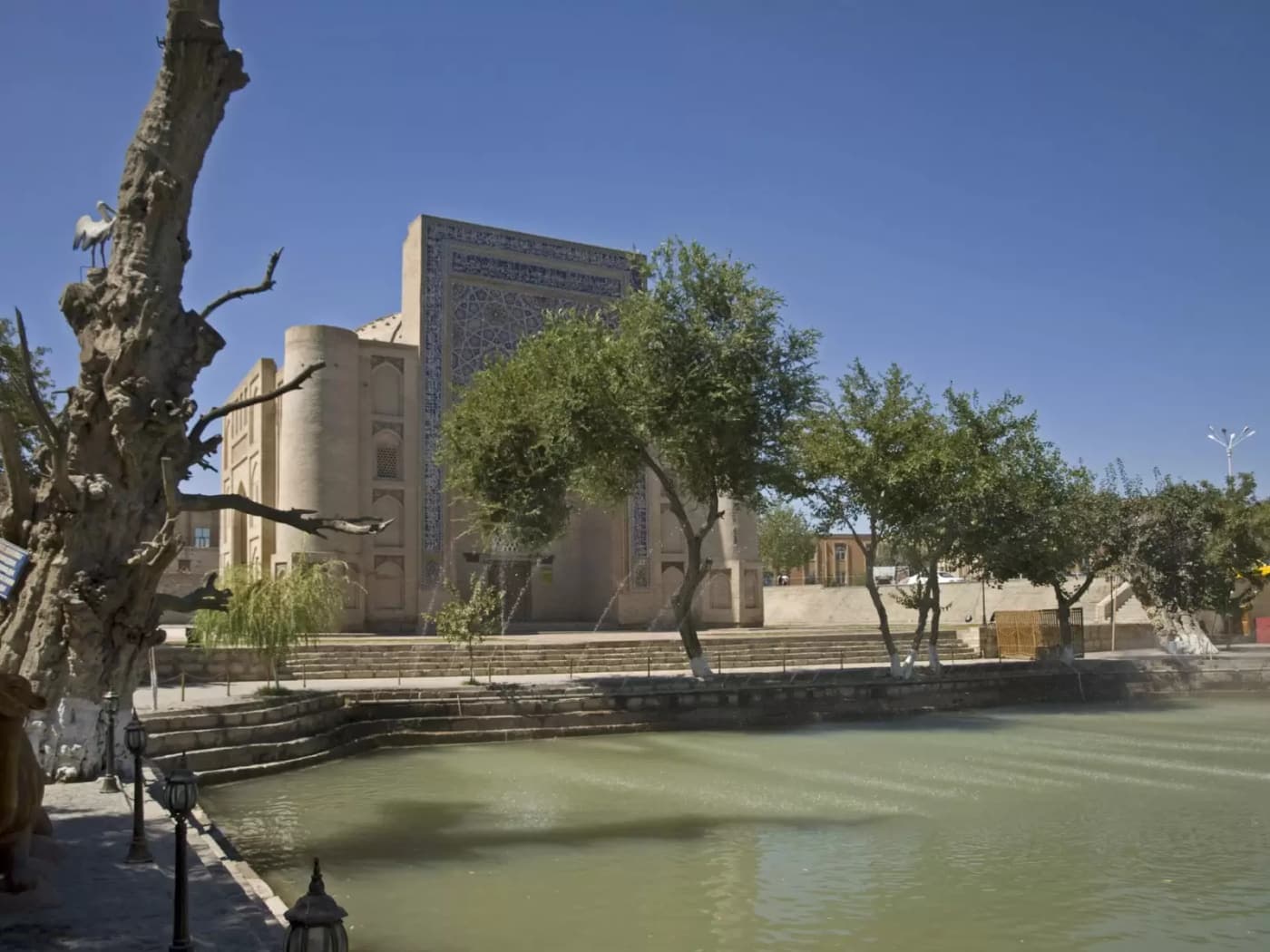
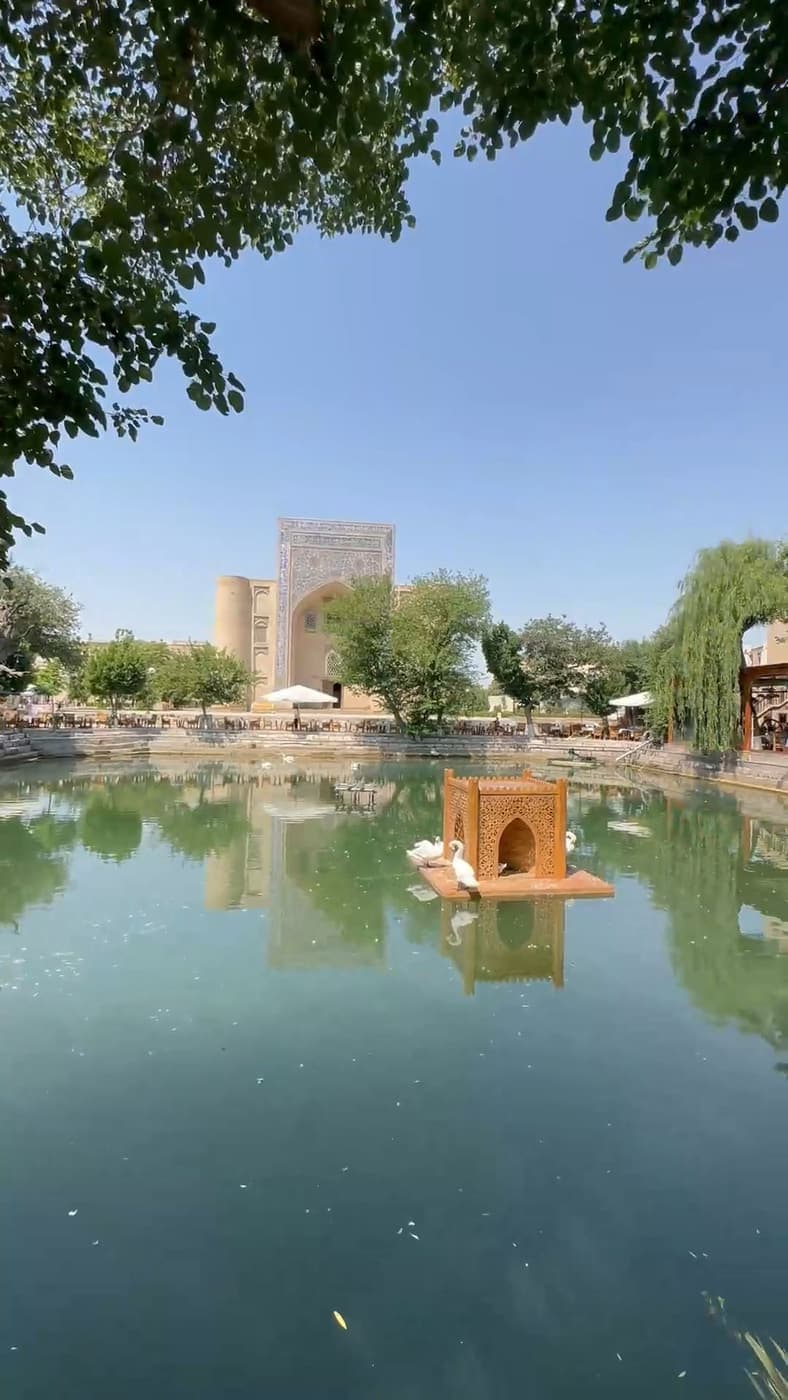
The central monument that gives the entire ensemble its name is the Lyabi-Hauz reservoir itself. “Lyabi-Hauz” means “by the pond.” Today this is one of Bukhara's best-known places for walking and meeting, but in the seventeenth century the reservoir was an important part of the city's water life.
The pond was created around the beginning of the seventeenth century on the initiative of Nadir Divan-Begi and was connected with the Shahrud canal. Bukhara has a hot, dry climate, so water was not simply a convenience; it was essential. Reservoirs stored water, but they also became places where people rested, met, traded, and escaped the heat.
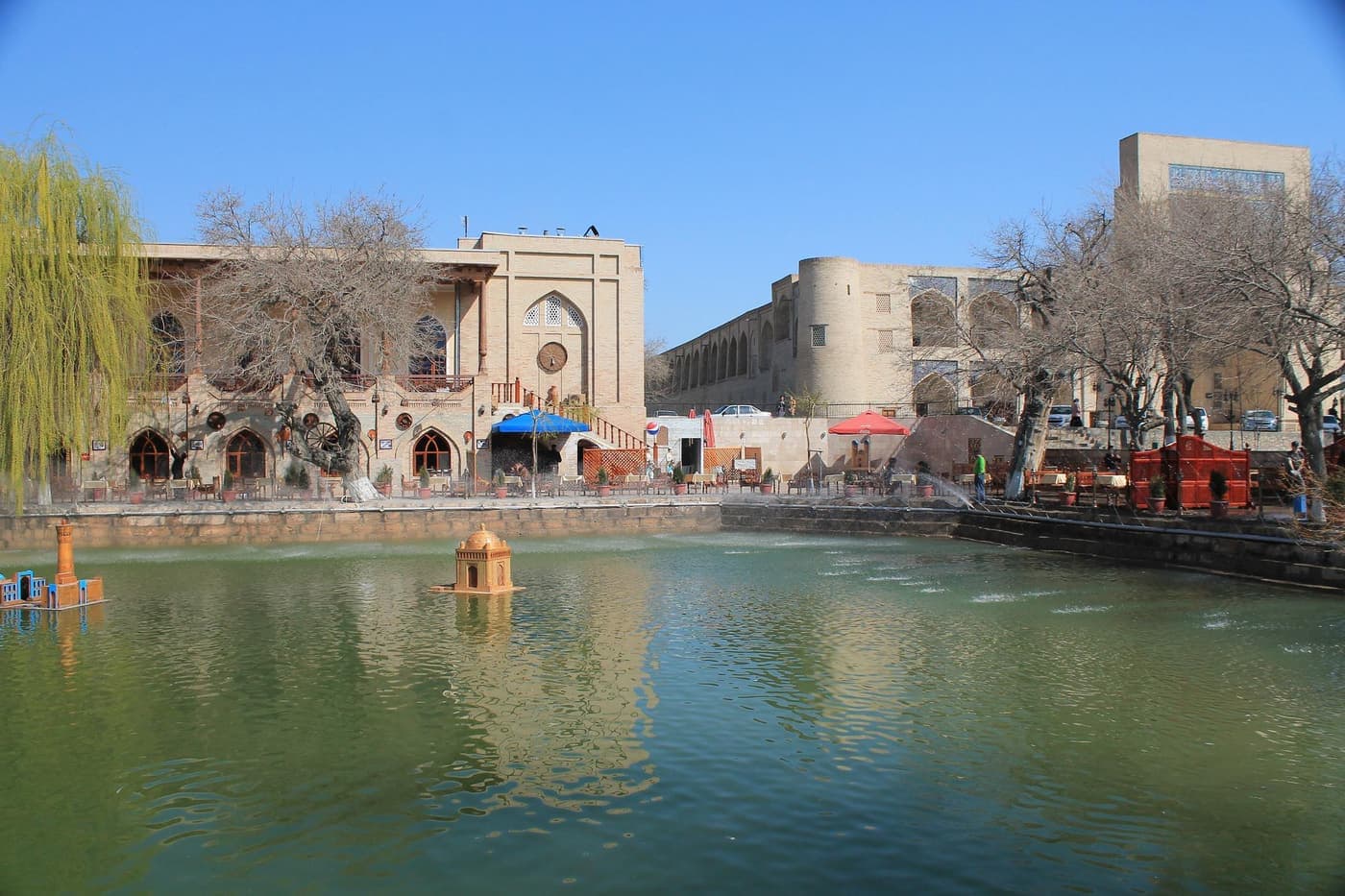
Look around: Kukeldash Madrasa stands to the north, the Nadir Divan-Begi Khanqah to the west, and the Nadir Divan-Begi Madrasa to the east. Together these buildings make the reservoir the heart of the ensemble.
Bukhara once had many such ponds. They stood near mosques, madrasas, markets, and neighbourhoods. But open reservoirs could also create sanitation problems. During the 1920s and 1930s, many were drained or filled. Lyabi-Hauz survived as the centre of a historic architectural ensemble.
Gallery