
Lyabi-Hauz Ensemble
A seventeenth-century pond ringed by a madrasa, a khanqah and mulberry trees — still the city's favourite meeting place.
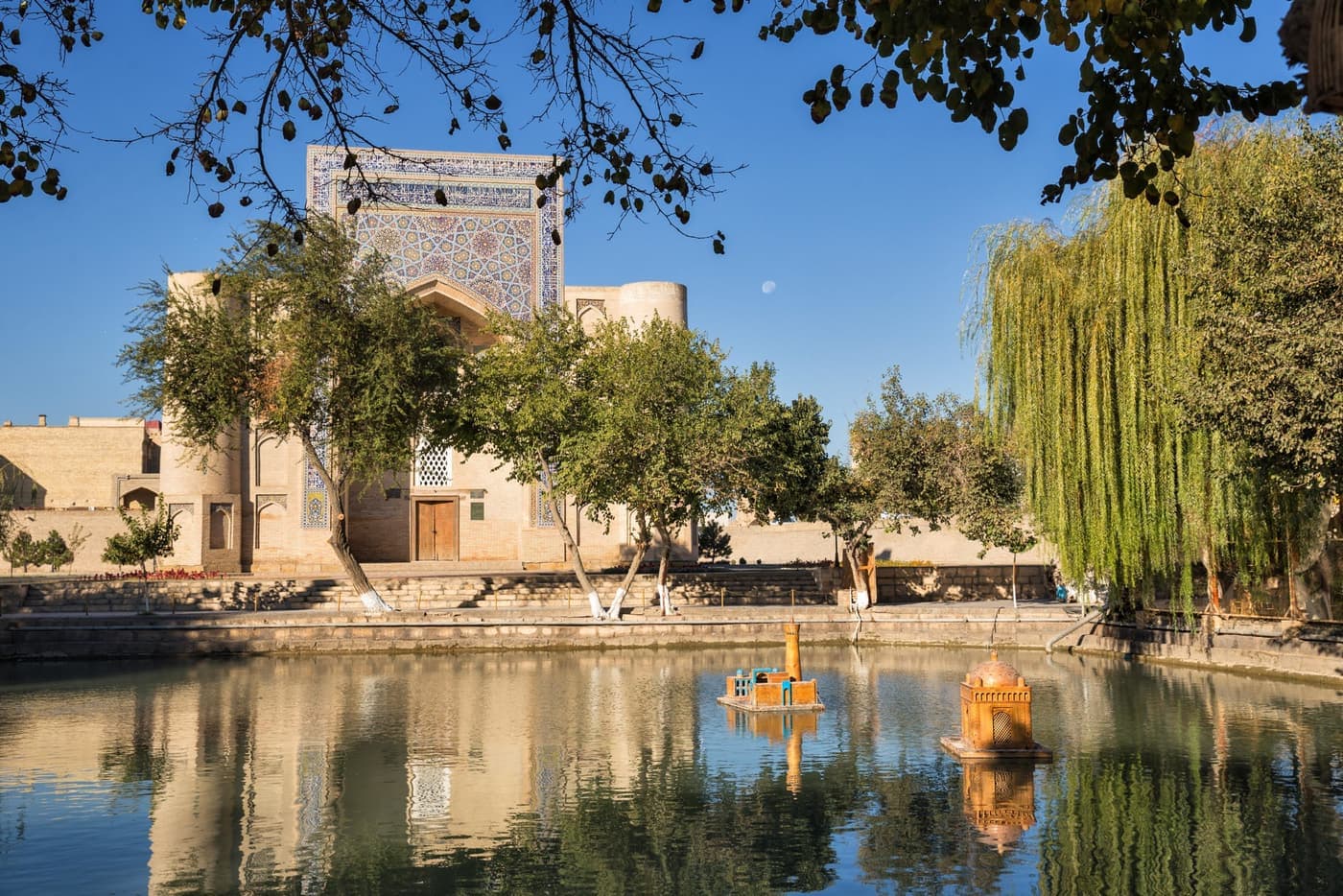
About this complex
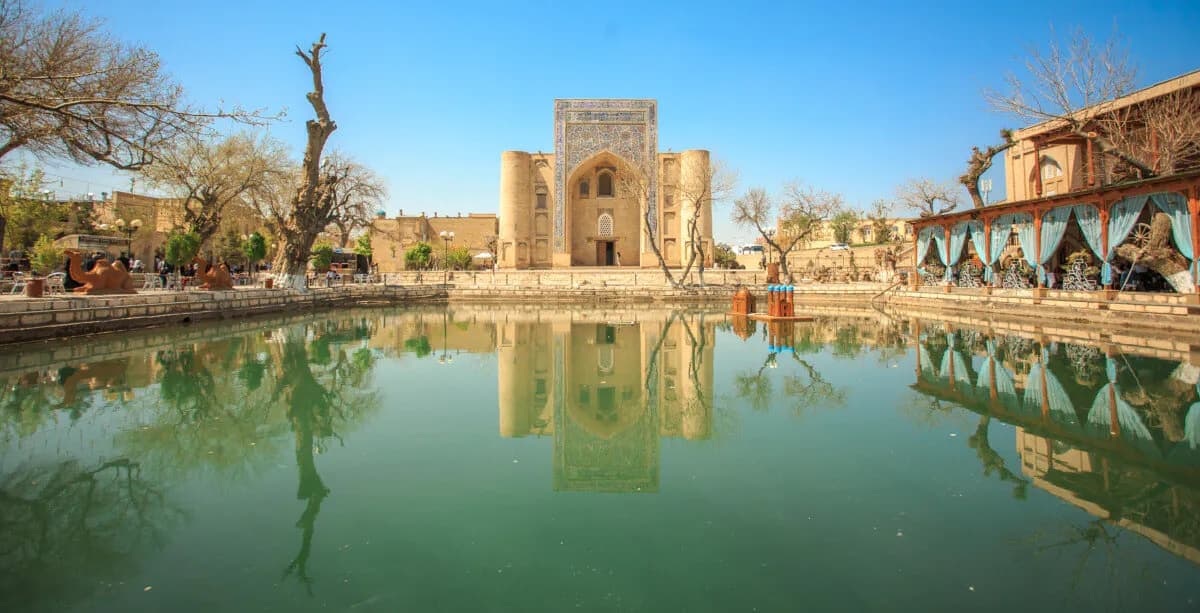
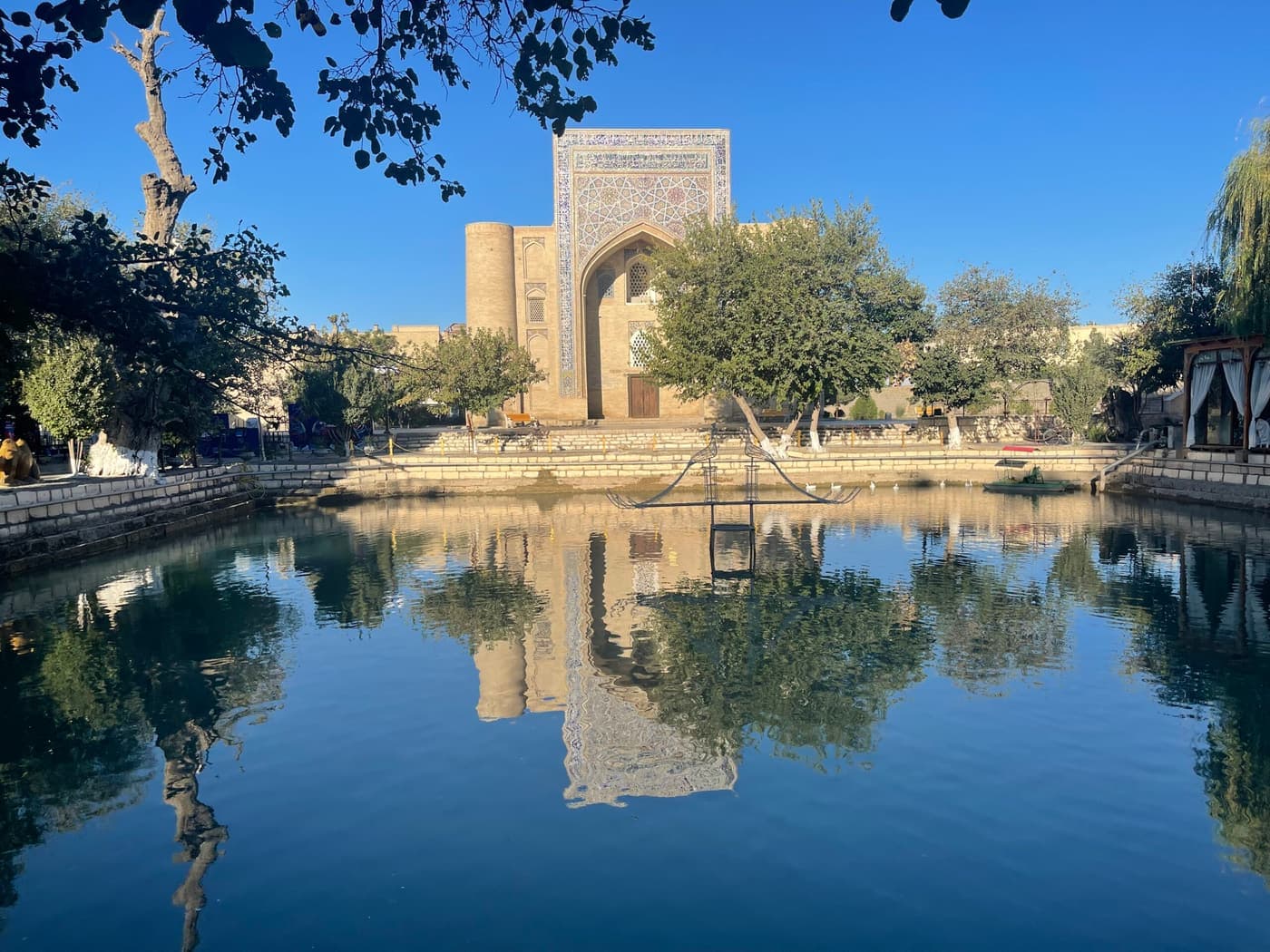
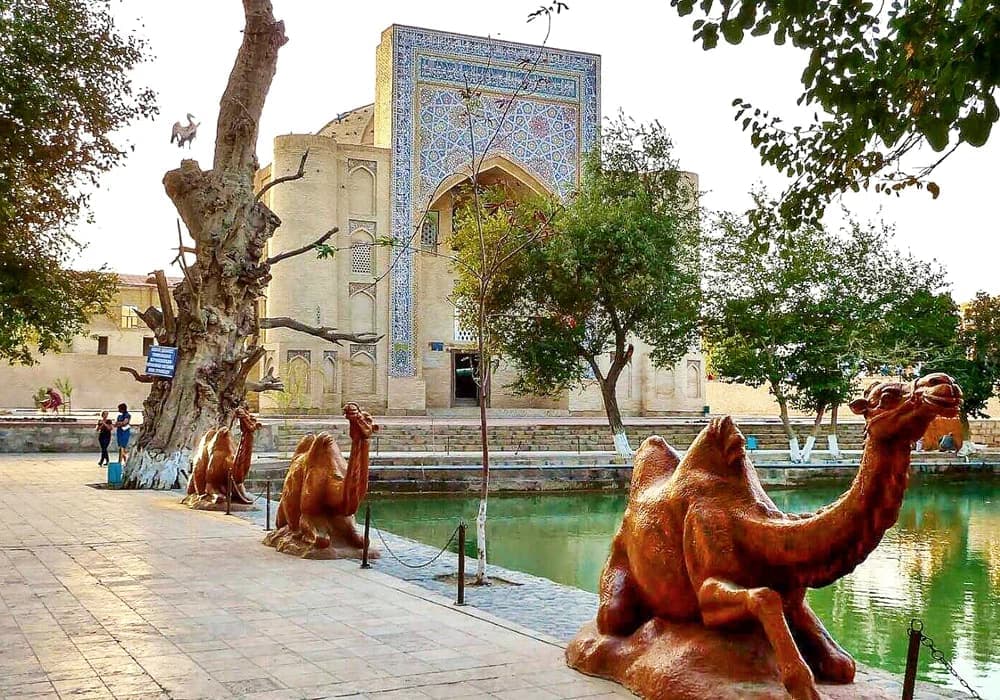
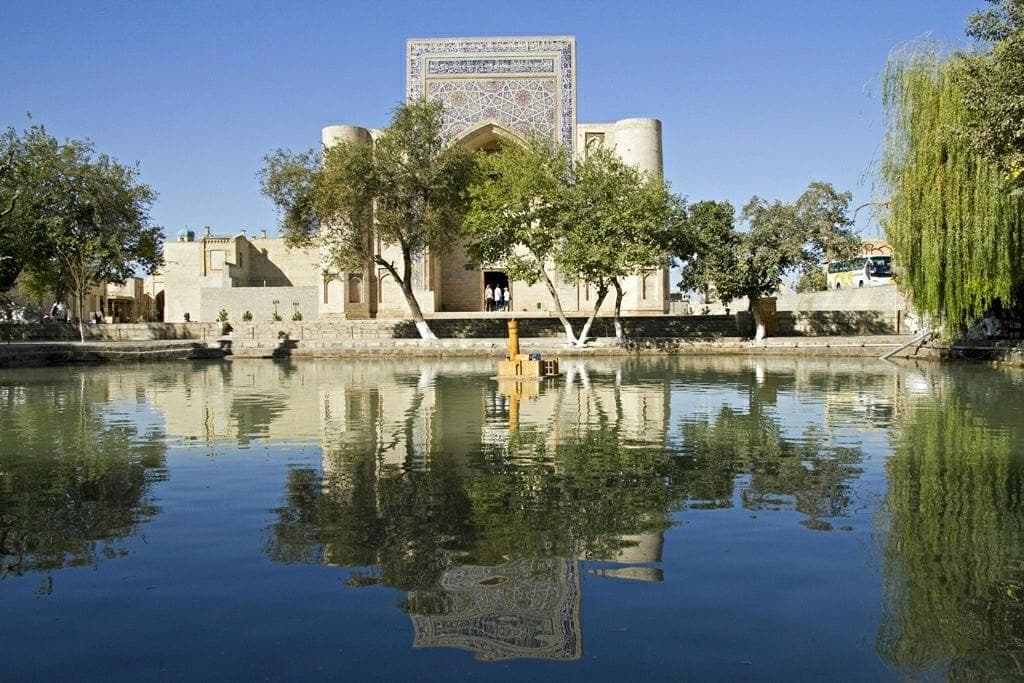
The Lyabi-Hauz Ensemble is a remarkable historic urban space in central Bukhara, formed mainly during the sixteenth and seventeenth centuries around a large reservoir. Its name means "by the pond", and the water is what holds the ensemble together: the Kukeldash Madrasa on one side, the Nadir Divan-Begi Khanqah and Madrasa on the others, and old mulberry trees leaning over the edge.
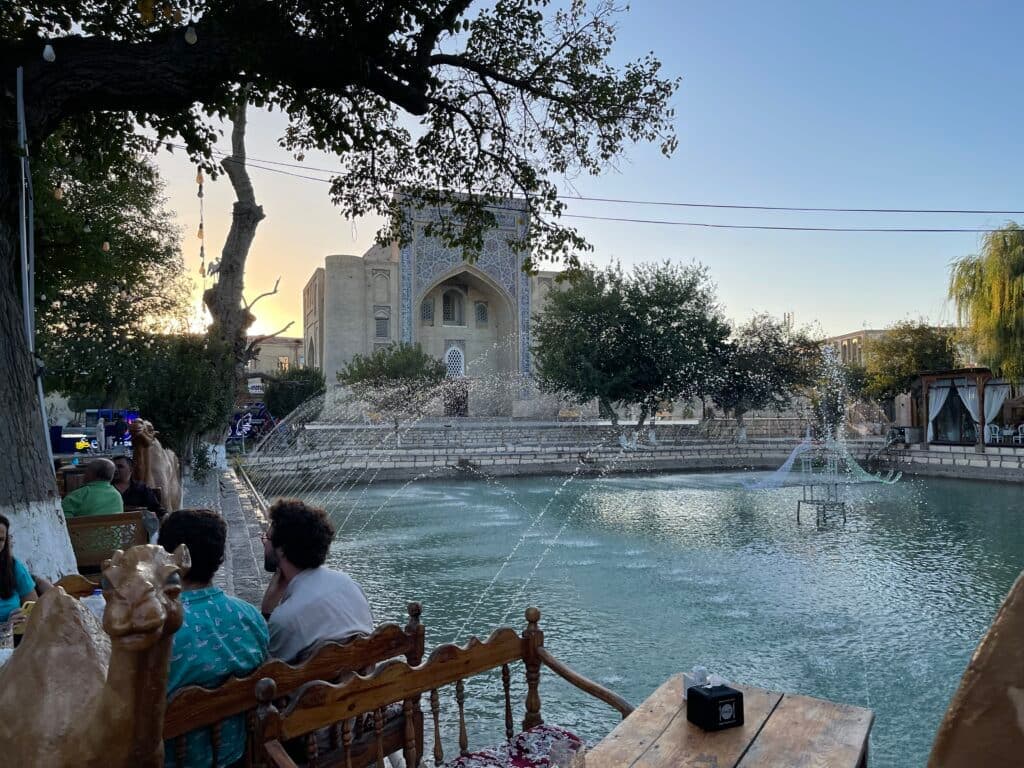
Unlike Poi-Kalyan, this was never a purely ceremonial square. People came here for water, for study, for shade and for company — and they still do.
Gallery
Monuments in this complex
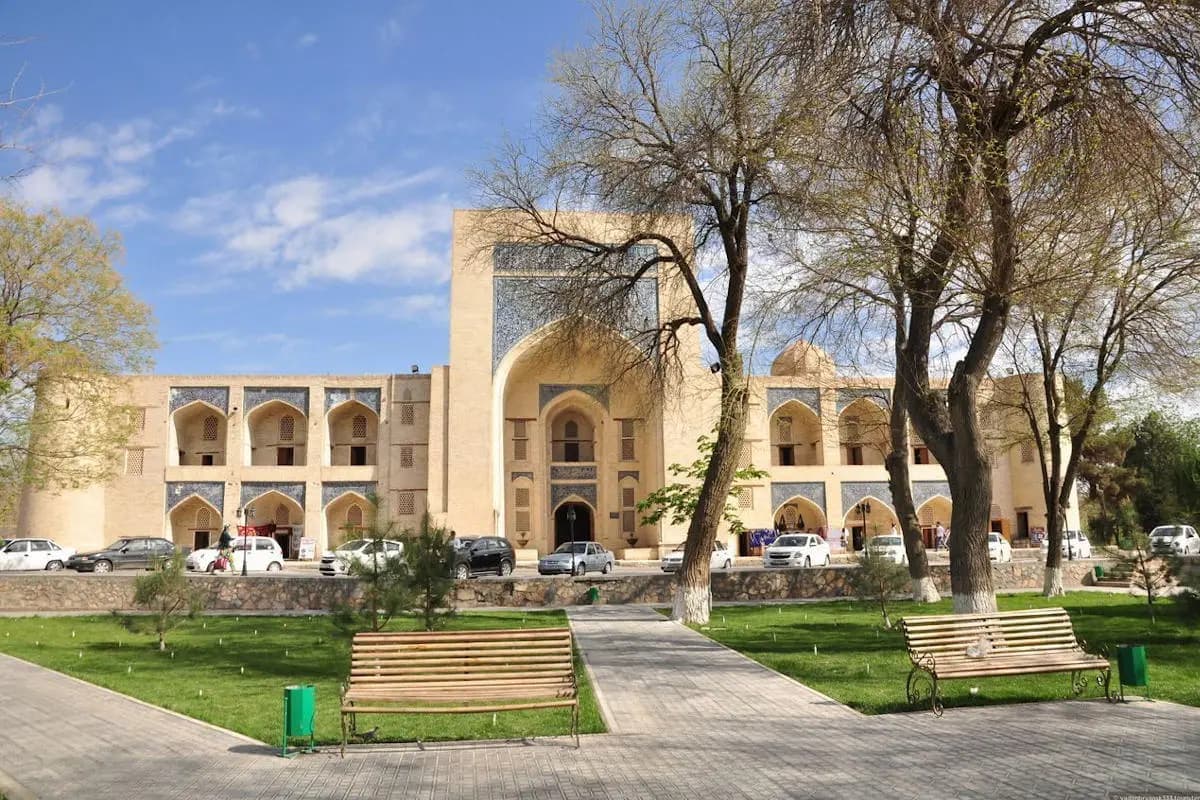
Kukeldash Madrasa
Built in 1568–1569, the oldest and largest building of the Lyabi-Hauz ensemble.
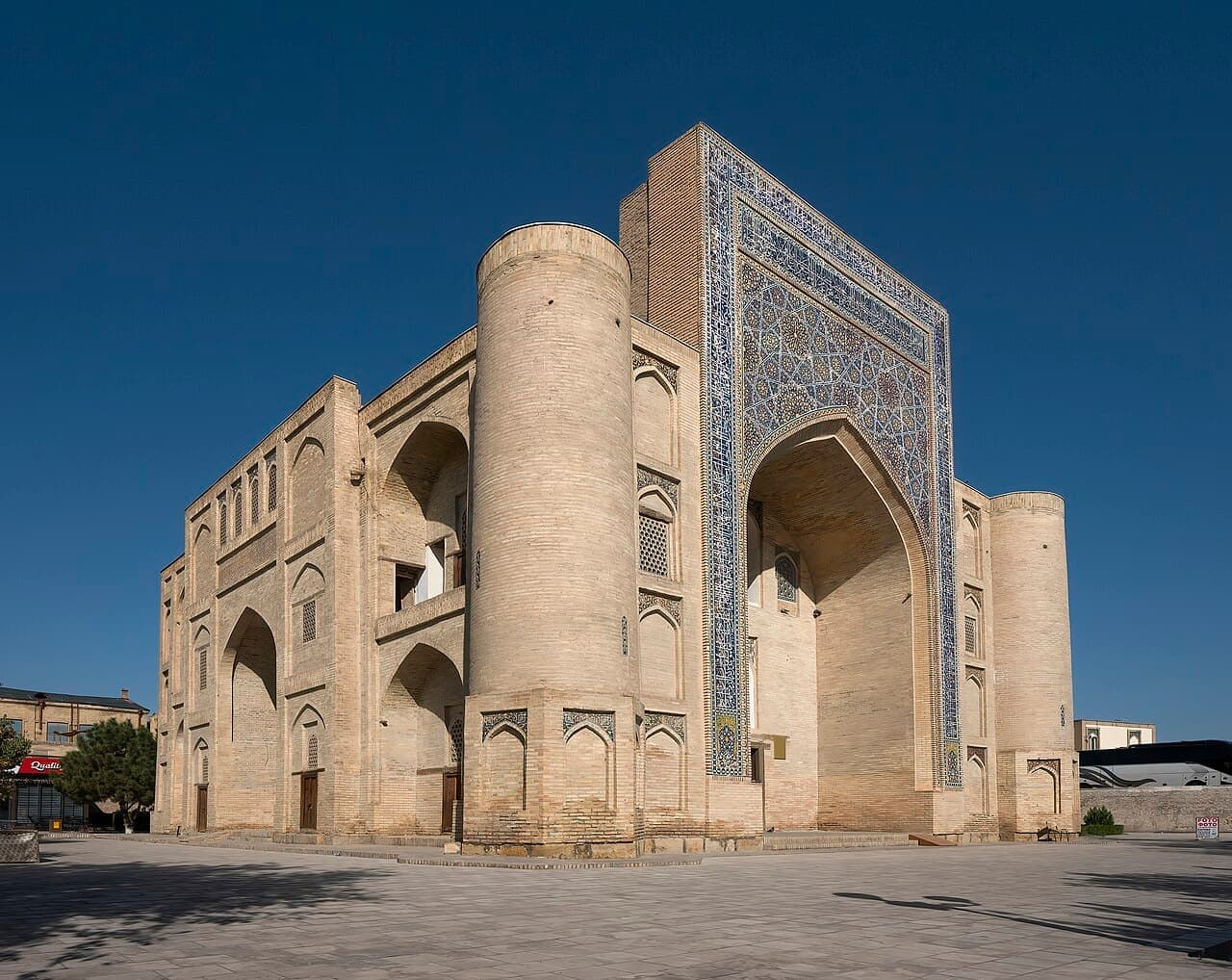
Nadir Divan-Begi Khanqah
A Sufi lodge of about 1619, built to house travelling dervishes on the west side of the pond.
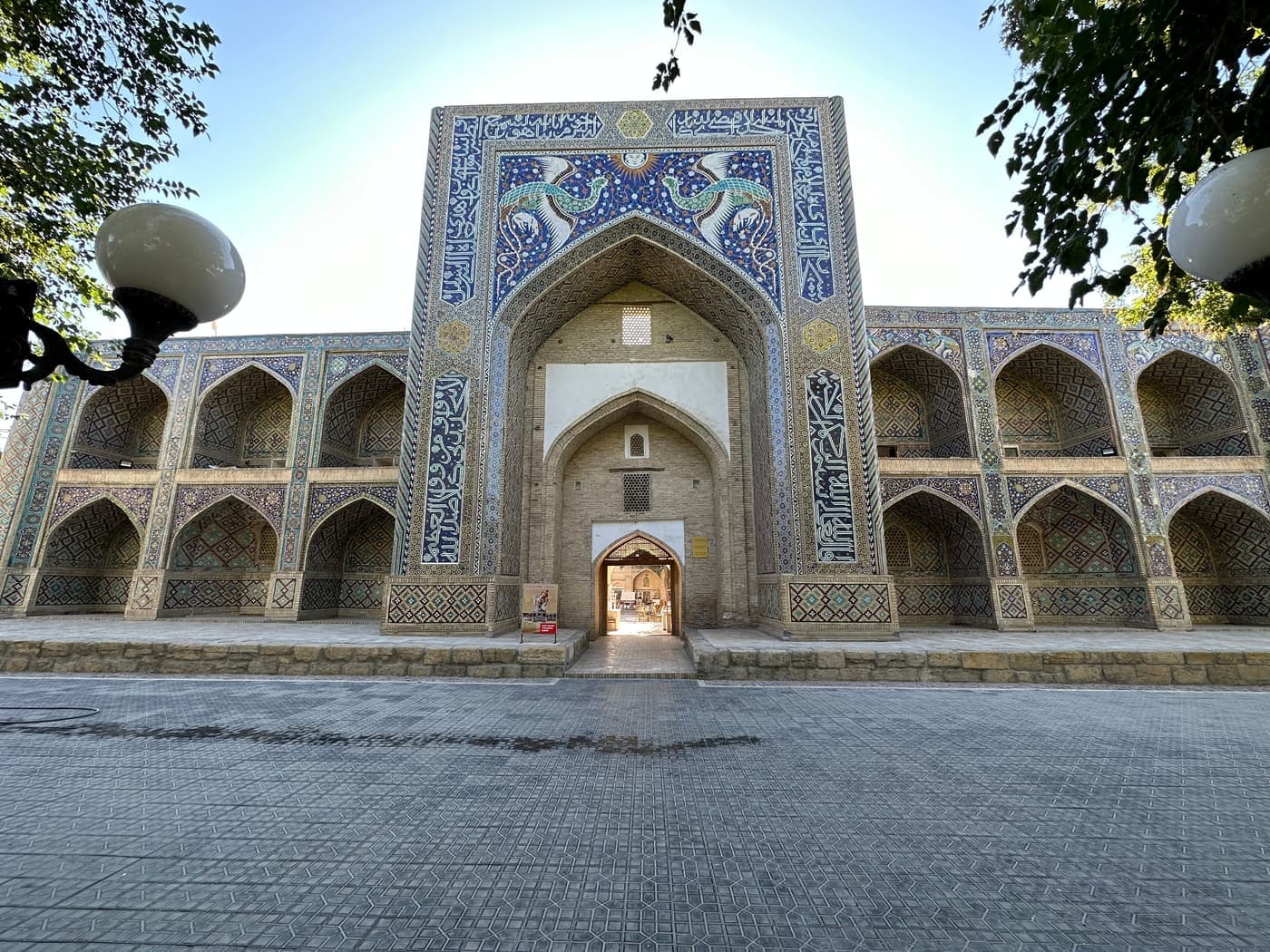
Nadir Divan-Begi Madrasa
Known for the two mythical birds on its portal, often identified as simurghs, flanking a sun with a human face.
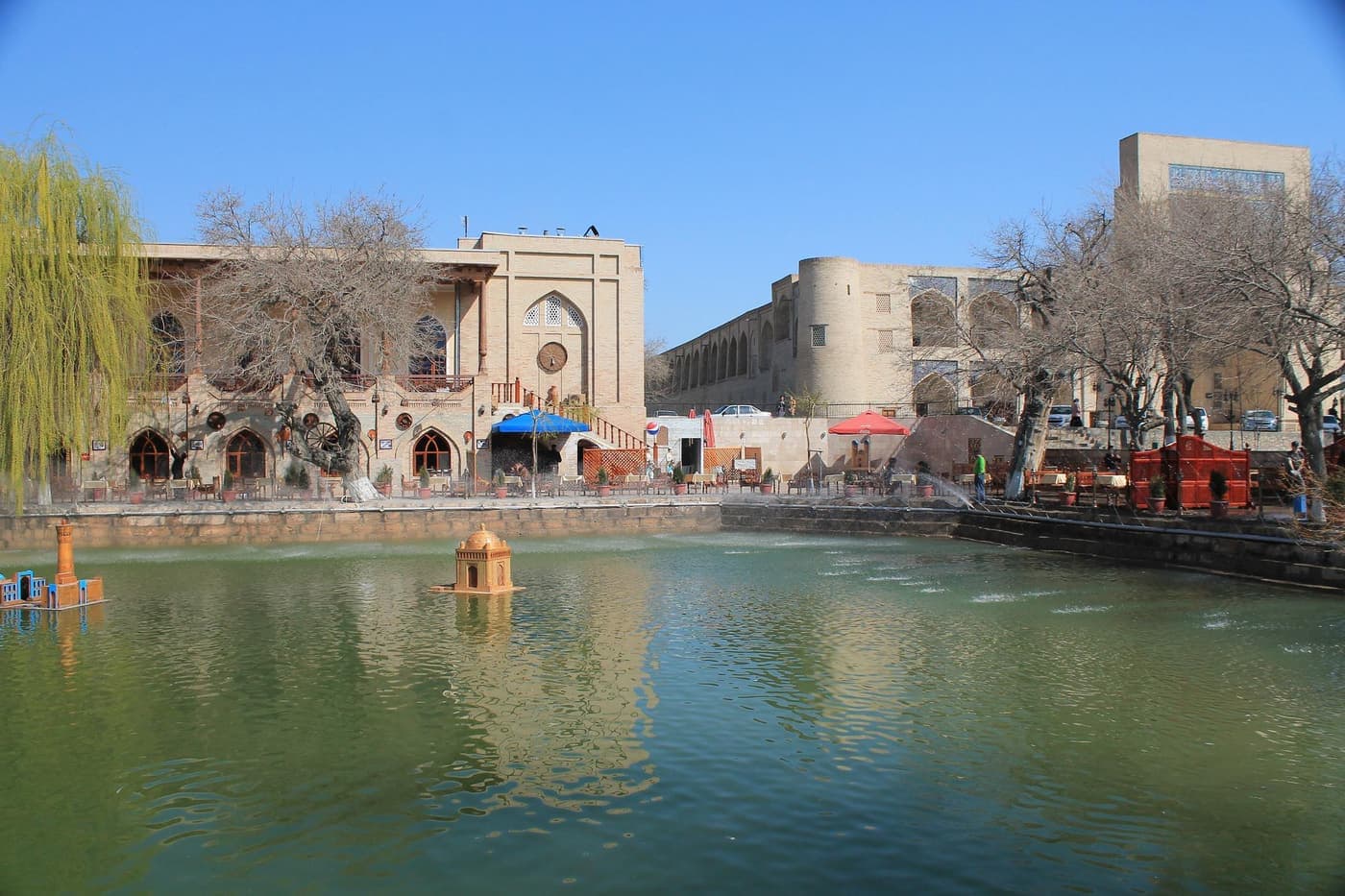
Lyabi-Hauz Reservoir
The pond the whole ensemble is named after — once part of Bukhara's water supply, now its living room.
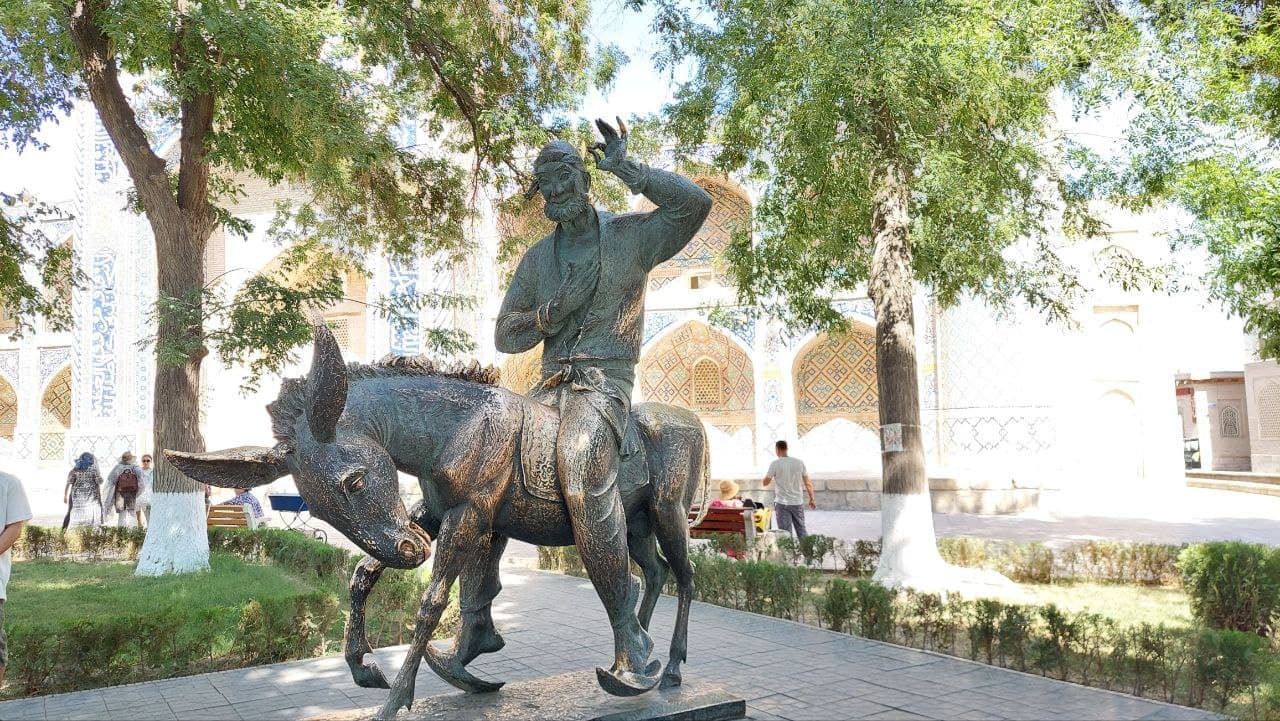
Khoja Nasreddin Monument
The wise fool of Central Asian folk tales on his donkey, cast in bronze in 1979 by the sculptor Yakov Shapiro.