Nadir Divan-Begi Madrasa
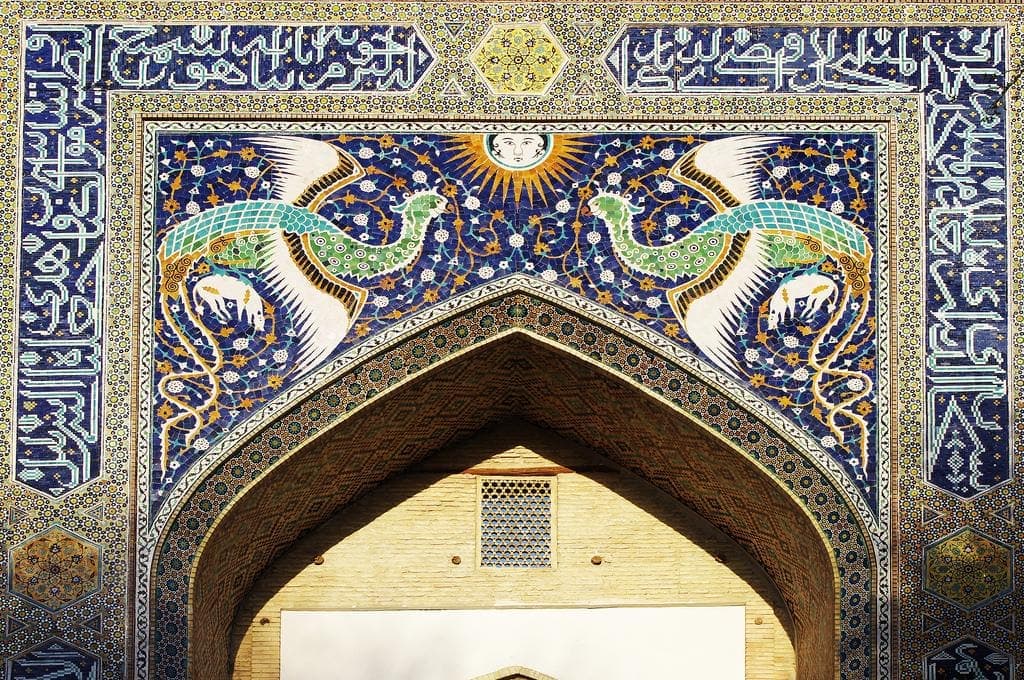
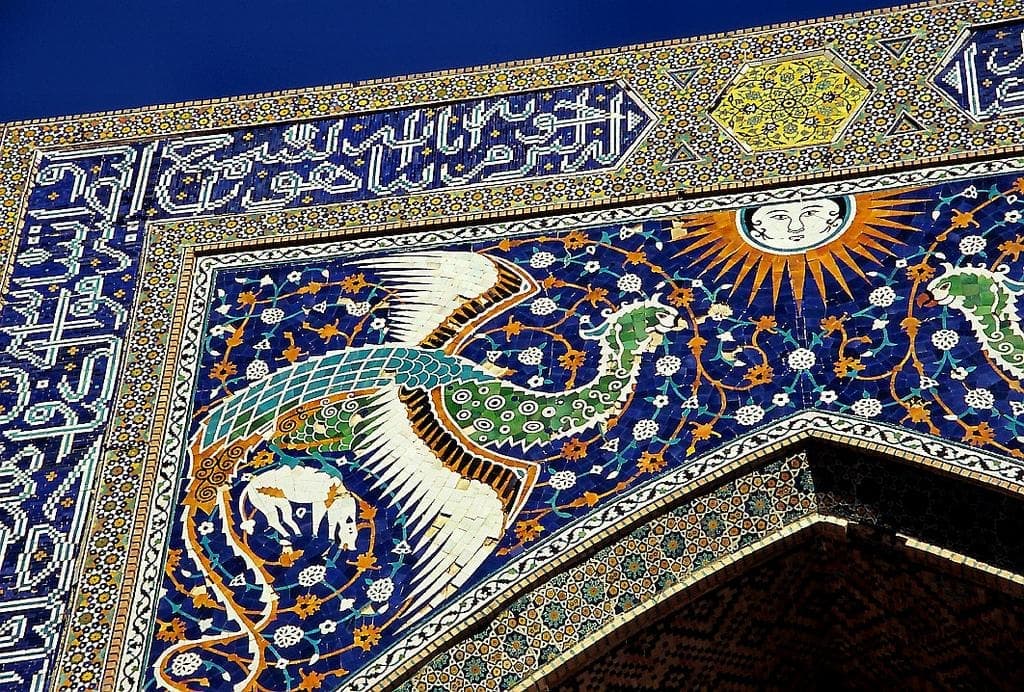
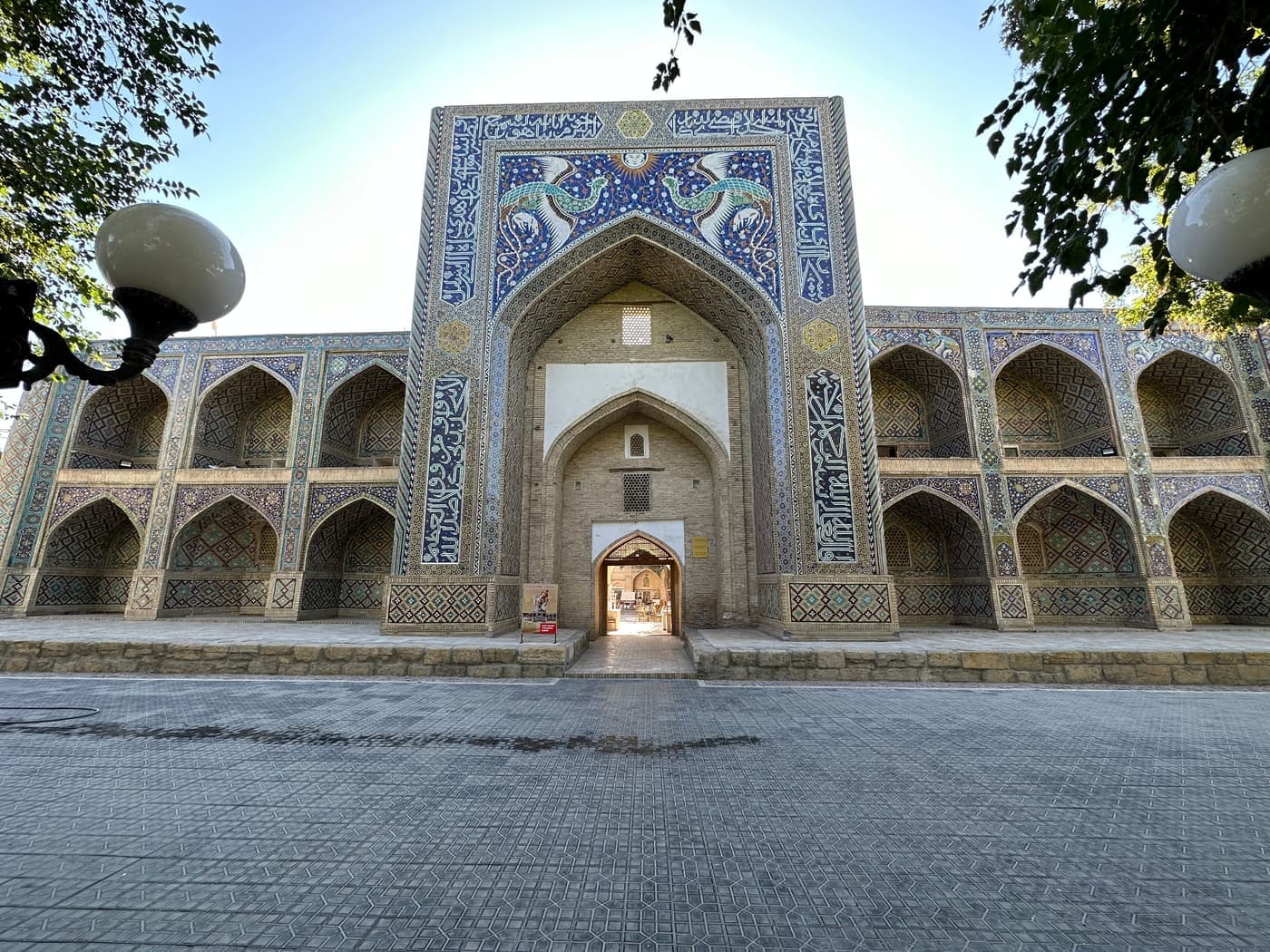
Known for the two mythical birds on its portal, often identified as simurghs, flanking a sun with a human face.
Listen while you walk
This guide plays in the language you selected.
Script
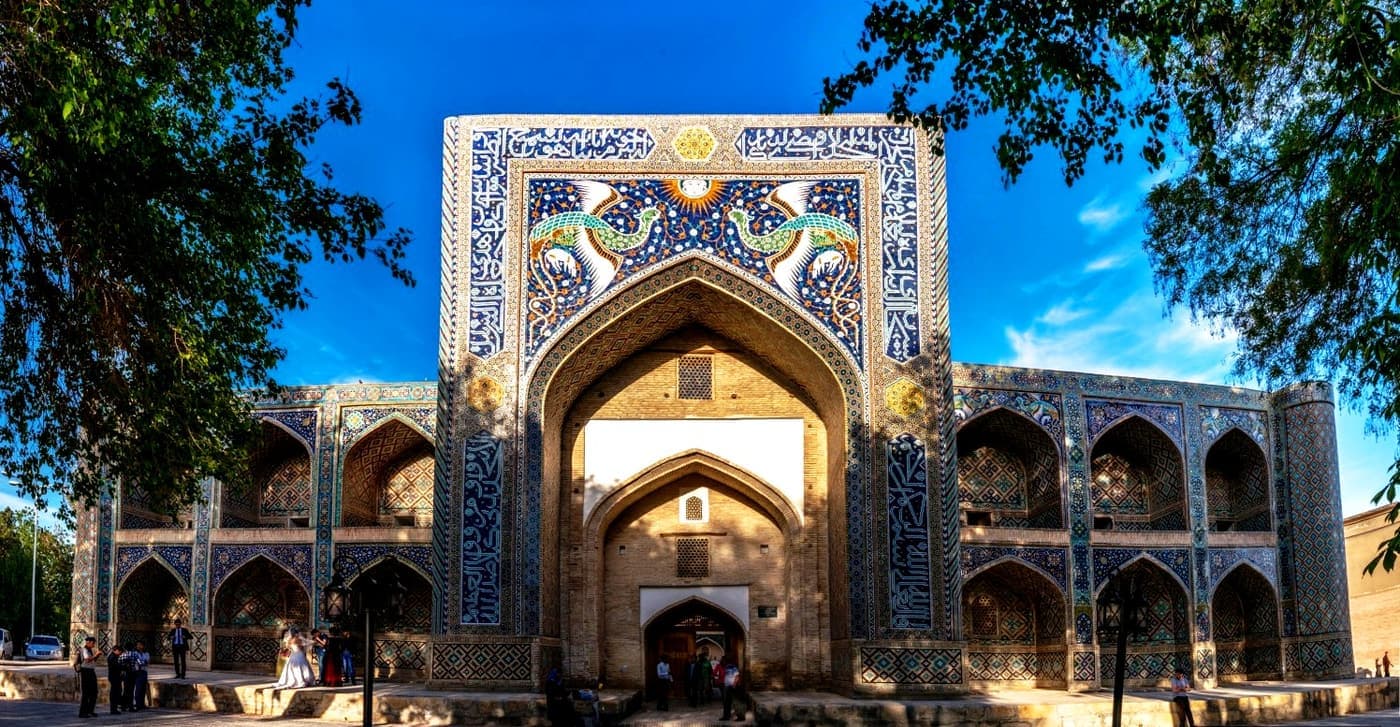
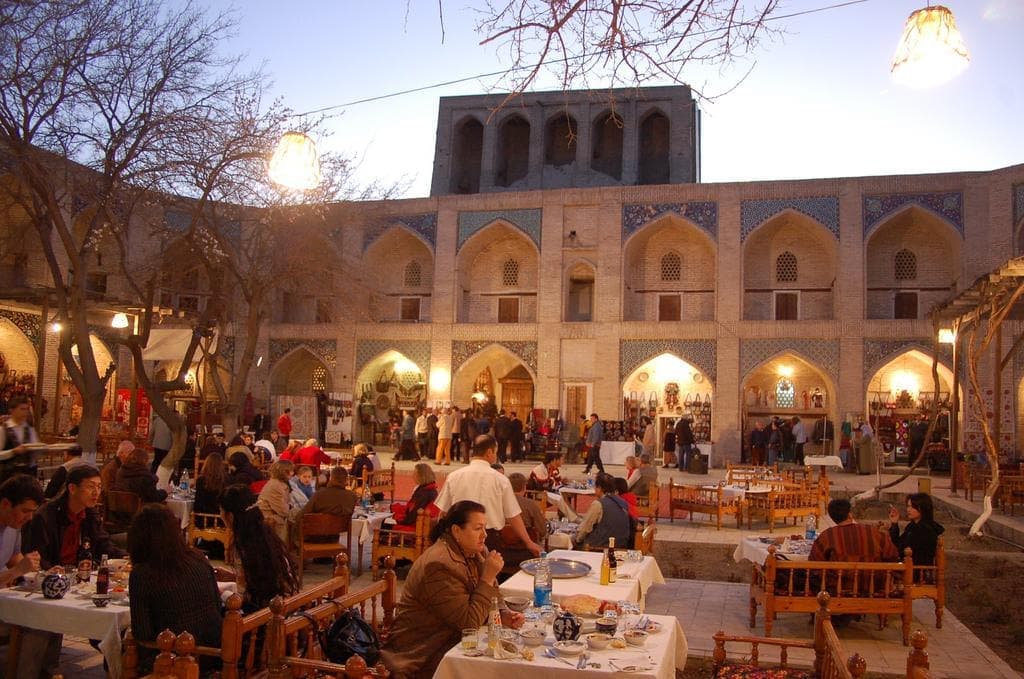
On the eastern side of Lyabi-Hauz stands the Nadir Divan-Begi Madrasa, one of the best-known monuments of early seventeenth-century Bukhara. It was built during the reign of Imam Quli Khan and is closely associated with the official Nadir Divan-Begi. Its story is especially interesting because it was originally planned not as a madrasa, but as a caravanserai.
Caravanserais were essential on the Silk Road. Merchants could sleep there, store their goods, rest, and prepare for the next stage of their journey. According to the traditional account, at the building's inauguration Imam Quli Khan called it a madrasa. Because the ruler's word carried authority, the building was adapted into an educational institution. Traces of the original caravanserai plan remained.
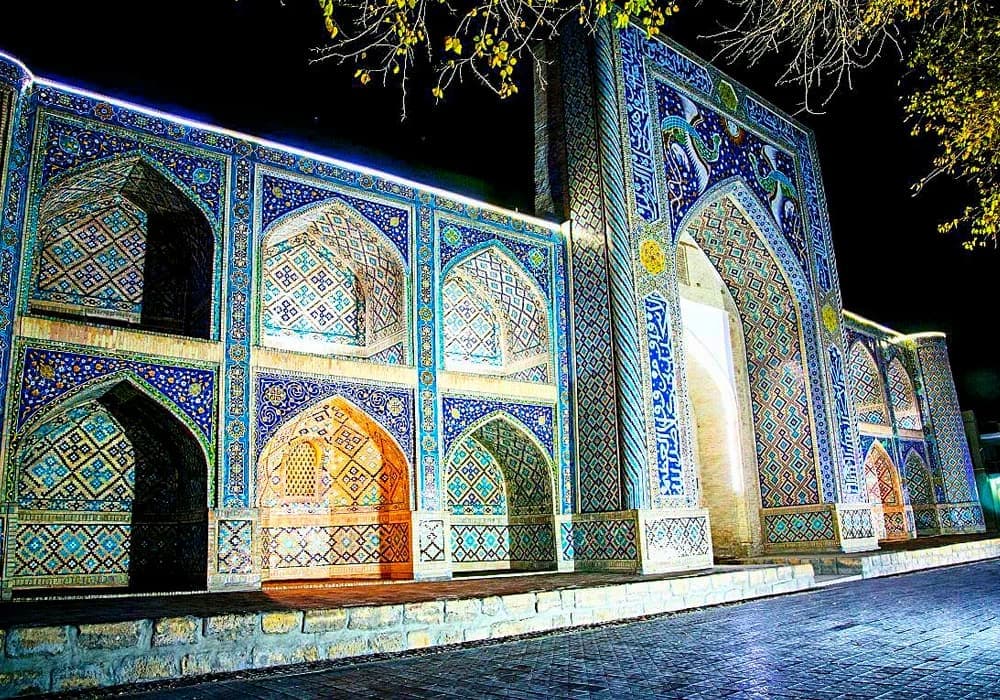
Look at the portal. Colourful tiles, corner towers, and the monumental entrance make the building immediately recognisable. Its most famous decoration shows a sun-like human face flanked by mythical, bird-like creatures. These images differ from the purely geometric patterns often associated with Islamic architecture and give the façade a distinctive character.
After its conversion into a madrasa, students lived and studied here. One building therefore moved from the world of merchants and caravans into the world of education. It shows how trade, scholarship, government, and art were interconnected in Bukhara.
Gallery