Kukeldash Madrasa
Built in 1568–1569, the oldest and largest building of the Lyabi-Hauz ensemble.
Listen while you walk
This guide plays in the language you selected.
Script
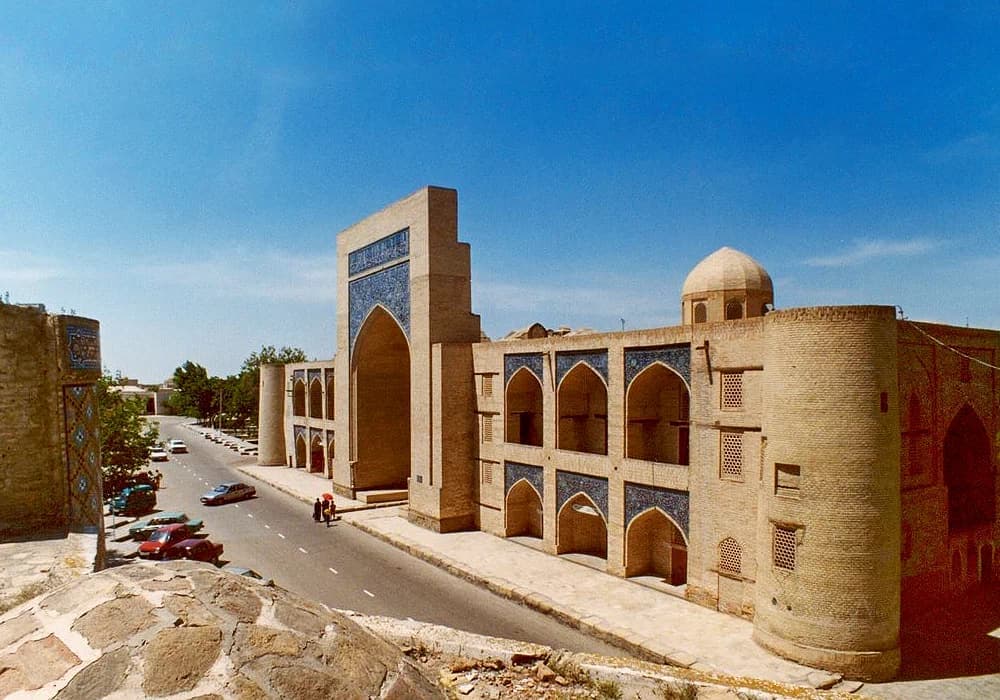
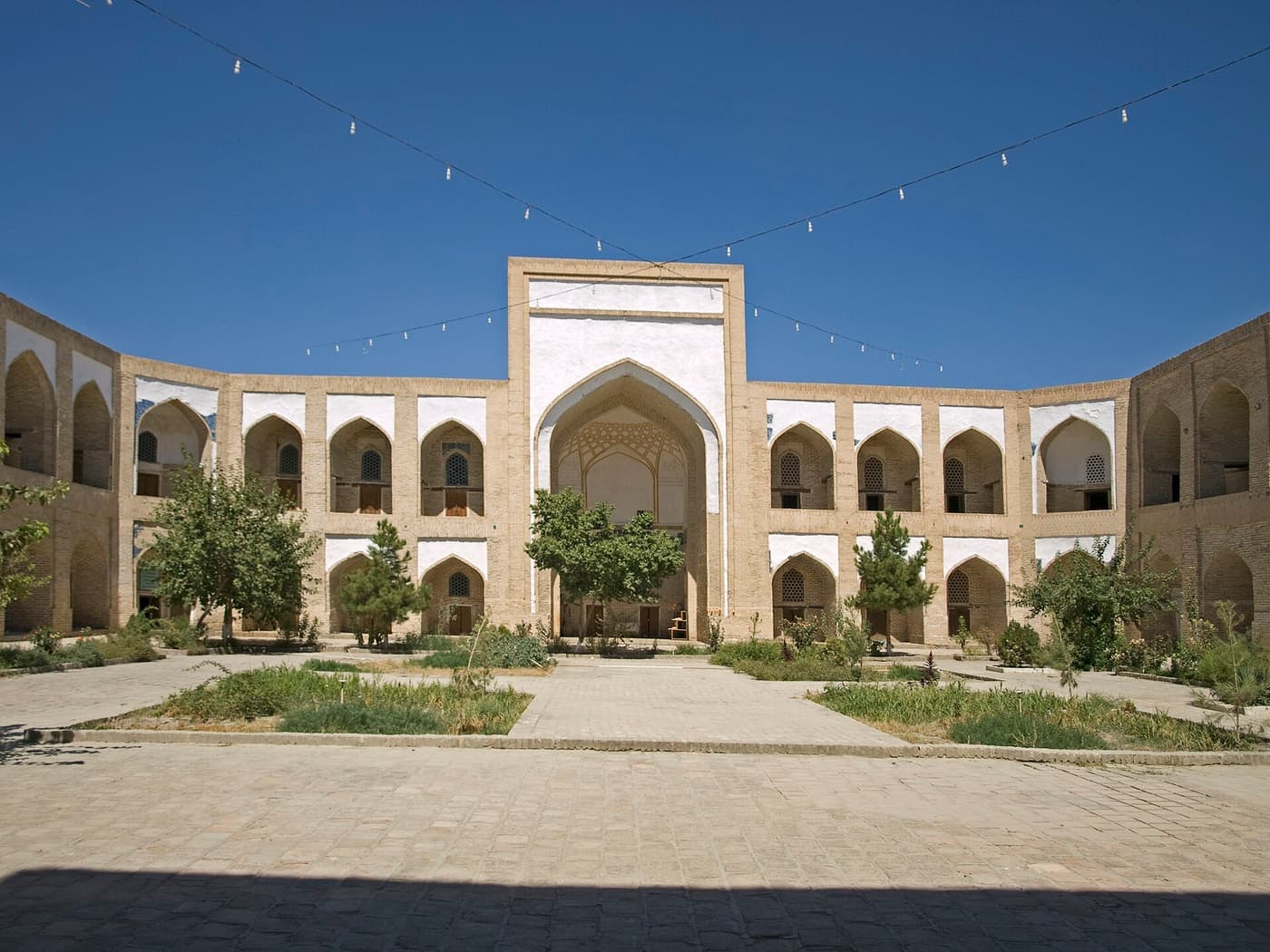
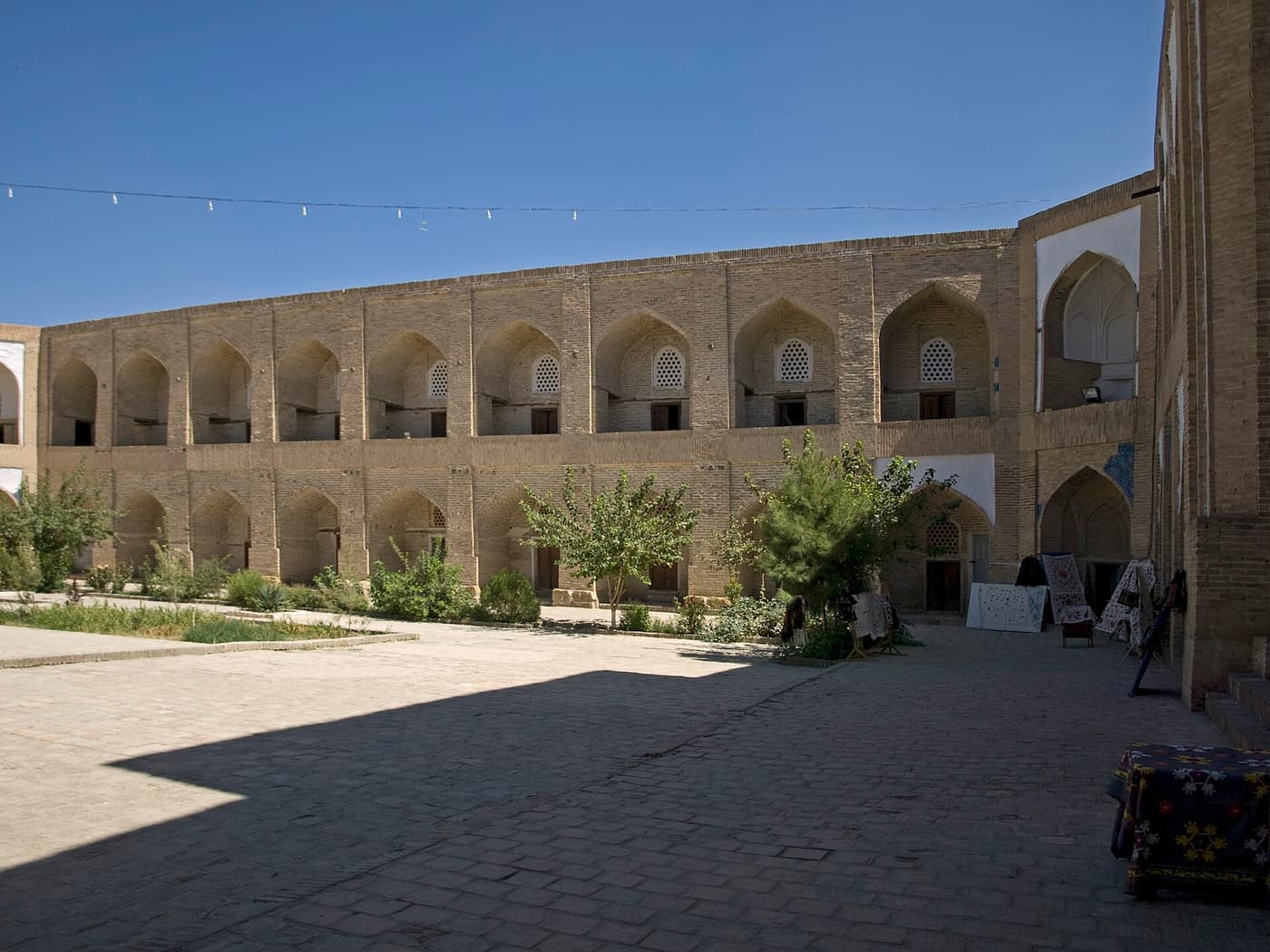
On the northern side of the Lyabi-Hauz Ensemble stands Kukeldash Madrasa, one of Bukhara's most important historic centres of education. It was built in 1568–1569 and is the oldest major building in the ensemble. Around 160 hujras, or student cells, once provided living and study space. The madrasa is associated with Kulbaba Kukeldash, an influential official of the Shaybanid period. The word “Kukeldash” can mean “milk brother,” but it was also an important court title.
Look first at the scale of the building. Student rooms surround a central courtyard, while arches and open galleries help bring light and air into the complex. This was not only decorative architecture; it was practical design suited to Bukhara's hot climate.
Imagine student life here centuries ago: a small room, the courtyard, lessons, teachers, and young people arriving from different regions. A madrasa was not simply a religious school. In Bukhara, a major centre of scholarship and culture, it was part of the intellectual life of the city.
The façades include elements of ganch plasterwork, tile, and majolica. Some details have changed or disappeared over time, but the monumental character remains. The building also had more than one life: historical accounts describe periods when it was used as a caravanserai and for defensive purposes.
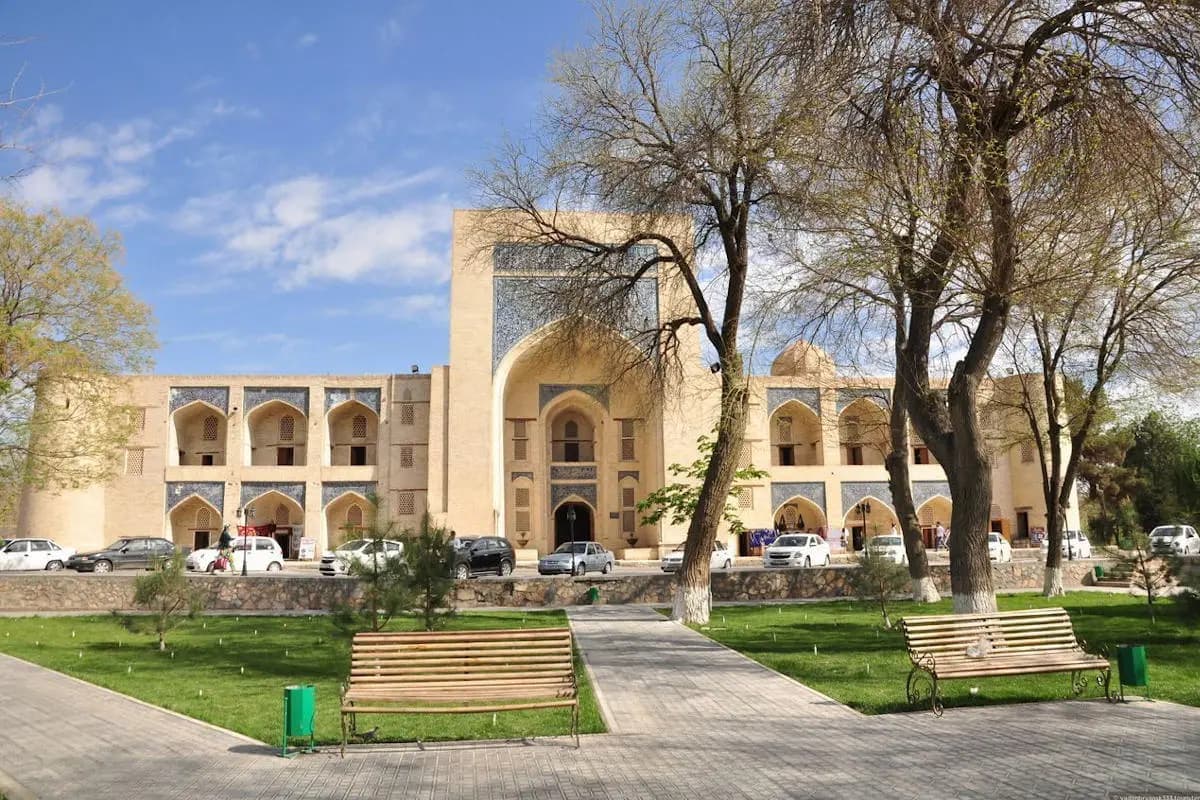
Its position within Lyabi-Hauz is meaningful. The pond represents water and everyday urban life, while the Nadir Divan-Begi buildings across it represent the architecture of the seventeenth century. In one small space, different historical periods meet.
When you look at Kukeldash today, try to see more than bricks and ornament. Imagine the students, teachers, travellers, and residents who passed through these spaces. Kukeldash reminds us that great architecture is not only about beauty. It also reflects what a society valued: learning, community, and the future.
Gallery