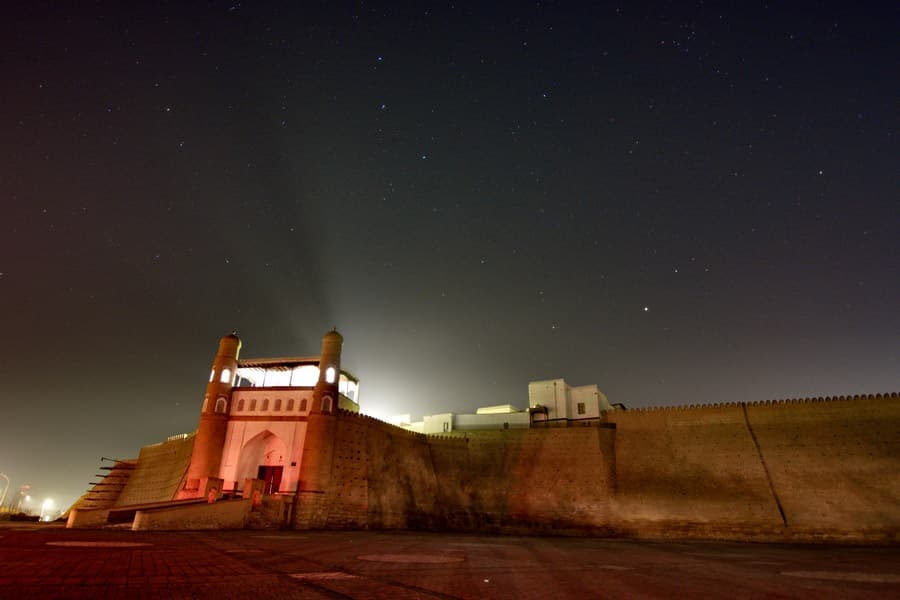
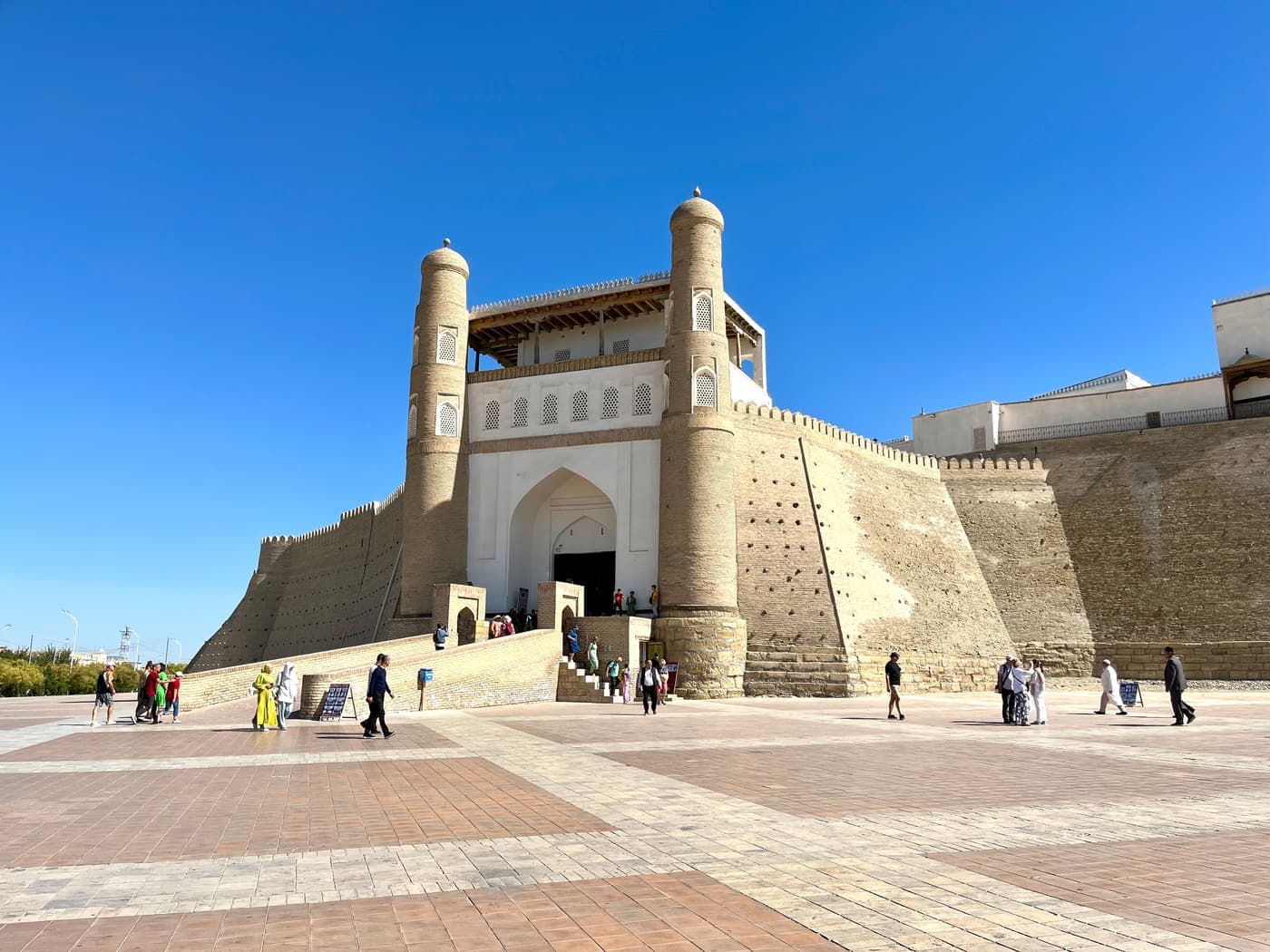
Ark Fortress
The fortress-city of Bukhara's emirs, lived in for some 1,500 years until 1920.
Listen while you walk
This guide plays in the language you selected.
Script
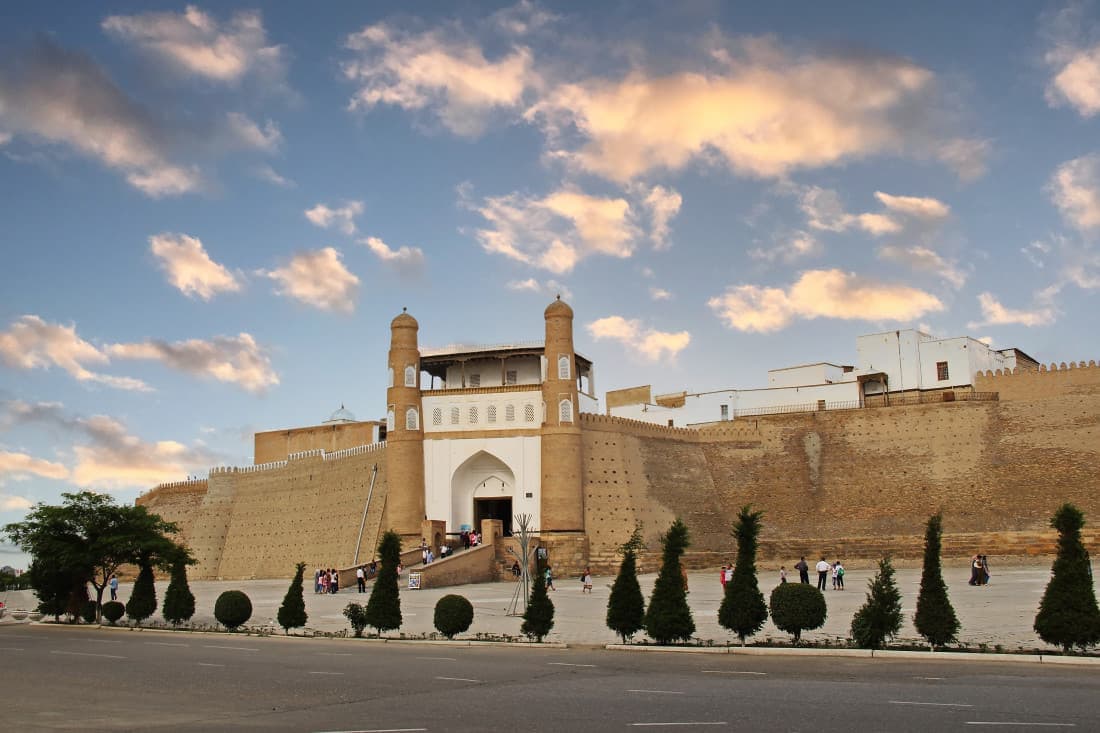
You are now standing before one of Bukhara's oldest and most symbolic monuments: the Ark Fortress. This enormous citadel was much more than a defensive wall. For centuries it served as the residence of Bukhara's rulers, a centre of government, a military stronghold, and a royal complex. The fortress rises on an artificial mound that reaches about 20 metres in places and covers roughly 4.2 hectares. The historic centre of Bukhara is a UNESCO World Heritage Site, and the Ark has remained one of the defining monuments of the city's civic history.
To understand the Ark, begin with its age. Bukhara itself is more than 2,500 years old, and the roots of the citadel reach deep into the city's ancient past. The tenth-century historian Narshakhi mentioned the Ark in his History of Bukhara. Over the centuries the fortress was destroyed and rebuilt many times. It is therefore better to think of the Ark not as a building frozen in one period, but as a huge historical record in which many layers of Bukhara's past have been preserved.
There is also a famous legend about its origin. According to the story, the prince Siyavush wanted to marry the daughter of King Afrasiab. The king said he would agree if the young man could build a fortress on an area equal to the size of one bull's hide. Siyavush cut the hide into thin strips, joined them together, and used the resulting large circle to define the site of his fortress. This is a legend rather than documented history, but it beautifully expresses the ancient and legendary character of Bukhara.
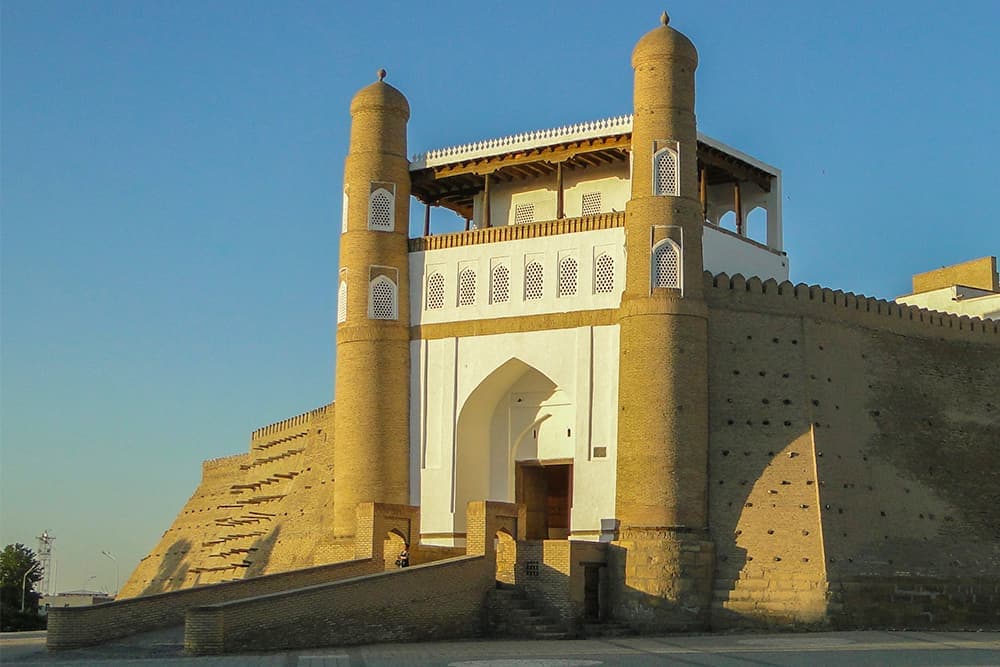
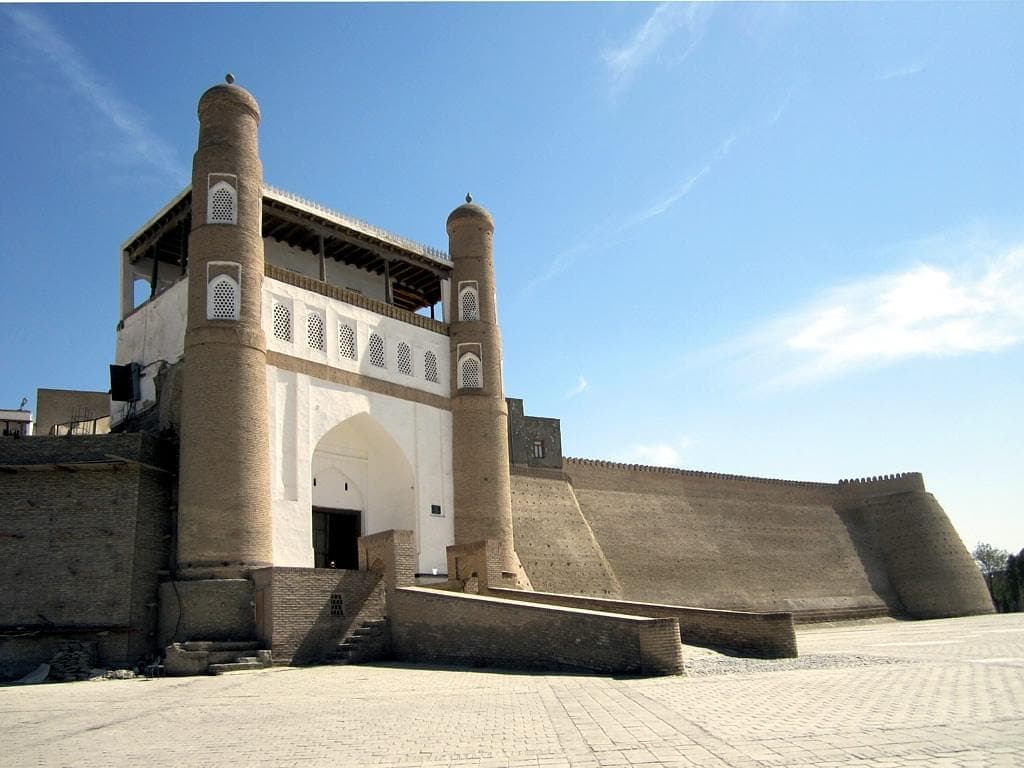
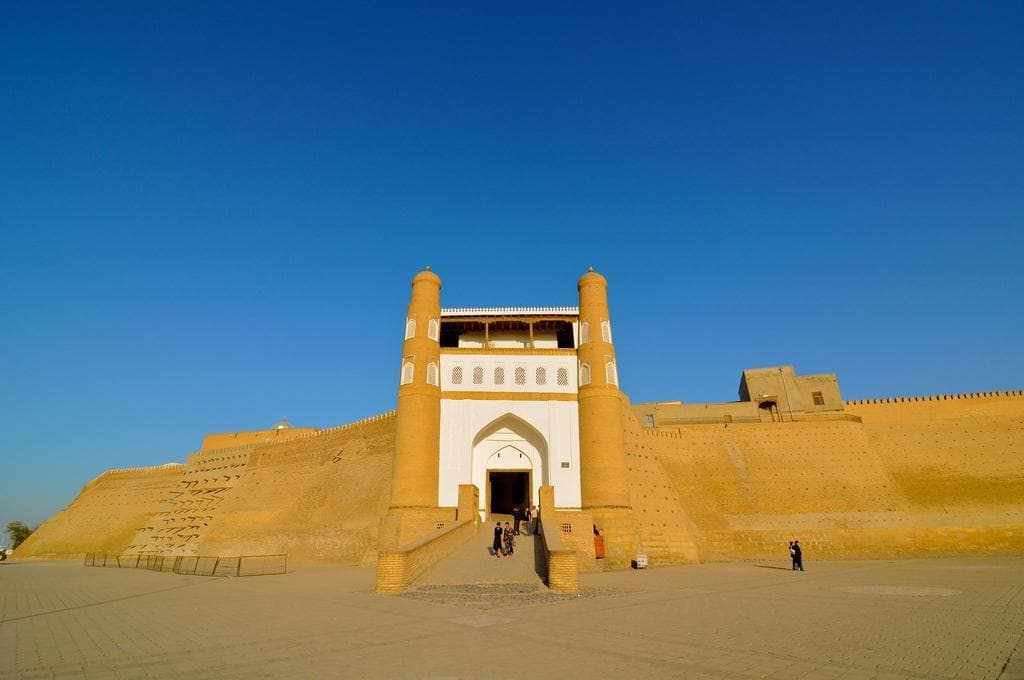
Now look toward the entrance. In the past, this gateway was not simply an entrance. It marked the symbolic boundary of royal power. Inside the Ark were palaces, mosques, government offices, a treasury, workshops, living quarters, and military facilities. In other words, the citadel contained a small city of its own. From here, rulers governed Bukhara, received ambassadors, issued orders, and held official ceremonies.
Gallery